
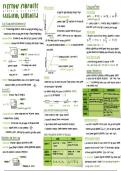
FIFATDIS SIDDIIIIIITC) &
ohmic conductor Energy and Power
nin nin straight line graph
electrical
that passes through origin energy
>
=
h
- (directly proportional N Pt W VIt W PRE W
T =
=
or or =
or
(meausered in
joules (J)]
E gradient of graph () represents the resistence (R)
E mf (3) and potential difference (v) note : a device called a fuse is used for safety in appliances. It
<
emf : the total energy supplied per coulomb of charge by the battery (in Volts)
> of the conductor
the resistence of conductor does not
melts When current is too high ,
so that the circuit will open.
vary with >
electrical power
↳
measured across terminal of battery when no flowing through battery
&
charge is 8
current (A) current. (current must be low-higher current ↳ the rate at which electrical
energy is dissipated in a resister
potential difference : the amount of work done (w) per coulomb of charge independant
Y E
-
can cause metal to heat up increasing resistence P = or P =
VI or P = or P =
PR
↳ terminal pd :
measured across terminals of a battery when charge is
flowing < this is when the conductor becomes non-ohmic as resistence now varies (measured in Watts (N))-C 5 .
domestic appliances are marked power
. Work done(
-
ratings which indicates
with current
iv- the power delivered to an appliance when connected to 240V supply
measured in volts (v)
increasing resistence (non-ohmic) electricity usage
of
"
F
temp increase
- :li parallel
-
series :
kWh
:
↳ electrical energy consumed is measure in
greater emf is obtained
· emf of battery is same a single cell constant cost =
power rating (kW) x time used (n) X price per kWh
·
resistence (ohmic)
fixed temp
(straight line)
-
1e I cell 51
Resistenceord
15 1
12 I cell is 1 5V
Internal
.
,
,
.
o
current (A)
4 5 battery emf 1 5V
battery emf .
is .
internal resistence of a
battery is treated as another resister
&
esistors
In series with the external resistence. : emf = Vext + Vost
> voltmeter :
measures potential difference across a circuit component (voltage)
Inserted into circuit to control the current
>
(high resistence =
small current < emf (3) : the terminal pd when circuit is open and zero current is
-connected in parallel , as it has a very high resistence - v
In the external circuit
and low resistence= high current)
Current (1) · pen switch closed switch
> for constant voltage , the current in a resistor is inversely
current in external circuit Is current
at battery 3
in external circuit
-current :
the rate of flow of charge (a) proportional to the resistence I current
zero
vemofbateryermvagembatanal
charge (c)
. terminal term
>
F times
-
I um I
I I
IA =
10 S
resistor variable resistor light bull
.
the
voltage across internal resistence will
III Internal
external circuit (lost
amperes (A)]
not be used in
(measured in
resistence volts) Viost Ir
factors that affect the resistence in a conductor
=
>
emf =
Vext + Vost
↳ conventional current positive charge moves from the positive terminal formula
(longer-greater resistence
:
1) ) length of conductor emf = I (Rext + r)
to negative terminal of battery 2 )
. thickness of conductor (thicker =
lower resistence) Increasing external resistence
&
)
↳
electron flow electrons more from the to the terminal
:
negative positive 3 ) type of material (different metals have different resistences) ↳
Will result in a decrease in circuit current· thus internal
pd across
.
Ammeter measures current in a circuit component A
(greater (Vost Ir)
< :
4) temperature of conductor temperature= greater resistence resistence will also decrease =
this will cause an increase
,
-
connected in series have very little resistence (don't affect current)
In the terminal potential difference (Vext =
emf-Vlost)
and parallel networks of resistors
,
series
Resistence and Ohm's Law reasing
series parallel &
extern
resistence
the flow of charge divided (split)
resistence (R) : A material's opposition to current increase in circuit current thus pd Internal
is
>
current (1) current is the same in each ↳ Will result in an . across
resistor amongst the resistors
< ohm's law Current :
through a conductor is directly proportional difference resistence will also increase (Viost =
Ir) ,
this will cause a decrease
conductor Voltage divided (split) the same across
across the at constant temperature . potential
is
Voltage is
in terminal potential difference (Vext =
emf-Vlost)
difference (v) amongst the resistors each branch
>
-
current (A) A short circuit : A path of very low resistence (Rext almost zerp)
Voltage (v)
Y ~
resistence (2-ohm's
resistence (R) R += Ri +
Ra + Rs ...+ and maximum current is created .
current in the wire]
[Wires and battery get very not due to
the high
ohmic conductor Energy and Power
nin nin straight line graph
electrical
that passes through origin energy
>
=
h
- (directly proportional N Pt W VIt W PRE W
T =
=
or or =
or
(meausered in
joules (J)]
E gradient of graph () represents the resistence (R)
E mf (3) and potential difference (v) note : a device called a fuse is used for safety in appliances. It
<
emf : the total energy supplied per coulomb of charge by the battery (in Volts)
> of the conductor
the resistence of conductor does not
melts When current is too high ,
so that the circuit will open.
vary with >
electrical power
↳
measured across terminal of battery when no flowing through battery
&
charge is 8
current (A) current. (current must be low-higher current ↳ the rate at which electrical
energy is dissipated in a resister
potential difference : the amount of work done (w) per coulomb of charge independant
Y E
-
can cause metal to heat up increasing resistence P = or P =
VI or P = or P =
PR
↳ terminal pd :
measured across terminals of a battery when charge is
flowing < this is when the conductor becomes non-ohmic as resistence now varies (measured in Watts (N))-C 5 .
domestic appliances are marked power
. Work done(
-
ratings which indicates
with current
iv- the power delivered to an appliance when connected to 240V supply
measured in volts (v)
increasing resistence (non-ohmic) electricity usage
of
"
F
temp increase
- :li parallel
-
series :
kWh
:
↳ electrical energy consumed is measure in
greater emf is obtained
· emf of battery is same a single cell constant cost =
power rating (kW) x time used (n) X price per kWh
·
resistence (ohmic)
fixed temp
(straight line)
-
1e I cell 51
Resistenceord
15 1
12 I cell is 1 5V
Internal
.
,
,
.
o
current (A)
4 5 battery emf 1 5V
battery emf .
is .
internal resistence of a
battery is treated as another resister
&
esistors
In series with the external resistence. : emf = Vext + Vost
> voltmeter :
measures potential difference across a circuit component (voltage)
Inserted into circuit to control the current
>
(high resistence =
small current < emf (3) : the terminal pd when circuit is open and zero current is
-connected in parallel , as it has a very high resistence - v
In the external circuit
and low resistence= high current)
Current (1) · pen switch closed switch
> for constant voltage , the current in a resistor is inversely
current in external circuit Is current
at battery 3
in external circuit
-current :
the rate of flow of charge (a) proportional to the resistence I current
zero
vemofbateryermvagembatanal
charge (c)
. terminal term
>
F times
-
I um I
I I
IA =
10 S
resistor variable resistor light bull
.
the
voltage across internal resistence will
III Internal
external circuit (lost
amperes (A)]
not be used in
(measured in
resistence volts) Viost Ir
factors that affect the resistence in a conductor
=
>
emf =
Vext + Vost
↳ conventional current positive charge moves from the positive terminal formula
(longer-greater resistence
:
1) ) length of conductor emf = I (Rext + r)
to negative terminal of battery 2 )
. thickness of conductor (thicker =
lower resistence) Increasing external resistence
&
)
↳
electron flow electrons more from the to the terminal
:
negative positive 3 ) type of material (different metals have different resistences) ↳
Will result in a decrease in circuit current· thus internal
pd across
.
Ammeter measures current in a circuit component A
(greater (Vost Ir)
< :
4) temperature of conductor temperature= greater resistence resistence will also decrease =
this will cause an increase
,
-
connected in series have very little resistence (don't affect current)
In the terminal potential difference (Vext =
emf-Vlost)
and parallel networks of resistors
,
series
Resistence and Ohm's Law reasing
series parallel &
extern
resistence
the flow of charge divided (split)
resistence (R) : A material's opposition to current increase in circuit current thus pd Internal
is
>
current (1) current is the same in each ↳ Will result in an . across
resistor amongst the resistors
< ohm's law Current :
through a conductor is directly proportional difference resistence will also increase (Viost =
Ir) ,
this will cause a decrease
conductor Voltage divided (split) the same across
across the at constant temperature . potential
is
Voltage is
in terminal potential difference (Vext =
emf-Vlost)
difference (v) amongst the resistors each branch
>
-
current (A) A short circuit : A path of very low resistence (Rext almost zerp)
Voltage (v)
Y ~
resistence (2-ohm's
resistence (R) R += Ri +
Ra + Rs ...+ and maximum current is created .
current in the wire]
[Wires and battery get very not due to
the high


