

Coen Teulings
Human capital, innovation and the capitalist revolution
Becker’s theory of education as human capital
Human capital as a metaphor
• Capital = postponing consumption to increase future productivity
• Physical capital: machines, buildings
• Human capital: education
Developed by Nobel prize laureate Gary Becker in 1960
• Immediate success in US, initially not in Europe
• Won the day after 1980
• Endogenous growth/innovation revolution in economics of 1990
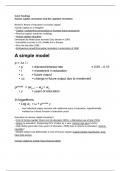
- how individual wages increase with additional years of education, logarithmically
modeled as a linear function of education years
Education as human capital investment
• Cost of human capital: Direct cost of education (30%) + Alternative use of time (70%)
• Return to education: Postponing NPV of labor by 1 year: interest rate plus (5-10%)
• High ability types take more years of education: Ability bias in returns to education: reverse
causality?
• Wealth related cost differentials in cost of human capital: Capital market imperfection: poor
have less access
Human capital far greater than physical capital
, “The theorems about the economic world presented here differ from those
in most standard economic theories;
- profits are the result of technical change;
- in a free-enterprise system, the rate of investment will be less than the optimum;
- net investment and the stock of capital become subordinate concepts …” Arrow (1962)
Endogenous growth & great divergence
Standard economics predicts convergence:
• Everybody can copy efficient technology
• Productivity differences reflect differences in capital stock
• Decreasing marginal return predicts convergence
Endogenous growth & learning by doing:
• Competition is about finding new technologies
• Current ideas are the basis for new ideas: divergence
Three groups of countries:
1. About 30 “old” capitalist countries (roughly: OECD members)
2. About 20 “new” capitalist countries: converging 收敛, catch up growth: 8-10%
(Japan, Korea, Taiwan, Singapore, China, India, Vietnam)
3. About 100 countries “non-capitalist”: still diverging 分化
–importance of technology innovation&education
Endogenous technological growth
Growth technology determined by number of new ideas
Human capital, innovation and the capitalist revolution
Becker’s theory of education as human capital
Human capital as a metaphor
• Capital = postponing consumption to increase future productivity
• Physical capital: machines, buildings
• Human capital: education
Developed by Nobel prize laureate Gary Becker in 1960
• Immediate success in US, initially not in Europe
• Won the day after 1980
• Endogenous growth/innovation revolution in economics of 1990
- how individual wages increase with additional years of education, logarithmically
modeled as a linear function of education years
Education as human capital investment
• Cost of human capital: Direct cost of education (30%) + Alternative use of time (70%)
• Return to education: Postponing NPV of labor by 1 year: interest rate plus (5-10%)
• High ability types take more years of education: Ability bias in returns to education: reverse
causality?
• Wealth related cost differentials in cost of human capital: Capital market imperfection: poor
have less access
Human capital far greater than physical capital
, “The theorems about the economic world presented here differ from those
in most standard economic theories;
- profits are the result of technical change;
- in a free-enterprise system, the rate of investment will be less than the optimum;
- net investment and the stock of capital become subordinate concepts …” Arrow (1962)
Endogenous growth & great divergence
Standard economics predicts convergence:
• Everybody can copy efficient technology
• Productivity differences reflect differences in capital stock
• Decreasing marginal return predicts convergence
Endogenous growth & learning by doing:
• Competition is about finding new technologies
• Current ideas are the basis for new ideas: divergence
Three groups of countries:
1. About 30 “old” capitalist countries (roughly: OECD members)
2. About 20 “new” capitalist countries: converging 收敛, catch up growth: 8-10%
(Japan, Korea, Taiwan, Singapore, China, India, Vietnam)
3. About 100 countries “non-capitalist”: still diverging 分化
–importance of technology innovation&education
Endogenous technological growth
Growth technology determined by number of new ideas


