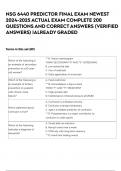
NSG 6440 PREDICTOR FINAL EXAM NEWEST
2024-2025 ACTUAL EXAM COMPLETE 200
QUESTIONS AND CORRECT ANSWERS (VERIFIED
ANSWERS) |ALREADY GRADED
Terms in this set (89)
***A. Yearly mammogram
Which of the following is
THINK SECONDARY="S" AND "S" =SCREENING
an example of secondary
B. Low animal-fat diet
prevention in a 50-year-
C. Use of seat belt
old woman?
D. Daily application of sunscreen
Which of the following is A. Fluid restriction
an example of tertiary ***B. Hemodialysis 4 days a week
prevention in a patient THINK "T" AND "T"= TREATMENT
with chronic renal C. High-protein diet
failure? D. Maintenance of blood pressure at 120/80
A. Confusion is a disease process.
B. Confusion is always temporary.
Which statement about
C. Age is a reliable predictor of confusion.
confusion is true?
***D. Polypharmacy is a major contributor to
confusion in older adults
A. Onset after an infection
Which of the following
B. Abrupt onset over a week
indicates a diagnosis of
C. Difficulty with long-term memory
dementia?
***D. Hard time finding words
, A. No activity at all
The hallmark of an ***B. A blank stare
absence seizure is: C. Urine is usually voided involuntarily
D. The attack usually lasts several minutes
Over the course of 3 A. Clinically isolated syndrome
years, a patient has had ***B. Relapsing-remitting
two MS flares. The C. Primary progressive
patient's primary D. Secondary progressive
complaints during the
episodes are bilateral
tingling and pain in their
legs, depression, and
numbness in their right
hand with complete
recovery in between
occurrences. Which MS
classification fits their
disease process?
A. Having a master's or doctoral degree
Which of the following is a B. Patient is a physician
risk factor for developing **C. Patient has Down's syndrome This said "Family
Alzheimer's disease? history of Alzheimers" on my exam, not down's*
D. History of neurological disease
Which drug for ***A. Cholinesterase inhibitors
Alzheimer's disease B. Anxiolytics
should be administered C. Antidepressants
beginning at the time of D. Atypical antipsychotics
diagnosis?
The health-care provider A. Intraparenchymal hemorrhage
is treating a patient who ***B. Subdural hematoma
was hit in the head with a C. Epidural hematoma
frying pan. D. Subarachnoid hematoma
Which of the following
should the provider
suspect?
, Which hematoma occurs ***A. Epidural hematoma
along the temporal cranial B. Subdural hematoma
wall and results from tears C. Subarachnoid hematoma
in the D. Intraparenchymal hemorrhage
middle meningeal artery?
Which of the following A. Full-body MRI
must be completed prior B. Head x-ray
to administering TPA ***C. Head CT
(tissue D. Head MRI
plasminogen activator)?
Which cranial nerve is ***A. CN V
affected in a patient with a B. CN VII
cerebrovascular accident C. CN IX
who has D. CN X
difficulty chewing?
A. Patient has stroke symptoms at work.
Which of the following has B. Patient experiences stroke during the day.
been linked to a delay in C. Patient lives with a family member.
treatment for stroke? ***D. Patient calls their primary-care provider (PCP)
instead of 911 at sign of stroke
A. A female in her reproductive years
Which patient is more B. A 40-year-old African American male
likely to have a cluster C. A 55-year-old female who drinks 10 cups of coffee
headache? daily
***D. A 45-year-old male awakened at night
A patient has been ***A. Cefotaxime
diagnosed with meningitis B. Isoniazid
caused by a C. Acyclovir
Streptococcus D. Amphotericin
pneumoniae
infection. Which of the
following treatments
would be appropriate?
2024-2025 ACTUAL EXAM COMPLETE 200
QUESTIONS AND CORRECT ANSWERS (VERIFIED
ANSWERS) |ALREADY GRADED
Terms in this set (89)
***A. Yearly mammogram
Which of the following is
THINK SECONDARY="S" AND "S" =SCREENING
an example of secondary
B. Low animal-fat diet
prevention in a 50-year-
C. Use of seat belt
old woman?
D. Daily application of sunscreen
Which of the following is A. Fluid restriction
an example of tertiary ***B. Hemodialysis 4 days a week
prevention in a patient THINK "T" AND "T"= TREATMENT
with chronic renal C. High-protein diet
failure? D. Maintenance of blood pressure at 120/80
A. Confusion is a disease process.
B. Confusion is always temporary.
Which statement about
C. Age is a reliable predictor of confusion.
confusion is true?
***D. Polypharmacy is a major contributor to
confusion in older adults
A. Onset after an infection
Which of the following
B. Abrupt onset over a week
indicates a diagnosis of
C. Difficulty with long-term memory
dementia?
***D. Hard time finding words
, A. No activity at all
The hallmark of an ***B. A blank stare
absence seizure is: C. Urine is usually voided involuntarily
D. The attack usually lasts several minutes
Over the course of 3 A. Clinically isolated syndrome
years, a patient has had ***B. Relapsing-remitting
two MS flares. The C. Primary progressive
patient's primary D. Secondary progressive
complaints during the
episodes are bilateral
tingling and pain in their
legs, depression, and
numbness in their right
hand with complete
recovery in between
occurrences. Which MS
classification fits their
disease process?
A. Having a master's or doctoral degree
Which of the following is a B. Patient is a physician
risk factor for developing **C. Patient has Down's syndrome This said "Family
Alzheimer's disease? history of Alzheimers" on my exam, not down's*
D. History of neurological disease
Which drug for ***A. Cholinesterase inhibitors
Alzheimer's disease B. Anxiolytics
should be administered C. Antidepressants
beginning at the time of D. Atypical antipsychotics
diagnosis?
The health-care provider A. Intraparenchymal hemorrhage
is treating a patient who ***B. Subdural hematoma
was hit in the head with a C. Epidural hematoma
frying pan. D. Subarachnoid hematoma
Which of the following
should the provider
suspect?
, Which hematoma occurs ***A. Epidural hematoma
along the temporal cranial B. Subdural hematoma
wall and results from tears C. Subarachnoid hematoma
in the D. Intraparenchymal hemorrhage
middle meningeal artery?
Which of the following A. Full-body MRI
must be completed prior B. Head x-ray
to administering TPA ***C. Head CT
(tissue D. Head MRI
plasminogen activator)?
Which cranial nerve is ***A. CN V
affected in a patient with a B. CN VII
cerebrovascular accident C. CN IX
who has D. CN X
difficulty chewing?
A. Patient has stroke symptoms at work.
Which of the following has B. Patient experiences stroke during the day.
been linked to a delay in C. Patient lives with a family member.
treatment for stroke? ***D. Patient calls their primary-care provider (PCP)
instead of 911 at sign of stroke
A. A female in her reproductive years
Which patient is more B. A 40-year-old African American male
likely to have a cluster C. A 55-year-old female who drinks 10 cups of coffee
headache? daily
***D. A 45-year-old male awakened at night
A patient has been ***A. Cefotaxime
diagnosed with meningitis B. Isoniazid
caused by a C. Acyclovir
Streptococcus D. Amphotericin
pneumoniae
infection. Which of the
following treatments
would be appropriate?