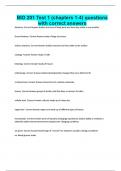
BIO 201 Test 1 (chapters 1-4) questions with correct answers
BIO 201 Test 1 (chapters 1-4) questions with correct answers Anatomy -Correct Answer-studies structure of body parts and how they relate to one another Gross Anatomy -Correct Answer-study of large structures surface anatomy -Correct Answer-studies structures as they relate to the surface cytology -Correct Answer-study of cells histology -Correct Answer-study of tissues embryology -Correct Answer-studies developmental changes that occur before birth chemical level -Correct Answer-atoms form to combine molecules tissues -Correct Answer-groups of similar cells that have a common function cellular level -Correct Answer-cells are made up of molecules organ level -Correct Answer-organs are made up of different types of tissues homeostasis -Correct Answer-point of dynamic (changing) equilibrium; body's ability to maintain a relatively stable internal environment despite ever changing conditions set point -Correct Answer-level/range of "normal" for whatever variable is being considered ex: blood glucose levels receptor -Correct Answer-sensor that monitors environment and responds to changes by sending information to the control center control center -Correct Answer-determines set point; analyzes input and determines appropriate response effector -Correct Answer-provides means for control center's response to the stimulus What is the correct order of the components of the loops for homeostasis? -Correct Answer-stimulus, receptor, afferent pathway, control center, efferent pathway, effector, response Negative feedback -Correct Answer-once stimulus occurs, and the control center and effector return the body to the normal position, stimuli stop as to not over-fix the problem ex: blood glucose-once glucose levels return to normal, the stimulus for either raising blood glucose or lowering it ends Negative feedback is the most common occurrance of homeostatic balancing Positive fee
Document information
- Uploaded on
- October 11, 2024
- Number of pages
- 9
- Written in
- 2024/2025
- Type
- Exam (elaborations)
- Contains
- Questions & answers