
10/11/24, 11:01 AM
Exam 1 Nur 200 Critical thinking
Jeremiah
Terms in this set (128)
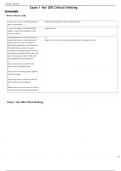
A nurse who uses an incorrect diagnostic identifying the piroblem, which is a labeling error
label is not accurately..........
A nurse who selects a diagnostic label clustering error
based on incorrectly grouped clinical
criteria is making a
A new graduate nurse is working with an a.
experienced nurse to chart assessment Data on the chart can sometimes be documented in a biased manner
findings. The new nurse notes that the
physical therapist wrote on the chart that
the patient is lazy and did not want to
participate in assigned therapies this AM.
The experienced nurse asks the new nurse
what may be going on here. What is the
best explanation for this statement?
a.
Data on the chart can sometimes be
documented in a biased manne
b.
Data on the chart changes as the patient's
condition changes.
c.
Data on the chart is usually accurate and
can be verified from the patient.
d.
Reading the chart is not a wise use of time
as this can be time consuming and tedious.
Exam 1 Nur 200 Critical thinking
1/8
, 10/11/24, 11:01 AM
- No experience
-lacks confidence to demonstrate
Benners stages of Clinical competence
-requires verbal/ physical cues
Stage 1: Novice (beginner)
- unable to use discretionary judgement
- practices in prolonged timing
- marginally acceptable performance
-prior experience in actual situations
Benners stages of clinical competence -Skillful in parts of practice
Stage 2: Advanced Beginner -Requires occasional cues
-Still developing knowledge
- may/ may not be within delayed timing
-2-3 years experience in situations
-demonstrates efficiency, coordination and confidence
Benners stages of clinical competence
-establishes plans on perspective
Stage 2: Competent
-can base plans of conscious, abstract and analytical skills of problems
-care completed in suitable time frame
- perceives situation as whole not choppy
-can perceive meaning in terms of long term goals
Benners stages of clinical competence
-experienced in what to expect in events and how to modify plans in response
Stage 4: Proficient
- holistic understanding helps the decision making
- knows what's more important in situations yielding less labor
-has intuitive grasp on each situation
-zeroes in with accuracy on problems
Benners stages of clinical competence
-doesn't waste time on unfruitful alternate diagnoses and solutions
Stage 5: the Expert
- deep understanding, fluid, flexible, highly proficient
- high skilled analytic abilities necessary when other nurses have had no experience
In ADPIE the "A" stands for assessment in NOTICING
which the nurse will Gather, Review and The nurse would gather data, notice info and look for patterns
Verify data. She identifies patterns,
clustering or organizing data. In tanners
model this would be compared to....
In ADPIE the "D" and "P" stands for INTERPRETING
diagnoses and planning. The nurse will Where the nurse processes info, identifies problems, determine what data is relevant
identify problems and risk, prioritize and what's not she then makes deductions and forms opinion based off her analysis
implementations and plan care to reach
goal/ outcome for the patient.
In tanners model this compares to
In ADPIE the "I" stands for RESPONDING the nurse selects course of action, determines priorities, criteria to
IMPLEMENTATION in which the nurse evaluate actions
carries out the plans that were identified in
the planning stage in tanners this compares
to
In ADPIE the "E" stands for EVALUATION in REFLECTING in which the nurse collects evaluation data and determines if situation
which the nurse determines if the first 4 improved, what went wrong/ right or what she can change in the future
steps of process have met goals then she
reassess and revises if needed in Tanners
this compares to
refers to the nurses understandings of patient responses to nursing actions while
Reflection in action
care is occurring
reflection on action happens after the patient care occurs
Exam 1 Nur 200 Critical thinking
2/8
Exam 1 Nur 200 Critical thinking
Jeremiah
Terms in this set (128)
A nurse who uses an incorrect diagnostic identifying the piroblem, which is a labeling error
label is not accurately..........
A nurse who selects a diagnostic label clustering error
based on incorrectly grouped clinical
criteria is making a
A new graduate nurse is working with an a.
experienced nurse to chart assessment Data on the chart can sometimes be documented in a biased manner
findings. The new nurse notes that the
physical therapist wrote on the chart that
the patient is lazy and did not want to
participate in assigned therapies this AM.
The experienced nurse asks the new nurse
what may be going on here. What is the
best explanation for this statement?
a.
Data on the chart can sometimes be
documented in a biased manne
b.
Data on the chart changes as the patient's
condition changes.
c.
Data on the chart is usually accurate and
can be verified from the patient.
d.
Reading the chart is not a wise use of time
as this can be time consuming and tedious.
Exam 1 Nur 200 Critical thinking
1/8
, 10/11/24, 11:01 AM
- No experience
-lacks confidence to demonstrate
Benners stages of Clinical competence
-requires verbal/ physical cues
Stage 1: Novice (beginner)
- unable to use discretionary judgement
- practices in prolonged timing
- marginally acceptable performance
-prior experience in actual situations
Benners stages of clinical competence -Skillful in parts of practice
Stage 2: Advanced Beginner -Requires occasional cues
-Still developing knowledge
- may/ may not be within delayed timing
-2-3 years experience in situations
-demonstrates efficiency, coordination and confidence
Benners stages of clinical competence
-establishes plans on perspective
Stage 2: Competent
-can base plans of conscious, abstract and analytical skills of problems
-care completed in suitable time frame
- perceives situation as whole not choppy
-can perceive meaning in terms of long term goals
Benners stages of clinical competence
-experienced in what to expect in events and how to modify plans in response
Stage 4: Proficient
- holistic understanding helps the decision making
- knows what's more important in situations yielding less labor
-has intuitive grasp on each situation
-zeroes in with accuracy on problems
Benners stages of clinical competence
-doesn't waste time on unfruitful alternate diagnoses and solutions
Stage 5: the Expert
- deep understanding, fluid, flexible, highly proficient
- high skilled analytic abilities necessary when other nurses have had no experience
In ADPIE the "A" stands for assessment in NOTICING
which the nurse will Gather, Review and The nurse would gather data, notice info and look for patterns
Verify data. She identifies patterns,
clustering or organizing data. In tanners
model this would be compared to....
In ADPIE the "D" and "P" stands for INTERPRETING
diagnoses and planning. The nurse will Where the nurse processes info, identifies problems, determine what data is relevant
identify problems and risk, prioritize and what's not she then makes deductions and forms opinion based off her analysis
implementations and plan care to reach
goal/ outcome for the patient.
In tanners model this compares to
In ADPIE the "I" stands for RESPONDING the nurse selects course of action, determines priorities, criteria to
IMPLEMENTATION in which the nurse evaluate actions
carries out the plans that were identified in
the planning stage in tanners this compares
to
In ADPIE the "E" stands for EVALUATION in REFLECTING in which the nurse collects evaluation data and determines if situation
which the nurse determines if the first 4 improved, what went wrong/ right or what she can change in the future
steps of process have met goals then she
reassess and revises if needed in Tanners
this compares to
refers to the nurses understandings of patient responses to nursing actions while
Reflection in action
care is occurring
reflection on action happens after the patient care occurs
Exam 1 Nur 200 Critical thinking
2/8


