
Blok 3 probleem 1: Philosophy of the mind
Leerdoelen:
1. Wat zijn de verschillende opvattingen over kennis (welke filosofen/ stromingen)?
2. Welke stromingen zijn tegenwoordig nog relevant?
(Alleen informatie over Plato, Aristoteles, Descartes, Locke & Hume)
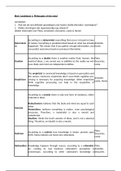
According to a determinist everything that occurs is based on laws
Determinis of nature. Everything is predetermined based on what has already Aristotle,
m happened. This means that if you gather enough information, you Hume
can predict outcomes based on previous information.
According to a dualist there is another reality (God, heaven, the Plato,
Dualism world of ideas...) we cannot see, in addition to the reality we wit- Descartes,
ness. Body and mind are independent entities. Locke
The empiricist is convinced knowledge is based on perception and
the senses. Hard-core empiricists don’t even think cognitive pro-
Aristotle,
Empiricism cessing is necessary for acquiring knowledge. Other empiricists
Locke, Hume
think cognitive processing can help in the acquisition of
knowledge.
According to a monist there is only one form of existence, either
material or ideal.
Reductionism: believes that the body and mind are equal to each
other.
Monism
Materialism: believes everything is matter, even psychological
processes. Therefore, a materialist is also a monist and
reductionist.
Idealism: thinks the truth consists of ideas, and is not a physical
thing. Therefore, an idealist is also a monist.
Plato,
According to a nativist true knowledge is innate, present upon
Nativism Descartes,
birth. Many nativists are hard-core rationalists.
Locke
Rationalism Knowledge happens through reason, according to a rationalist. Plato,
Ac- cording to real hardcore rationalist’s perception is Aristotle,
unnecessary. According to other rationalist’s knowledge is Descartes
, acquired through rea- soning about sensory
perception/perceptual observation.
Plato (ca. 427 – 347 B.C.)
Zijn geschriften zijn te verdelen in twee perioden:
1. Gedachten en methoden van zijn leraar Socrates rapporteren (Athene)
2. Na Socrates zijn dood vertrok hij naar Zuid-Italië, waar hij Pythagoreaanse invloeden
leerde. Hierna bestond zijn werk uit socratische methode met Pythagoreaanse filosofie.
Pythagoreaanse filosofie – zij geloofden dat nummers en numerieke relaties abstract zijn,
maar ook echt zijn omdat deze invloed uit kunnen oefenen op de empirische wereld.
Empirische wereld - de wereld waarin we leven.
Theory of forms or ideas – gebaseerd op pythagoreaanse filosofie. ‘Alles in de empirische
wereld is een manifestatie (waarneembaar verschijnsel) van een pure vorm’. Dit wil zeggen
dat alle waarneembare voorwerpen inferieure verschijnselen zijn van een pure vorm
(vergelijkbaar met prototype benadering van Rosch) in de abstracte wereld (kennis wereld).
Tussen de abstracte en empirische wereld zijn deze ideeën geen perfecte match, hij dacht
namelijk dat kennis al bij geboorte aanwezig is en dat deze kan ontwikkelen door redeneren.
The allegory of the cave – Plato beschrijft een gevangene die zijn leven in een grot leeft. Hij
is geketend en kan alleen maar voor zich kijken, naar een muur waar schaduwen van echte
objecten te zien zijn. Voor de gevangene zijn deze schaduwen de realiteit. Wanneer hij
ontsnapt ziet hij de wereld zoals hij echt is. Wanneer deze gevangene terug zou gaan naar de
grot zal hij moeite hebben met het herkennen van deze wereld omdat hij de echte wereld
heeft gezien. Zijn medegevangenen zullen hem een dwaas vinden en nooit uit de grot willen,
omdat hier niets goeds van zou komen. Dit verhaal is een analogie voor de realiteit die wij
ervaren. Is deze echt, of is het een schaduwwereld?
The reminiscence theory of knowledge – Pythagoreanen geloofden in onsterflijkheid van de
ziel. Plato stelt dat, voordat de ziel het lichaam in ging, deze leefde tussen alle andere
vormen en hierdoor kennis over deze vormen heeft. De enige manier om deze kennis te
vinden is door sensorische kennis te negeren en te focussen op gedachten die de geest
binnenkomen. Alle kennis is aangeboren en kan teruggehaald worden door introspectie
(zoeken naar innerlijke ervaringen van jezelf).
The nature of the soul (tripartite soul) – De ziel heeft twee onderdelen, het irrationele
onderdeel (1. Moed 2. Eetlust (2 is vergelijkbaar met Freud’s id) onderdeel en het rationele
onderdeel (3. Kennis). Moed en eetlust zijn deel van het lichaam en om deze reden sterflijk.
Men zou de lichamelijke behoeften moeten onderdrukken en alleen focussen op hun kennis.
Deze drie onderdelen zijn hierdoor altijd in conflict. De manier waarop je dit het best kan
doen is door de ziel van het lichaam te bevrijden, niet iedereen is in staat dit te doen. Plato
creëerde voor zichzelf een wereld waarin mensen die gedomineerd worden door eetlust
slaven zijn, door moed soldaten zijn en door kennis filosoof-koningen.
Leerdoelen:
1. Wat zijn de verschillende opvattingen over kennis (welke filosofen/ stromingen)?
2. Welke stromingen zijn tegenwoordig nog relevant?
(Alleen informatie over Plato, Aristoteles, Descartes, Locke & Hume)
According to a determinist everything that occurs is based on laws
Determinis of nature. Everything is predetermined based on what has already Aristotle,
m happened. This means that if you gather enough information, you Hume
can predict outcomes based on previous information.
According to a dualist there is another reality (God, heaven, the Plato,
Dualism world of ideas...) we cannot see, in addition to the reality we wit- Descartes,
ness. Body and mind are independent entities. Locke
The empiricist is convinced knowledge is based on perception and
the senses. Hard-core empiricists don’t even think cognitive pro-
Aristotle,
Empiricism cessing is necessary for acquiring knowledge. Other empiricists
Locke, Hume
think cognitive processing can help in the acquisition of
knowledge.
According to a monist there is only one form of existence, either
material or ideal.
Reductionism: believes that the body and mind are equal to each
other.
Monism
Materialism: believes everything is matter, even psychological
processes. Therefore, a materialist is also a monist and
reductionist.
Idealism: thinks the truth consists of ideas, and is not a physical
thing. Therefore, an idealist is also a monist.
Plato,
According to a nativist true knowledge is innate, present upon
Nativism Descartes,
birth. Many nativists are hard-core rationalists.
Locke
Rationalism Knowledge happens through reason, according to a rationalist. Plato,
Ac- cording to real hardcore rationalist’s perception is Aristotle,
unnecessary. According to other rationalist’s knowledge is Descartes
, acquired through rea- soning about sensory
perception/perceptual observation.
Plato (ca. 427 – 347 B.C.)
Zijn geschriften zijn te verdelen in twee perioden:
1. Gedachten en methoden van zijn leraar Socrates rapporteren (Athene)
2. Na Socrates zijn dood vertrok hij naar Zuid-Italië, waar hij Pythagoreaanse invloeden
leerde. Hierna bestond zijn werk uit socratische methode met Pythagoreaanse filosofie.
Pythagoreaanse filosofie – zij geloofden dat nummers en numerieke relaties abstract zijn,
maar ook echt zijn omdat deze invloed uit kunnen oefenen op de empirische wereld.
Empirische wereld - de wereld waarin we leven.
Theory of forms or ideas – gebaseerd op pythagoreaanse filosofie. ‘Alles in de empirische
wereld is een manifestatie (waarneembaar verschijnsel) van een pure vorm’. Dit wil zeggen
dat alle waarneembare voorwerpen inferieure verschijnselen zijn van een pure vorm
(vergelijkbaar met prototype benadering van Rosch) in de abstracte wereld (kennis wereld).
Tussen de abstracte en empirische wereld zijn deze ideeën geen perfecte match, hij dacht
namelijk dat kennis al bij geboorte aanwezig is en dat deze kan ontwikkelen door redeneren.
The allegory of the cave – Plato beschrijft een gevangene die zijn leven in een grot leeft. Hij
is geketend en kan alleen maar voor zich kijken, naar een muur waar schaduwen van echte
objecten te zien zijn. Voor de gevangene zijn deze schaduwen de realiteit. Wanneer hij
ontsnapt ziet hij de wereld zoals hij echt is. Wanneer deze gevangene terug zou gaan naar de
grot zal hij moeite hebben met het herkennen van deze wereld omdat hij de echte wereld
heeft gezien. Zijn medegevangenen zullen hem een dwaas vinden en nooit uit de grot willen,
omdat hier niets goeds van zou komen. Dit verhaal is een analogie voor de realiteit die wij
ervaren. Is deze echt, of is het een schaduwwereld?
The reminiscence theory of knowledge – Pythagoreanen geloofden in onsterflijkheid van de
ziel. Plato stelt dat, voordat de ziel het lichaam in ging, deze leefde tussen alle andere
vormen en hierdoor kennis over deze vormen heeft. De enige manier om deze kennis te
vinden is door sensorische kennis te negeren en te focussen op gedachten die de geest
binnenkomen. Alle kennis is aangeboren en kan teruggehaald worden door introspectie
(zoeken naar innerlijke ervaringen van jezelf).
The nature of the soul (tripartite soul) – De ziel heeft twee onderdelen, het irrationele
onderdeel (1. Moed 2. Eetlust (2 is vergelijkbaar met Freud’s id) onderdeel en het rationele
onderdeel (3. Kennis). Moed en eetlust zijn deel van het lichaam en om deze reden sterflijk.
Men zou de lichamelijke behoeften moeten onderdrukken en alleen focussen op hun kennis.
Deze drie onderdelen zijn hierdoor altijd in conflict. De manier waarop je dit het best kan
doen is door de ziel van het lichaam te bevrijden, niet iedereen is in staat dit te doen. Plato
creëerde voor zichzelf een wereld waarin mensen die gedomineerd worden door eetlust
slaven zijn, door moed soldaten zijn en door kennis filosoof-koningen.


