
EUNICE
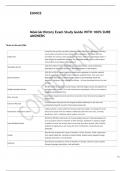
MGA GA History Exam Study Guide WITH 100% SURE
ANSWERS
Terms in this set (206)
A machine that quickly and easily separates cotton fibers from their seeds, enabling
much greater productivity than manual cotton separation. The fibers are then
Cotton Gin processed into various cotton goods such as linens, while any undamaged cotton is
used largely for textiles like clothing. The separated seeds may be used to grow
more cotton or to produce cottonseed oil.
1000 BC to 900 AD trends during this period sedentariness, social stratification,
Woodland Period
elaboration of ritual and ceremony, and intensification of horticulture.
1000 BC to 300 BC ceramic cooking vessels were upgraded to a sturdier material
with the use of sand and grit temper (replaced vegetable fiber). Pots were more
Early Woodland elaborately decorated. Sumpweed was added to domesticated plants like
goosefoot, maygrass, knot weed and sunflower.... all were developed during the Late
Archaic.
300 BC to 600 BC significant social change; planned villages (cicular arrangement as
Middle Woodland Period many as twenty houses). Corn was introduced to southeastern US but not a staple in
Georgians diets at this time.
small dome shaped structures served as burial sites. Some functioned as stages for
Rock mounds
ceremonies.
In southwestern Georgia were the largest woodland settlement in the state and
Kolomoki Mounds
contatined at least 8 mounds (7 have been preserved).
trading network; marine shell from the Gulf coast was traded in exchange for exotic
Hopewellian Interaction Sphere stones and cooper from the midwest. Additional trade items like rocks, minerals,
gemstones, chert, crystalline quartz, galena, and mica.
600 AD to 900 AD construction of mound building slowed. Trade decreased and
corn agriculture became important in North Georgia. Projectiles or weapons began
Late Woodland Period to appear the bow and arrows used to hunt deer and other animals. More Fortified
settlements appeared as well during this time. Fortification include ditches and
palisades.
West Africans accepted the name of islanders in South Carolina. Gullah coast spans
Gullah from Sandy Island So. Carolina to Amelia Florida. Gullah culture passed through
language, agriculture, and spirituality.
West Africans accepted the name of islanders in Georgia. Geechee culture passed
Geechee
through language, agriculture, and spirituality.
1/9
, The Gullah-Geechee Cultural Heritage Corridor is a federal National Heritage Area
in the United States, representing the significant story of the Gullah-Geechee people
Gullah and Geechee Culture
for maintaining their cultural traditions, and for being a reflection of the values of
ingenuity, pride, and perseverance.
Established in Georgia 1732 primarly to help British Citizens create a mercantile
Board of Trustees
system to supply England with agricultural products.
The penal colony of the Province of Georgia under James Oglethorpe banned
slavery in 1735, the only one of the thirteen colonies to have done so. However, it
Antislavery Law
was legalized by royal decree in 1751, in part due to George Whitefield's support for
the institution of slavery.
Georgia became successful in competing economically with other slaved based rice
economies along the Eastern seaboard. Due to the fact that they imported slaves
Winward Coast (Rice Coast) from the Winward Coast of West Africa. Most of the slaves were from Senegambia (
now Senegal and Gambia), Sierra Leone, and Liberia. Rice, indigo, and cotton were
indigenous to the region.
Lorenzo Dow Turner Linguist who publised Gullah dilect lexicon "Africanisims in the Gullah Dialect" in 1949.
Thousands of slaves from Georgia and South Carolina remained loyal to the British
after the American Revolution 1775 - 83. Some migrated to Novia Scotia Canada and
Migration
gained freedom. Many returned to Sierra Leone in 1791 and established Freetown
(Captial).
The southeastern ring shout is probably the oldest surviving African American
performance tradition on the North American continent. It continues to be
performed in a black community in McIntosh County on Georgia's coast. This
McIntosh County Shouters compelling fusion of counterclockwise dancelike movement, call-and-response
singing, and percussion (in the form of hand-clapping and a stick beating a drumlike
rhythm on a wooden floor) is clearly African in its origins. The ring shout affirms
oneness with the Spirit and with ancestors as well as community cohesiveness.
emerged in a process of ethnogenesis from various Native American groups who
settled in Florida in the 18th century, most significantly northern Muscogee (Creeks)
Seminole Nation from what is now Georgia and Alabama.[1] The word "Seminole" is derived from the
Creek word simanó-li, which may itself be derived from the Spanish word cimarrón,
meaning "runaway" or "wild one".
Founded by the Spanish in 1526 in an area that is now part of Georgia, this settlement
was led by Lucas Vasquez de Allyon. It survived less than a year due to malaria,
San Miguel de Gualdape mutiny among settlers, an Indian attack and a slave rebellion. However, before
Allyon's death his positive reports encouraged more Spaniards to come to the New
World.
Commanded 600 Spanish soldiers and marched them from Florida to southwestern
Georgia. His expedition 1539 - 43 his travels were the only at the time to chronicle
Hernado de Soto Native American chiefdom across the interior of the southeastern U.S. However, the
expedition brought with it plague and diseases that wiped out massive populations
of Native Americans.
a Spanish admiral and explorer from the region of Asturias, Spain, who is
Pedro Menendez de Aviles remembered for planning the first regular trans-oceanic convoys and for founding
St. Augustine, Florida, in 1565.
22 December 1696 - 30 June 1785 was a British general, Member of Parliament,
James Edward Oglethorpe philanthropist, and founder of the colony of Georgia. As a social reformer, he hoped
to resettle Britain's poor, especially those in debtors' prisons, in the New World.
2/9
MGA GA History Exam Study Guide WITH 100% SURE
ANSWERS
Terms in this set (206)
A machine that quickly and easily separates cotton fibers from their seeds, enabling
much greater productivity than manual cotton separation. The fibers are then
Cotton Gin processed into various cotton goods such as linens, while any undamaged cotton is
used largely for textiles like clothing. The separated seeds may be used to grow
more cotton or to produce cottonseed oil.
1000 BC to 900 AD trends during this period sedentariness, social stratification,
Woodland Period
elaboration of ritual and ceremony, and intensification of horticulture.
1000 BC to 300 BC ceramic cooking vessels were upgraded to a sturdier material
with the use of sand and grit temper (replaced vegetable fiber). Pots were more
Early Woodland elaborately decorated. Sumpweed was added to domesticated plants like
goosefoot, maygrass, knot weed and sunflower.... all were developed during the Late
Archaic.
300 BC to 600 BC significant social change; planned villages (cicular arrangement as
Middle Woodland Period many as twenty houses). Corn was introduced to southeastern US but not a staple in
Georgians diets at this time.
small dome shaped structures served as burial sites. Some functioned as stages for
Rock mounds
ceremonies.
In southwestern Georgia were the largest woodland settlement in the state and
Kolomoki Mounds
contatined at least 8 mounds (7 have been preserved).
trading network; marine shell from the Gulf coast was traded in exchange for exotic
Hopewellian Interaction Sphere stones and cooper from the midwest. Additional trade items like rocks, minerals,
gemstones, chert, crystalline quartz, galena, and mica.
600 AD to 900 AD construction of mound building slowed. Trade decreased and
corn agriculture became important in North Georgia. Projectiles or weapons began
Late Woodland Period to appear the bow and arrows used to hunt deer and other animals. More Fortified
settlements appeared as well during this time. Fortification include ditches and
palisades.
West Africans accepted the name of islanders in South Carolina. Gullah coast spans
Gullah from Sandy Island So. Carolina to Amelia Florida. Gullah culture passed through
language, agriculture, and spirituality.
West Africans accepted the name of islanders in Georgia. Geechee culture passed
Geechee
through language, agriculture, and spirituality.
1/9
, The Gullah-Geechee Cultural Heritage Corridor is a federal National Heritage Area
in the United States, representing the significant story of the Gullah-Geechee people
Gullah and Geechee Culture
for maintaining their cultural traditions, and for being a reflection of the values of
ingenuity, pride, and perseverance.
Established in Georgia 1732 primarly to help British Citizens create a mercantile
Board of Trustees
system to supply England with agricultural products.
The penal colony of the Province of Georgia under James Oglethorpe banned
slavery in 1735, the only one of the thirteen colonies to have done so. However, it
Antislavery Law
was legalized by royal decree in 1751, in part due to George Whitefield's support for
the institution of slavery.
Georgia became successful in competing economically with other slaved based rice
economies along the Eastern seaboard. Due to the fact that they imported slaves
Winward Coast (Rice Coast) from the Winward Coast of West Africa. Most of the slaves were from Senegambia (
now Senegal and Gambia), Sierra Leone, and Liberia. Rice, indigo, and cotton were
indigenous to the region.
Lorenzo Dow Turner Linguist who publised Gullah dilect lexicon "Africanisims in the Gullah Dialect" in 1949.
Thousands of slaves from Georgia and South Carolina remained loyal to the British
after the American Revolution 1775 - 83. Some migrated to Novia Scotia Canada and
Migration
gained freedom. Many returned to Sierra Leone in 1791 and established Freetown
(Captial).
The southeastern ring shout is probably the oldest surviving African American
performance tradition on the North American continent. It continues to be
performed in a black community in McIntosh County on Georgia's coast. This
McIntosh County Shouters compelling fusion of counterclockwise dancelike movement, call-and-response
singing, and percussion (in the form of hand-clapping and a stick beating a drumlike
rhythm on a wooden floor) is clearly African in its origins. The ring shout affirms
oneness with the Spirit and with ancestors as well as community cohesiveness.
emerged in a process of ethnogenesis from various Native American groups who
settled in Florida in the 18th century, most significantly northern Muscogee (Creeks)
Seminole Nation from what is now Georgia and Alabama.[1] The word "Seminole" is derived from the
Creek word simanó-li, which may itself be derived from the Spanish word cimarrón,
meaning "runaway" or "wild one".
Founded by the Spanish in 1526 in an area that is now part of Georgia, this settlement
was led by Lucas Vasquez de Allyon. It survived less than a year due to malaria,
San Miguel de Gualdape mutiny among settlers, an Indian attack and a slave rebellion. However, before
Allyon's death his positive reports encouraged more Spaniards to come to the New
World.
Commanded 600 Spanish soldiers and marched them from Florida to southwestern
Georgia. His expedition 1539 - 43 his travels were the only at the time to chronicle
Hernado de Soto Native American chiefdom across the interior of the southeastern U.S. However, the
expedition brought with it plague and diseases that wiped out massive populations
of Native Americans.
a Spanish admiral and explorer from the region of Asturias, Spain, who is
Pedro Menendez de Aviles remembered for planning the first regular trans-oceanic convoys and for founding
St. Augustine, Florida, in 1565.
22 December 1696 - 30 June 1785 was a British general, Member of Parliament,
James Edward Oglethorpe philanthropist, and founder of the colony of Georgia. As a social reformer, he hoped
to resettle Britain's poor, especially those in debtors' prisons, in the New World.
2/9


