
EUNICE
GCSU GA HISTORY EXAM FULL WITH 100% SURE
ANSWERS
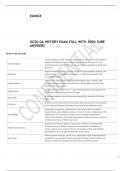
Terms in this set (228)
moved to Georgia in 1784, held many political offices, and was very instrumental in
obtaining the charter for the University of Georgia; played a pivotal role in the
Abraham Baldwin
Constitutional Convention in 1787, and was one of the two Georgians to sign the final
document
fought in the Battle of Burke County Jail, served in the state legislative sessions, and
William Few took part in the 1777 constitutional convention; in 1780 he was elected to the
Continental Congress
veteran of the Continental army during the Revolutionary War (1775-83); after
George Mathews moving to Georgia he quickly rose to service as a state legislator, governor, and
member of the U.S. Congress
served in both the Georgia and U.S. House of Representatives; twice elected to the
George Troup
U.S. Senate; also served as governor of Georgia
an American academic, journalist and government official; president of UGA from
Josiah Meigs
1801 - 1810
American inventor best known for inventing the cotton gin (one of the key inventions
Eli Whitney
of the Industrial Revolution and shaped the economy of the Antebellum South)
held positions as governor, congressman for four terms in the U.S. House of
Representatives, and president pro tempore in the U.S. Senate; principal figure in the
John Milledge organization of the University of Georgia (on the committee that decided the
location of the institution, and he later purchased and donated the land on which the
university and the town of Athens now stand)
prepared one of the early digests of Georgia law; elected to the Georgia State
Senate, then the U.S. Senate - where he rose to the position of President pro
William Harris Crawford
tempore; also served as minister to France and Secretary of War under President
James Madison, then was appointed Secretary of the Treasury
attorney general of Georgia; served in the United States House of Representatives
John Forsyth and Senate on two separate occasions; governor of Georgia; minister to Spain; U.S.
Secretary of State under Presidents Andrew Jackson and Martin Van Buren
1/7
, fought in the War of 1812 and concurrent Indian campaigns; served in the Georgia
George Gilmer and U.S. House of Representatives; governor of Georgia during the Cherokee Indian
Removal (Trail of Tears)
served in both the Georgia and U.S. House of Representatives, as governor of
Georgia, and as a U.S. Senator; acted as U.S. Commissioner to the Cherokee Indians,
Wilson Lumpkin
and member of the commission to finalize Georgia/Florida boundary; one of the
founders of the Western and Atlantic Railroad
served as congressman, Speaker of the U.S. House of Representatives, governor of
Georgia, and secretary of the treasury; following Georgia's secession from the Union
Howell Cobb
in 1861, he served as president of the Provisional Confederate Congress (1861-62) and
a major general of the Confederate army
twice served as a judge in Georgia; served one term each as a U.S. Senator and as
Herschel Johnson governor of Georgia; unsuccessful candidate for Vice President in 1860; served as a
Georgia Senator in the Confederate Congress
play a pivotal role in many of the political crises of his time, including the Civil War;
while personally opposed to slavery (calling it "that abominable human tragedy"), he
Alexander Stephens
was also an ardent supporter of states' rights -- which led him to defend slavery
when other politicians attacked the institution
one of the most ardent secessionists in the U.S. Senate, helped to lead Georgia out
Robert Toombs
of the Union on the eve of the Civil War
Civil War governor of Georgia; one of the most successful politicians in the state's
Joseph Brown
history
principal chief of the Cherokee Nation in 1827; presided over the nation during the
John Ross apex of its development in the Southeast, the tragic Trail of Tears, and the
subsequent rebuilding of the nation in Indian Territory
led the Cherokee "Treaty Party," which signed a removal agreement at New Echota in
Major and John Ridge 1835; all four leaders were marked for execution by members of the John Ross party
in 1839
Sequoyah creator of the Cherokee syllabary
formally educated Cherokee who became the editor of the Cherokee Phoenix, the
Elias Boudinot
first Native American newspaper in the United States
published Georgia's first important literary work, Georgia Scenes, Characters,
Augustus Baldwin Longstreet
Incidents, Etc. in the First Half Century of the Republic
Crawford W. Long first to perform surgeries using sulfuric ether anesthesia
career United States Army officer, and then a general in the Confederate States Army
Braxton Bragg —a principal commander in the Western Theater of the American Civil War and later
the military adviser to the Confederate President Jefferson Davis
a career U.S. Army officer, serving with distinction in the Mexican-American War and
Joseph E. Johnston Seminole Wars, and was also one of the most senior general officers in the
Confederate States Army during the American Civil War
served as a General in the Union Army during the American Civil War (1861-65), for
which he received recognition for his outstanding command of military strategy as
William Tecumseh Sherman
well as criticism for the harshness of the "scorched earth" policies that he
implemented in conducting total war against the Confederate States
a Swiss-born Confederate officer in the American Civil War; best known for his
command of Camp Sumter, the Confederate prisoner of war camp near
Henry Wirz
Andersonville, Georgia; he was tried and executed after the war for conspiracy and
murder relating to his command of the camp
2/7
GCSU GA HISTORY EXAM FULL WITH 100% SURE
ANSWERS
Terms in this set (228)
moved to Georgia in 1784, held many political offices, and was very instrumental in
obtaining the charter for the University of Georgia; played a pivotal role in the
Abraham Baldwin
Constitutional Convention in 1787, and was one of the two Georgians to sign the final
document
fought in the Battle of Burke County Jail, served in the state legislative sessions, and
William Few took part in the 1777 constitutional convention; in 1780 he was elected to the
Continental Congress
veteran of the Continental army during the Revolutionary War (1775-83); after
George Mathews moving to Georgia he quickly rose to service as a state legislator, governor, and
member of the U.S. Congress
served in both the Georgia and U.S. House of Representatives; twice elected to the
George Troup
U.S. Senate; also served as governor of Georgia
an American academic, journalist and government official; president of UGA from
Josiah Meigs
1801 - 1810
American inventor best known for inventing the cotton gin (one of the key inventions
Eli Whitney
of the Industrial Revolution and shaped the economy of the Antebellum South)
held positions as governor, congressman for four terms in the U.S. House of
Representatives, and president pro tempore in the U.S. Senate; principal figure in the
John Milledge organization of the University of Georgia (on the committee that decided the
location of the institution, and he later purchased and donated the land on which the
university and the town of Athens now stand)
prepared one of the early digests of Georgia law; elected to the Georgia State
Senate, then the U.S. Senate - where he rose to the position of President pro
William Harris Crawford
tempore; also served as minister to France and Secretary of War under President
James Madison, then was appointed Secretary of the Treasury
attorney general of Georgia; served in the United States House of Representatives
John Forsyth and Senate on two separate occasions; governor of Georgia; minister to Spain; U.S.
Secretary of State under Presidents Andrew Jackson and Martin Van Buren
1/7
, fought in the War of 1812 and concurrent Indian campaigns; served in the Georgia
George Gilmer and U.S. House of Representatives; governor of Georgia during the Cherokee Indian
Removal (Trail of Tears)
served in both the Georgia and U.S. House of Representatives, as governor of
Georgia, and as a U.S. Senator; acted as U.S. Commissioner to the Cherokee Indians,
Wilson Lumpkin
and member of the commission to finalize Georgia/Florida boundary; one of the
founders of the Western and Atlantic Railroad
served as congressman, Speaker of the U.S. House of Representatives, governor of
Georgia, and secretary of the treasury; following Georgia's secession from the Union
Howell Cobb
in 1861, he served as president of the Provisional Confederate Congress (1861-62) and
a major general of the Confederate army
twice served as a judge in Georgia; served one term each as a U.S. Senator and as
Herschel Johnson governor of Georgia; unsuccessful candidate for Vice President in 1860; served as a
Georgia Senator in the Confederate Congress
play a pivotal role in many of the political crises of his time, including the Civil War;
while personally opposed to slavery (calling it "that abominable human tragedy"), he
Alexander Stephens
was also an ardent supporter of states' rights -- which led him to defend slavery
when other politicians attacked the institution
one of the most ardent secessionists in the U.S. Senate, helped to lead Georgia out
Robert Toombs
of the Union on the eve of the Civil War
Civil War governor of Georgia; one of the most successful politicians in the state's
Joseph Brown
history
principal chief of the Cherokee Nation in 1827; presided over the nation during the
John Ross apex of its development in the Southeast, the tragic Trail of Tears, and the
subsequent rebuilding of the nation in Indian Territory
led the Cherokee "Treaty Party," which signed a removal agreement at New Echota in
Major and John Ridge 1835; all four leaders were marked for execution by members of the John Ross party
in 1839
Sequoyah creator of the Cherokee syllabary
formally educated Cherokee who became the editor of the Cherokee Phoenix, the
Elias Boudinot
first Native American newspaper in the United States
published Georgia's first important literary work, Georgia Scenes, Characters,
Augustus Baldwin Longstreet
Incidents, Etc. in the First Half Century of the Republic
Crawford W. Long first to perform surgeries using sulfuric ether anesthesia
career United States Army officer, and then a general in the Confederate States Army
Braxton Bragg —a principal commander in the Western Theater of the American Civil War and later
the military adviser to the Confederate President Jefferson Davis
a career U.S. Army officer, serving with distinction in the Mexican-American War and
Joseph E. Johnston Seminole Wars, and was also one of the most senior general officers in the
Confederate States Army during the American Civil War
served as a General in the Union Army during the American Civil War (1861-65), for
which he received recognition for his outstanding command of military strategy as
William Tecumseh Sherman
well as criticism for the harshness of the "scorched earth" policies that he
implemented in conducting total war against the Confederate States
a Swiss-born Confederate officer in the American Civil War; best known for his
command of Camp Sumter, the Confederate prisoner of war camp near
Henry Wirz
Andersonville, Georgia; he was tried and executed after the war for conspiracy and
murder relating to his command of the camp
2/7


