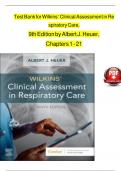
Test Bank for Wilkins’ Clinical Assessment in Re
5 5 5 5 5 5 5
spiratory Care,
5
9th Edition by Albert J. Heuer,
5 5 5 5 5
Chapters 1 - 21 5 5 5
,Wilkins'5Clinical5Assessment5in5Respiratory5Care,
Contents:
Chapter51.5Preparing5for5the5Patient5Encounter
Chapter52.5The5Medical5History5and5the5Interview
Chapter53.5Cardiopulmonary5Symptoms
Chapter54.5Vital5Signs
Chapter55.5Fundamentals5of5Physical5Examination
Chapter56.5Neurologic5Assessment
Chapter57.5Clinical5Laboratory5Studies
Chapter58.5Interpretation5of5Blood5Gases
Chapter59.5Pulmonary5Function5Testing
Chapter510.5Chest5Imaging
Chapter511.5Electrocardiography
Chapter512.5Neonatal5and5Pediatric5Assessment
Chapter513.5Older5Patient5Assessment
Chapter514.5Monitoring5in5Critical5Care
Chapter515.5Vascular5Pressure5Monitoring
Chapter516.5Cardiac5Output5Measurement
Chapter517.5Bronchoscopy
Chapter518.5Nutritional5Assessment
Chapter519.5Sleep5and5Breathing5Assessment
Chapter520.5Home5Care5Patient5Assessment
Chapter521.5Documentation
,Chapter51:5Preparing5for5the5Patient5Encounter5Tes
t5Bank
MULTIPLE5CHOICE
1. Which5of5the5following5activities5is5not5part5of5the5role5of5respiratory5therapists5(RTs)5in
5patient5assessment?
a. Assist5the5physician5with5diagnostic5reasoning5skills.
b. Help5the5physician5select5appropriate5pulmonary5function5tests.
c. Interpret5arterial5blood5gas5values5and5suggest5mechanical5ventilation5changes.
d. Document5the5patient5diagnosis5in5the5patient’s5chart.
ANSWER:5 D
RTs5are5not5qualified5to5make5an5official5diagnosis.5This5is5the5role5of5the5attending5physician.
REF:5 Table51-1,5pg.54 OBJ:5 5 9
2. In5which5of5the5following5stages5of5patient–
clinician5interaction5is5the5review5of5physician5orders5carried5out?
a. Treatment5stage
b. Introductory5stage
c. Preinteraction5stage
d. Initial5assessment5stage
ANSWER:5 C
Physician5orders5should5be5reviewed5in5the5patient’s5chart5before5the5physician5sees5the5patien
t.
REF:5 Table51-1,5pg.54 OBJ:5 5 9
3. In5which5stage5of5patient–clinician5interaction5is5the5patient5identification5bracelet5checked?
a. Introductory5stage
b. Preinteraction5stage
c. Initial5assessment5stage
d. Treatment5stage
ANSWER:5 A
The5patient5ID5bracelet5must5be5checked5before5moving5forward5with5assessment5and5treatme
nt.
REF:5 Table51-1,5pg.54 OBJ:5 5 9
4. What5should5be5done5just5before5the5patient’s5ID5bracelet5is5checked?
a. Check5the5patient’s5SpO2.
b. Ask5the5patient5for5permission.
c. Check5the5chart5for5vital5signs.
d. Listen5to5breath5sounds.
ANSWER:5 B
It5is5considered5polite5to5ask5the5patient5for5permission5before5touching5and5reading5his5or5her
5ID5bracelet.
, REF:5 5 pg.53 OBJ:5 5 35|55
5. What5is5the5goal5of5the5introductory5phase?
a. Assess5the5patient’s5apparent5age.
b. Identify5the5patient’s5family5history.
c. Determine5the5patient’s5diagnosis.
d. Establish5a5rapport5with5the5patient.
ANSWER:5 D
The5introductory5phase5is5all5about5getting5to5know5the5patient5and5establishing5a5rapport5with5hi
m5or5her.
REF:5 Table51-1,5pg.54 OBJ:5 5 3
6. Which5of5the5following5behaviors5is5not5consistent5with5resistive5behavior5of5a5patient?
a. Crossed5arms
b. Minimal5eye5contact
c. Brief5answers5to5questions
d. Asking5the5purpose5of5the5treatment
ANSWER:5 D
If5a5patient5asks5about5the5purpose5of5the5treatment5you5are5about5to5give,5this5generally5indic
ates5that5he5or5she5is5not5upset.
REF:5 Table51-1,5pg.54 OBJ:5 5 3
7. What5is5the5main5purpose5of5the5initial5assessment5stage?
a. To5identify5any5allergies5to5medications
b. To5document5the5patient’s5smoking5history
c. To5personally5get5to5know5the5patient5better
d. To5verify5that5the5prescribed5treatment5is5still5needed5and5appropriate
ANSWER:5 D
When5you5first5see5the5patient,5you5are5encouraged5to5perform5a5brief5assessment5to5make5sure
5the5treatment5order5by5the5physician5is5still5appropriate.5The5patient’s5status5may5have5change
d5abruptly5recently.
REF:5 Table51-1,5pg.54 OBJ:5 5 3
8. What5is5the5appropriate5distance5for5the5social5space5from5the5patient?
a. 35to555feet
b. 45to5125feet
c. 65to5185feet
d. 85to5205feet
ANSWER:5 B
The5social5space5is545to5125feet.
REF:5 5 pg.55 OBJ:5 5 5
9. What5is5the5appropriate5distance5for5the5personal5space?
5 5 5 5 5 5 5
spiratory Care,
5
9th Edition by Albert J. Heuer,
5 5 5 5 5
Chapters 1 - 21 5 5 5
,Wilkins'5Clinical5Assessment5in5Respiratory5Care,
Contents:
Chapter51.5Preparing5for5the5Patient5Encounter
Chapter52.5The5Medical5History5and5the5Interview
Chapter53.5Cardiopulmonary5Symptoms
Chapter54.5Vital5Signs
Chapter55.5Fundamentals5of5Physical5Examination
Chapter56.5Neurologic5Assessment
Chapter57.5Clinical5Laboratory5Studies
Chapter58.5Interpretation5of5Blood5Gases
Chapter59.5Pulmonary5Function5Testing
Chapter510.5Chest5Imaging
Chapter511.5Electrocardiography
Chapter512.5Neonatal5and5Pediatric5Assessment
Chapter513.5Older5Patient5Assessment
Chapter514.5Monitoring5in5Critical5Care
Chapter515.5Vascular5Pressure5Monitoring
Chapter516.5Cardiac5Output5Measurement
Chapter517.5Bronchoscopy
Chapter518.5Nutritional5Assessment
Chapter519.5Sleep5and5Breathing5Assessment
Chapter520.5Home5Care5Patient5Assessment
Chapter521.5Documentation
,Chapter51:5Preparing5for5the5Patient5Encounter5Tes
t5Bank
MULTIPLE5CHOICE
1. Which5of5the5following5activities5is5not5part5of5the5role5of5respiratory5therapists5(RTs)5in
5patient5assessment?
a. Assist5the5physician5with5diagnostic5reasoning5skills.
b. Help5the5physician5select5appropriate5pulmonary5function5tests.
c. Interpret5arterial5blood5gas5values5and5suggest5mechanical5ventilation5changes.
d. Document5the5patient5diagnosis5in5the5patient’s5chart.
ANSWER:5 D
RTs5are5not5qualified5to5make5an5official5diagnosis.5This5is5the5role5of5the5attending5physician.
REF:5 Table51-1,5pg.54 OBJ:5 5 9
2. In5which5of5the5following5stages5of5patient–
clinician5interaction5is5the5review5of5physician5orders5carried5out?
a. Treatment5stage
b. Introductory5stage
c. Preinteraction5stage
d. Initial5assessment5stage
ANSWER:5 C
Physician5orders5should5be5reviewed5in5the5patient’s5chart5before5the5physician5sees5the5patien
t.
REF:5 Table51-1,5pg.54 OBJ:5 5 9
3. In5which5stage5of5patient–clinician5interaction5is5the5patient5identification5bracelet5checked?
a. Introductory5stage
b. Preinteraction5stage
c. Initial5assessment5stage
d. Treatment5stage
ANSWER:5 A
The5patient5ID5bracelet5must5be5checked5before5moving5forward5with5assessment5and5treatme
nt.
REF:5 Table51-1,5pg.54 OBJ:5 5 9
4. What5should5be5done5just5before5the5patient’s5ID5bracelet5is5checked?
a. Check5the5patient’s5SpO2.
b. Ask5the5patient5for5permission.
c. Check5the5chart5for5vital5signs.
d. Listen5to5breath5sounds.
ANSWER:5 B
It5is5considered5polite5to5ask5the5patient5for5permission5before5touching5and5reading5his5or5her
5ID5bracelet.
, REF:5 5 pg.53 OBJ:5 5 35|55
5. What5is5the5goal5of5the5introductory5phase?
a. Assess5the5patient’s5apparent5age.
b. Identify5the5patient’s5family5history.
c. Determine5the5patient’s5diagnosis.
d. Establish5a5rapport5with5the5patient.
ANSWER:5 D
The5introductory5phase5is5all5about5getting5to5know5the5patient5and5establishing5a5rapport5with5hi
m5or5her.
REF:5 Table51-1,5pg.54 OBJ:5 5 3
6. Which5of5the5following5behaviors5is5not5consistent5with5resistive5behavior5of5a5patient?
a. Crossed5arms
b. Minimal5eye5contact
c. Brief5answers5to5questions
d. Asking5the5purpose5of5the5treatment
ANSWER:5 D
If5a5patient5asks5about5the5purpose5of5the5treatment5you5are5about5to5give,5this5generally5indic
ates5that5he5or5she5is5not5upset.
REF:5 Table51-1,5pg.54 OBJ:5 5 3
7. What5is5the5main5purpose5of5the5initial5assessment5stage?
a. To5identify5any5allergies5to5medications
b. To5document5the5patient’s5smoking5history
c. To5personally5get5to5know5the5patient5better
d. To5verify5that5the5prescribed5treatment5is5still5needed5and5appropriate
ANSWER:5 D
When5you5first5see5the5patient,5you5are5encouraged5to5perform5a5brief5assessment5to5make5sure
5the5treatment5order5by5the5physician5is5still5appropriate.5The5patient’s5status5may5have5change
d5abruptly5recently.
REF:5 Table51-1,5pg.54 OBJ:5 5 3
8. What5is5the5appropriate5distance5for5the5social5space5from5the5patient?
a. 35to555feet
b. 45to5125feet
c. 65to5185feet
d. 85to5205feet
ANSWER:5 B
The5social5space5is545to5125feet.
REF:5 5 pg.55 OBJ:5 5 5
9. What5is5the5appropriate5distance5for5the5personal5space?