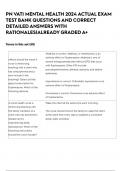
PN VATI MENTAL HEALTH 2024 ACTUAL EXAM
TEST BANK QUESTIONS AND CORRECT
DETAILED ANSWERS WITH
RATIONALES|ALREADY GRADED A+
Terms in this set (50)
Akathisia is correct. Akathisia, or restlessness, is an
adverse effect of fluphenazine. Akathisia is one of
effects should the nurse A
several extrapyramidal side effects (EPS) that occur
nurse is reinforcing
with fluphenazine. Other EPS include
teaching with a client who
pseudoparkinsonism, akinesia, dystonia, and tardive
has schizophrenia and a
dyskinesia.
new include in the
teaching? (Select all that
Hypotension is correct. Orthostatic hypotension is an
apply.) prescription for
adverse effect of fluphenazine.
fluphenazine. Which of the
following adverse
Drowsiness is correct. Drowsiness is an adverse effect
of fluphenazine.
A home health nurse is Wake the client at the same time each morming.
reinforcing teaching with
the family members of a The nurse should instruct the family to wake the client
client who has Alzheimer's at the same time every day to establish a consistent
disease and is sleep-wake schedule.
experiencing sleep
disturbances. Which of the
following instructions
should the nurse include?
,A nurse in a long-term Ask the client's family what their favorite beverages
care facility is caring for a are.
client who has dementia
and cannot verbalize their Nurses develop therapeutic relationships with clients
wants and needs. The over time and can include family members of the
client refuses to drink client when planning care. The nurse should advocate
liquids provided on meal for the client by attempting to find out their
trays. Which of the preferences so the dietary and nursing staff can
following actions by the provide preferred beverages at meals.
nurse demonstrates
advocacy?
, The right to retract previously provided consent is
correct. The client has the right to retract consent for
treatment or therapies, whether written or verbal.
However, this is dependent on the client's level of
competency, because a client who is deemed
incompetent is unable to make their own health care
decisions.
The right to receive individualized care is correct. The
client has the right to treatment, which includes
receiving high-quality care and being involved in their
own care in order to collaborate on treatment
A nurse is admitting a
decisions.
client to a mental health
unit. The nurse should
The right to refuse psychotropic medications is
inform the client that they
correct. The client has the right to refuse treatment
have which of the
and medications, including psychotropic medications.
following rights? (Select
The client might receive emergency psychotropic
all that apply.)
medications if they are an imminent danger to
themselves or others. However, a court of law must
then determine if the client can receive additional
psychotropic medication against their will.
The right to the least restrictive environment is
correct. Federal law states that a client has the right to
treatment, including the right to the least restrictive
environment. Physical or chemical restraints or
seclusion should be implemented when other
methods of intervention are ineffective and the client
is a danger to themselves or others.
TEST BANK QUESTIONS AND CORRECT
DETAILED ANSWERS WITH
RATIONALES|ALREADY GRADED A+
Terms in this set (50)
Akathisia is correct. Akathisia, or restlessness, is an
adverse effect of fluphenazine. Akathisia is one of
effects should the nurse A
several extrapyramidal side effects (EPS) that occur
nurse is reinforcing
with fluphenazine. Other EPS include
teaching with a client who
pseudoparkinsonism, akinesia, dystonia, and tardive
has schizophrenia and a
dyskinesia.
new include in the
teaching? (Select all that
Hypotension is correct. Orthostatic hypotension is an
apply.) prescription for
adverse effect of fluphenazine.
fluphenazine. Which of the
following adverse
Drowsiness is correct. Drowsiness is an adverse effect
of fluphenazine.
A home health nurse is Wake the client at the same time each morming.
reinforcing teaching with
the family members of a The nurse should instruct the family to wake the client
client who has Alzheimer's at the same time every day to establish a consistent
disease and is sleep-wake schedule.
experiencing sleep
disturbances. Which of the
following instructions
should the nurse include?
,A nurse in a long-term Ask the client's family what their favorite beverages
care facility is caring for a are.
client who has dementia
and cannot verbalize their Nurses develop therapeutic relationships with clients
wants and needs. The over time and can include family members of the
client refuses to drink client when planning care. The nurse should advocate
liquids provided on meal for the client by attempting to find out their
trays. Which of the preferences so the dietary and nursing staff can
following actions by the provide preferred beverages at meals.
nurse demonstrates
advocacy?
, The right to retract previously provided consent is
correct. The client has the right to retract consent for
treatment or therapies, whether written or verbal.
However, this is dependent on the client's level of
competency, because a client who is deemed
incompetent is unable to make their own health care
decisions.
The right to receive individualized care is correct. The
client has the right to treatment, which includes
receiving high-quality care and being involved in their
own care in order to collaborate on treatment
A nurse is admitting a
decisions.
client to a mental health
unit. The nurse should
The right to refuse psychotropic medications is
inform the client that they
correct. The client has the right to refuse treatment
have which of the
and medications, including psychotropic medications.
following rights? (Select
The client might receive emergency psychotropic
all that apply.)
medications if they are an imminent danger to
themselves or others. However, a court of law must
then determine if the client can receive additional
psychotropic medication against their will.
The right to the least restrictive environment is
correct. Federal law states that a client has the right to
treatment, including the right to the least restrictive
environment. Physical or chemical restraints or
seclusion should be implemented when other
methods of intervention are ineffective and the client
is a danger to themselves or others.