TestnbanknfornWong'snNursingnCarenofnInfantsnandnChildrenn11thnEditionnbynHoc
k1enberrynChaptern1-34
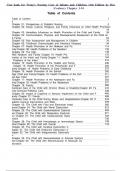
Tablen ofnContents
TablenofnContent 1
s
Chaptern01:nPerspectivesnofnPediatricnNursing 2
Chaptern02:nSocial,nCultural,nReligious,nandnFamilynInfluencesnonnChildnHealthnPromotion
18
Chaptern03:nHereditarynInfluencesnonnHealthnPromotionnofnthenChildnandnFamily 36
Chaptern04:nCommunication,nPhysical,nandnDevelopmentalnAssessmentnofnthenChildnan
dnFamily 54
Chaptern05:nPainnAssessmentnandnManagementninnChildren 76
Chaptern06:nChildhoodnCommunicablenandnInfectiousnDiseases 94
Chaptern07:nHealthnPromotionnofnthenNewbornnandnFa 114
milynChaptern08:nHealthnProblemsnofnthenNewborn 132
Chaptern09:nThenHigh- 148
RisknNewbornnandnFamilynChaptern10:nHealthnPro 173
motionnofnthenInfantnandnFamilynChaptern11:nHealth 194
nProblemsnofnthenInfant 215
Chaptern12:nHealthnPromotionnofnthenToddlernandnFamily 236
nChaptern13:nHealthnPromotionnofnthenPreschoolernandnF 254
amilynChaptern14:nHealthnProblemsnofnEarlynChildhood 272
Chaptern15:nHealthnPromotionnofnthenSchool- 292
AgenChildnandnFamilynChaptern16:nHealthnProblemsnofnthenSch 311
ool-AgenChild 327
Chaptern17:nHealthnPromotionnofnthenAdolescentnandnFa 355
milynChaptern18:nHealthnProblemsnofnthenAdolescent 377
Chaptern19:nFamily- 395
CenterednCarenofnthenChildnwithnChronicnIllnessnornDisabilitynChaptern20:nFa 416
mily-CenterednPalliativenCare 436
Chaptern20:nImpactnofnCognitivenornSensorynImpairmentnonnthenChildnandnF 460
amilynChaptern21:nFamily- 489
CenterednCarenofnthenChildnDuringnIllnessnandnHospitalizationnChaptern22:nP 518
ediatricnNursingnInterventionsnandnSkills 549
Chaptern23:nThenChildnwithnFluidnandnElectrolytenImbal 582
ancenChaptern24:nThenChildnwithnRenalnDysfunction 613
Chaptern25:nThenChildnwithnGastrointestinalnDysfunct 643
ionnChaptern26:nThenChildnwithnRespiratorynDysfuncti 671
onnChaptern27:nThenChildnwithnCardiovascularnDysfu 702
nction 730
Chaptern28:nThenChildnwithnHematologicnornImmunologicnDysfun 749
ctionnChaptern29:nThenChildnwithnCancer 778
Chaptern30:nThenChildnwithnCerebralnDysfunctionnC
haptern31:nThenChildnwithnEndocrinenDysfunctionnC
haptern32:nThenChildnwithnIntegumentarynDysfunctio
n
Chaptern33:nThenChildnwithnMusculoskeletalnornArticularnDysfunc
tionnChaptern34:nThenChildnwithnNeuromuscularnornMuscularnDy
sfunction
,TestnbanknfornWong'snNursingnCarenofnInfantsnandnChildrenn11thnEditionnbynHoc
k2enberrynChaptern1-34
Chaptern01:nPerspectivesnofnPediatricnNursing
MULTIPLEnCHOICE
1. ThenclinicnnursenisnreviewingnstatisticsnonninfantnmortalitynfornthenUnitednStatesnversusnothern
countries.nComparednwithnotherncountriesnthatnhavenanpopulationnofnatnleastn25nmillion,nthennu
rsenmakesnwhichndetermination?
a. ThenUnitednStatesnisnrankednlastnamongn27ncountries.
b. ThenUnitednStatesnisnrankednsimilarnton20notherndevelopedncountries.
c. ThenUnitednStatesnisnrankedninnthenmiddlenofn20notherndevelopedncountries.
d. ThenUnitednStatesnisnrankednhighestnamongn27nothernindustrializedncountries.
ANS:nA
Althoughnthendeathnratenhasndecreased,nthenUnitednStatesnstillnranksnlastninninfantnmortalitynamongnnat
ionsnwithnanpopulationnofnatnleastn25nmillion.nThenUnitednStatesnhasnthenhighestninfantndeathnratenof
ndevelopednnations.
DIF:nCognitivenLevel:nRemembering
TOP:nNursingnProcess:nAssessmentnMSC:nClientnNeeds:nHealthnPromotionnandnMaintenance
2. Whichnisnthenleadingncausenofndeathninninfantsnyoungernthann1nyearninnthenUnitednStates?
a. Congenitalnanomalies
b. Suddenninfantndeathnsyndrome
c. Disordersnrelatedntonshortngestationnandnlownbirthnweight
d. Maternalncomplicationsnspecificntonthenperinatalnperi
odnANS:nA
Congenitalnanomaliesnaccountnforn20.1%nofndeathsninninfantsnyoungernthann1nyearncomparednwithnsudden
ninfantndeathnsyndrome,nwhichnaccountsnforn8.2%;ndisordersnrelatedntonshortngestationnandnunspecified
nlownbirthnweight,nwhichnaccountnforn16.5%;nandnmaternalncomplicationsnsuchnasninfectionsnspecificnt
onthenperinatalnperiod,nwhichnaccountnforn6.1%nofndeathsninninfantsnyoungernthann1nyearnofnage.
DIF:nCognitivenLevel:nRemembering
MSC:nClientnNeeds:nHealthnPromotionnandnMaintenance
3. Whatnisnthenmajorncausenofndeathnfornchildrennoldernthann1nyearninnthenUnitednStates?
a. Heartndisease
,TestnbanknfornWong'snNursingnCarenofnInfantsnandnChildrenn11thnEditionnbynHoc
k3enberrynChaptern1-34
b. Childhoodncancer
c. Unintentionalninjuries
d. Congenitalnanomalie
snANS:nC
Unintentionalninjuriesn(accidents)narenthenleadingncausenofndeathnafternagen1nyearnthroughnadolescence.
nThenleadingncausenofndeathnfornthosenyoungernthann1nyearnisncongenitalnanomalies,nandnchildhoodncance
rsnandnheartndiseasencausenansignificantlynlowernpercentagenofndeathsninnchildrennoldernthann1nyearnofn
age.
DIF:nCognitivenLevel:nUnderstanding
MSC:nClientnNeeds:nHealthnPromotionnandnMaintenance
4. Innadditionntoninjuries,nwhatnarenthenleadingncausesnofndeathninnadolescentsnagesn15nton19nyears?
a. Suicidenandncancer
b. Suicidenandnhomicide
c. Drowningn andn cancer
d. Homicidenandnheartndisea
senANS:nB
Suicidenandnhomicidenaccountnforn16.7%nofndeathsninnthisnagengroup.nSuicidenandncancernaccountnforn1
0.9%nofndeaths,nheartndiseasenandncancernaccountnfornapproximatelyn5.5%,nandnhomicidenandnheartndise
asenaccountnforn10.9%nofnthendeathsninnthisnagengroup.
DIF:nCognitivenLevel:nRemembering
MSC:nClientnNeeds:nHealthnPromotionnandnMaintenance
5. Thennursenisnplanningnanteachingnsessionntonadolescentsnaboutndeathsnbynunintentionalninjuries.nWhic
hnshouldnthennursenincludeninnthensessionnwithnregardntondeathsncausednbyninjuries?
a. Morendeathsnoccurninnmales.
b. Morendeathsnoccurninnfemales.
c. Thenpatternnofndeathsndoesnnotnvarynaccordingntonagenandnsex.
d. Thenpatternnofndeathsndoesnnotnvarynwidelynamongndifferentnethnicngroups.
ANS:nA
Thenmajoritynofndeathsnfromnunintentionalninjuriesnoccurninnmales.nThenpatternnofndeathndoesnvaryngreatl
y
, TestnbanknfornWong'snNursingnCarenofnInfantsnandnChildrenn11thnEditionnbynHoc
k4enberrynChaptern1-34
amongndifferentnethnicngroups,nandnthencausesnofnunintentionalndeathsnvarynwithnagenandnge
nder.nDIF:nCognitivenLevel:nApplying
TOP:nIntegratednProcess:nTeaching/Learning
MSC:nClientnNeeds:nHealthnPromotionnandnMaintenance
6. Whatndonmortalitynstatisticsndescribe?
a. Diseasenoccurringnregularlynwithinnangeographicnlocation
b. Thennumbernofnindividualsnwhonhavendiednovernanspecificnperiod
c. Thenprevalencenofnspecificnillnessninnthenpopulationnatnanparticularntime
d. Diseasenoccurringninnmorenthannthennumbernofnexpectedncasesninnancom
munitynANS:nB
Mortalitynstatisticsnreferntonthennumbernofnindividualsnwhonhavendiednovernanspecificnperiod.
Morbiditynstatisticsnshownthenprevalencenofnspecificnillnessninnthenpopulationnatnanparticularntime.n
Datanregardingndiseasenwithinnangeographicnregion,norninngreaternthannexpectednnumbersninnancommun
ity,nmaynbenextrapolatednfromnanalyzingnthenmorbiditynstatistics.
DIF:nCognitivenLevel:nRemembering
MSC:nClientnNeeds:nHealthnPromotionnandnMaintenance
7. Thennursenshouldnassessnwhichnagengroupnfornsuicidenideationnsincensuicideninnwhichnagengroupni
snthenthirdnleadingncausenofndeath?
a. Preschoolers
b. Youngnschoolnage
c. Middlenschoolnage
d. Latenschoolnagenandnadolesce
ntsnANS:nD
Suicidenisnthenthirdnleadingncausenofndeathninnchildrennagesn10nton19nyears;ntherefore,nthenagengroupn
shouldnbenlatenschoolnagenandnadolescents.nSuicidenisnnotnonenofnthenleadingncausesnofndeathnfornpres
choolnandnyoungnornmiddlenschool-agednchildren.
DIF:nCognitivenLevel:nUnderstanding
TOP:nNursingnProcess:nAssessmentnMSC:nClientnNeeds:nHealthnPromotionnandnMaintenance
8. Parentsnofnanhospitalizedntoddlernasknthennurse,nWhatnisnmeantnbynfamily-
centeredncare?nThennursenshouldnrespondnwithnwhichnstatement?
k1enberrynChaptern1-34
Tablen ofnContents
TablenofnContent 1
s
Chaptern01:nPerspectivesnofnPediatricnNursing 2
Chaptern02:nSocial,nCultural,nReligious,nandnFamilynInfluencesnonnChildnHealthnPromotion
18
Chaptern03:nHereditarynInfluencesnonnHealthnPromotionnofnthenChildnandnFamily 36
Chaptern04:nCommunication,nPhysical,nandnDevelopmentalnAssessmentnofnthenChildnan
dnFamily 54
Chaptern05:nPainnAssessmentnandnManagementninnChildren 76
Chaptern06:nChildhoodnCommunicablenandnInfectiousnDiseases 94
Chaptern07:nHealthnPromotionnofnthenNewbornnandnFa 114
milynChaptern08:nHealthnProblemsnofnthenNewborn 132
Chaptern09:nThenHigh- 148
RisknNewbornnandnFamilynChaptern10:nHealthnPro 173
motionnofnthenInfantnandnFamilynChaptern11:nHealth 194
nProblemsnofnthenInfant 215
Chaptern12:nHealthnPromotionnofnthenToddlernandnFamily 236
nChaptern13:nHealthnPromotionnofnthenPreschoolernandnF 254
amilynChaptern14:nHealthnProblemsnofnEarlynChildhood 272
Chaptern15:nHealthnPromotionnofnthenSchool- 292
AgenChildnandnFamilynChaptern16:nHealthnProblemsnofnthenSch 311
ool-AgenChild 327
Chaptern17:nHealthnPromotionnofnthenAdolescentnandnFa 355
milynChaptern18:nHealthnProblemsnofnthenAdolescent 377
Chaptern19:nFamily- 395
CenterednCarenofnthenChildnwithnChronicnIllnessnornDisabilitynChaptern20:nFa 416
mily-CenterednPalliativenCare 436
Chaptern20:nImpactnofnCognitivenornSensorynImpairmentnonnthenChildnandnF 460
amilynChaptern21:nFamily- 489
CenterednCarenofnthenChildnDuringnIllnessnandnHospitalizationnChaptern22:nP 518
ediatricnNursingnInterventionsnandnSkills 549
Chaptern23:nThenChildnwithnFluidnandnElectrolytenImbal 582
ancenChaptern24:nThenChildnwithnRenalnDysfunction 613
Chaptern25:nThenChildnwithnGastrointestinalnDysfunct 643
ionnChaptern26:nThenChildnwithnRespiratorynDysfuncti 671
onnChaptern27:nThenChildnwithnCardiovascularnDysfu 702
nction 730
Chaptern28:nThenChildnwithnHematologicnornImmunologicnDysfun 749
ctionnChaptern29:nThenChildnwithnCancer 778
Chaptern30:nThenChildnwithnCerebralnDysfunctionnC
haptern31:nThenChildnwithnEndocrinenDysfunctionnC
haptern32:nThenChildnwithnIntegumentarynDysfunctio
n
Chaptern33:nThenChildnwithnMusculoskeletalnornArticularnDysfunc
tionnChaptern34:nThenChildnwithnNeuromuscularnornMuscularnDy
sfunction
,TestnbanknfornWong'snNursingnCarenofnInfantsnandnChildrenn11thnEditionnbynHoc
k2enberrynChaptern1-34
Chaptern01:nPerspectivesnofnPediatricnNursing
MULTIPLEnCHOICE
1. ThenclinicnnursenisnreviewingnstatisticsnonninfantnmortalitynfornthenUnitednStatesnversusnothern
countries.nComparednwithnotherncountriesnthatnhavenanpopulationnofnatnleastn25nmillion,nthennu
rsenmakesnwhichndetermination?
a. ThenUnitednStatesnisnrankednlastnamongn27ncountries.
b. ThenUnitednStatesnisnrankednsimilarnton20notherndevelopedncountries.
c. ThenUnitednStatesnisnrankedninnthenmiddlenofn20notherndevelopedncountries.
d. ThenUnitednStatesnisnrankednhighestnamongn27nothernindustrializedncountries.
ANS:nA
Althoughnthendeathnratenhasndecreased,nthenUnitednStatesnstillnranksnlastninninfantnmortalitynamongnnat
ionsnwithnanpopulationnofnatnleastn25nmillion.nThenUnitednStatesnhasnthenhighestninfantndeathnratenof
ndevelopednnations.
DIF:nCognitivenLevel:nRemembering
TOP:nNursingnProcess:nAssessmentnMSC:nClientnNeeds:nHealthnPromotionnandnMaintenance
2. Whichnisnthenleadingncausenofndeathninninfantsnyoungernthann1nyearninnthenUnitednStates?
a. Congenitalnanomalies
b. Suddenninfantndeathnsyndrome
c. Disordersnrelatedntonshortngestationnandnlownbirthnweight
d. Maternalncomplicationsnspecificntonthenperinatalnperi
odnANS:nA
Congenitalnanomaliesnaccountnforn20.1%nofndeathsninninfantsnyoungernthann1nyearncomparednwithnsudden
ninfantndeathnsyndrome,nwhichnaccountsnforn8.2%;ndisordersnrelatedntonshortngestationnandnunspecified
nlownbirthnweight,nwhichnaccountnforn16.5%;nandnmaternalncomplicationsnsuchnasninfectionsnspecificnt
onthenperinatalnperiod,nwhichnaccountnforn6.1%nofndeathsninninfantsnyoungernthann1nyearnofnage.
DIF:nCognitivenLevel:nRemembering
MSC:nClientnNeeds:nHealthnPromotionnandnMaintenance
3. Whatnisnthenmajorncausenofndeathnfornchildrennoldernthann1nyearninnthenUnitednStates?
a. Heartndisease
,TestnbanknfornWong'snNursingnCarenofnInfantsnandnChildrenn11thnEditionnbynHoc
k3enberrynChaptern1-34
b. Childhoodncancer
c. Unintentionalninjuries
d. Congenitalnanomalie
snANS:nC
Unintentionalninjuriesn(accidents)narenthenleadingncausenofndeathnafternagen1nyearnthroughnadolescence.
nThenleadingncausenofndeathnfornthosenyoungernthann1nyearnisncongenitalnanomalies,nandnchildhoodncance
rsnandnheartndiseasencausenansignificantlynlowernpercentagenofndeathsninnchildrennoldernthann1nyearnofn
age.
DIF:nCognitivenLevel:nUnderstanding
MSC:nClientnNeeds:nHealthnPromotionnandnMaintenance
4. Innadditionntoninjuries,nwhatnarenthenleadingncausesnofndeathninnadolescentsnagesn15nton19nyears?
a. Suicidenandncancer
b. Suicidenandnhomicide
c. Drowningn andn cancer
d. Homicidenandnheartndisea
senANS:nB
Suicidenandnhomicidenaccountnforn16.7%nofndeathsninnthisnagengroup.nSuicidenandncancernaccountnforn1
0.9%nofndeaths,nheartndiseasenandncancernaccountnfornapproximatelyn5.5%,nandnhomicidenandnheartndise
asenaccountnforn10.9%nofnthendeathsninnthisnagengroup.
DIF:nCognitivenLevel:nRemembering
MSC:nClientnNeeds:nHealthnPromotionnandnMaintenance
5. Thennursenisnplanningnanteachingnsessionntonadolescentsnaboutndeathsnbynunintentionalninjuries.nWhic
hnshouldnthennursenincludeninnthensessionnwithnregardntondeathsncausednbyninjuries?
a. Morendeathsnoccurninnmales.
b. Morendeathsnoccurninnfemales.
c. Thenpatternnofndeathsndoesnnotnvarynaccordingntonagenandnsex.
d. Thenpatternnofndeathsndoesnnotnvarynwidelynamongndifferentnethnicngroups.
ANS:nA
Thenmajoritynofndeathsnfromnunintentionalninjuriesnoccurninnmales.nThenpatternnofndeathndoesnvaryngreatl
y
, TestnbanknfornWong'snNursingnCarenofnInfantsnandnChildrenn11thnEditionnbynHoc
k4enberrynChaptern1-34
amongndifferentnethnicngroups,nandnthencausesnofnunintentionalndeathsnvarynwithnagenandnge
nder.nDIF:nCognitivenLevel:nApplying
TOP:nIntegratednProcess:nTeaching/Learning
MSC:nClientnNeeds:nHealthnPromotionnandnMaintenance
6. Whatndonmortalitynstatisticsndescribe?
a. Diseasenoccurringnregularlynwithinnangeographicnlocation
b. Thennumbernofnindividualsnwhonhavendiednovernanspecificnperiod
c. Thenprevalencenofnspecificnillnessninnthenpopulationnatnanparticularntime
d. Diseasenoccurringninnmorenthannthennumbernofnexpectedncasesninnancom
munitynANS:nB
Mortalitynstatisticsnreferntonthennumbernofnindividualsnwhonhavendiednovernanspecificnperiod.
Morbiditynstatisticsnshownthenprevalencenofnspecificnillnessninnthenpopulationnatnanparticularntime.n
Datanregardingndiseasenwithinnangeographicnregion,norninngreaternthannexpectednnumbersninnancommun
ity,nmaynbenextrapolatednfromnanalyzingnthenmorbiditynstatistics.
DIF:nCognitivenLevel:nRemembering
MSC:nClientnNeeds:nHealthnPromotionnandnMaintenance
7. Thennursenshouldnassessnwhichnagengroupnfornsuicidenideationnsincensuicideninnwhichnagengroupni
snthenthirdnleadingncausenofndeath?
a. Preschoolers
b. Youngnschoolnage
c. Middlenschoolnage
d. Latenschoolnagenandnadolesce
ntsnANS:nD
Suicidenisnthenthirdnleadingncausenofndeathninnchildrennagesn10nton19nyears;ntherefore,nthenagengroupn
shouldnbenlatenschoolnagenandnadolescents.nSuicidenisnnotnonenofnthenleadingncausesnofndeathnfornpres
choolnandnyoungnornmiddlenschool-agednchildren.
DIF:nCognitivenLevel:nUnderstanding
TOP:nNursingnProcess:nAssessmentnMSC:nClientnNeeds:nHealthnPromotionnandnMaintenance
8. Parentsnofnanhospitalizedntoddlernasknthennurse,nWhatnisnmeantnbynfamily-
centeredncare?nThennursenshouldnrespondnwithnwhichnstatement?