

The Three Certainties - Intention
- 3 certainties is needed for a valid trust.
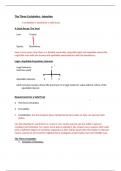
A Quick Recap: The Trust
Law: Trustee
Equity: Beneficiary
Have a trust every time there is a divided ownership, especially legal and equitable ownership.
Legal title rests with the trustee and equitable ownership lies with the beneficiary.
Legal v Equitable Proprietary Interests
Legal Interests: X
bind the world
Equitable Interests: X Y Z
bind everyone except a bona fide purchaser of a legal estate for value without notice of the
equitable interest.
Requirements for a Valid Trust
o The three certainties
o Formalities
o Constitution- has the property been transferred to the trustee so they can exercise their
duties.
Use this checklist to see if there is a trust or not. Courts want to see the settlor’s (person
creating trust) intention. For courts to be able to uphold it, the creator has to express their wish
with a sufficient degree of certainty. Important as they will be dead when the matter is relevant.
Courts used to be strict and the slightest bit of ambiguity would matter, but more flexible now.
The Three Certainties
1. Certainty of intention.
, a. Did the settlor intend to create a trust?
2. Certainty of subject-matter.
a. Is the property or interest due to the beneficiary under the trust identifiable and
certain? Do we know exactly what the beneficiaries are meant to receive?
3. Certainty of objects.
a. Is it clear who the beneficiaries are?
Knight v Knight (1840) 3 Beav 148
Rationale
The three certainties are required in order:
To ensure that the wishes of the settlor or testator are capable of being implemented as
often can’t go back and ask them;
To avoid fraud; and
To ensure that the trust is enforceable (both in law and practice).
Certainty of Intention
The key issue here is:
did the person in question intend to create a trust or merely make a gift?
It doesn’t matter if the creator has never heard of a ‘trust’ or even realised that they were
creating one, if they intend for the legal and equitable ownership to be separated and to
impose a duty on the legal owner to look after the property for the benefit of the equitable
owner then they intend to create a trust.
Are they transferring the property for it to be looked after by someone else? Doesn’t matter
if they don’t label it as a trust.
Substance, not form
The courts will look to:
what was said and
what was done.
Equity looks to the substance and not the form.
The courts also take an objective view of the circumstances and are more concerned with
what the reasonable person would conclude that the creator of the trust intended (not what
they subjectively intended).
Certainty of Intention: The Objective Test
- 3 certainties is needed for a valid trust.
A Quick Recap: The Trust
Law: Trustee
Equity: Beneficiary
Have a trust every time there is a divided ownership, especially legal and equitable ownership.
Legal title rests with the trustee and equitable ownership lies with the beneficiary.
Legal v Equitable Proprietary Interests
Legal Interests: X
bind the world
Equitable Interests: X Y Z
bind everyone except a bona fide purchaser of a legal estate for value without notice of the
equitable interest.
Requirements for a Valid Trust
o The three certainties
o Formalities
o Constitution- has the property been transferred to the trustee so they can exercise their
duties.
Use this checklist to see if there is a trust or not. Courts want to see the settlor’s (person
creating trust) intention. For courts to be able to uphold it, the creator has to express their wish
with a sufficient degree of certainty. Important as they will be dead when the matter is relevant.
Courts used to be strict and the slightest bit of ambiguity would matter, but more flexible now.
The Three Certainties
1. Certainty of intention.
, a. Did the settlor intend to create a trust?
2. Certainty of subject-matter.
a. Is the property or interest due to the beneficiary under the trust identifiable and
certain? Do we know exactly what the beneficiaries are meant to receive?
3. Certainty of objects.
a. Is it clear who the beneficiaries are?
Knight v Knight (1840) 3 Beav 148
Rationale
The three certainties are required in order:
To ensure that the wishes of the settlor or testator are capable of being implemented as
often can’t go back and ask them;
To avoid fraud; and
To ensure that the trust is enforceable (both in law and practice).
Certainty of Intention
The key issue here is:
did the person in question intend to create a trust or merely make a gift?
It doesn’t matter if the creator has never heard of a ‘trust’ or even realised that they were
creating one, if they intend for the legal and equitable ownership to be separated and to
impose a duty on the legal owner to look after the property for the benefit of the equitable
owner then they intend to create a trust.
Are they transferring the property for it to be looked after by someone else? Doesn’t matter
if they don’t label it as a trust.
Substance, not form
The courts will look to:
what was said and
what was done.
Equity looks to the substance and not the form.
The courts also take an objective view of the circumstances and are more concerned with
what the reasonable person would conclude that the creator of the trust intended (not what
they subjectively intended).
Certainty of Intention: The Objective Test


