
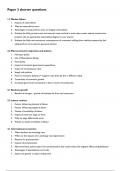
Paper 3 shorter questions
1.3 Market failure
1. Impacts of externalities
2. Why do externalities occur
3. Advantages of using indirect taxes to mitigate externalities
4. Evaluate the likely private costs and external costs involved in such major power station construction
projects. Use an appropriate externalities diagram in your answer
5. Evaluate the likely microeconomic consequences of consumers shifting from vehicles powered by fuel
obtained from oil to electric-powered vehicles
2.6 Macroeconomic objectives and policies
1. Monetary policy
2. Use of Quantitative Easing
3. Fiscal policy
4. Impact of increased government expenditure
5. Impact of increasing tax rates
6. Supply side policies
7. Fiscal vs monetary policies (+ supply in case they ask this in different ways)
8. Constraints of economic growth
9. Increased government investment in dams / factors of production
3.1 Business growth
1. Benefits of mergers / growth of business for firms and consumers
3.5 Labour market
1. Factors influencing demand of labour
2. Factors influencing supply of labour
3. Causes of immobility of labour
4. Impact of minimum wage on firms
5. Why do wage differentials occur
6. Policies to tackle immobility of labour
4.1 International economics
1. What devalues the exchange rate
2. What are the impacts of an exchange rate depreciation
3. Reasons for protectionism
4. Impacts of protectionism
5. Macroeconomic policies apart from protectionism that could reduce the negative effects of globalisation
6. Advantages of specialisation and trade
7. Export led growth vs import led growth
,4.3 Emerging and developing countries
1. Results of primary product dependency
2. Benefits of aid
3. Causes of income inequality
4. Benefits of micro finance
5. Factors inhibiting growth of industry in developing countries
4.5 Role of the
1. With reference to the information provided and your own knowledge, evaluate the macroeconomic effects
of a government policy of cutting public expenditure rather than raising taxes as a means of reducing a fiscal
deficit
2. Does reducing the fiscal deficit align with UKs economic goals
3. Impact of a large fiscal deficit and national debt
4. Policies to increase international competitiveness
5. Does expansionary monetary policy in advanced economies reduce the trade competitiveness of developing
economies?
6. Policies to respond to increasing commodity prices
7. Consequences of a fall in the global oil prices
8. Structural vs fiscal deficit more serious
9. Policies to control global companies
,Why do externalities occur
1. Negative production externalities
- Eg Pollution - marginal society cost is greater than the marginal private cost
- Loss of economic / social welfare - usually because the costs or benefits that the market gives to individuals
or businesses diverge from the costs or the benefits of society as a whole
2. Positive consumption externalities
- Eg education / healthcare - marginal social benefit is greater than the marginal private benefit
- Positive externalities of consumption is when an individual or firm consumes a good or service, and this
action provides a benefit to an unrelated third part
, Advantages of using indirect taxes to mitigate externalities
1. Tradable permits - involve giving firms a legal right to pollute a
certain amount - if the firm produces less pollution it can sell its
pollution permits to other firms - however if it produces more
pollution it has to buy permits from other firms or the government
- pollution permits have a similar goal to the carbon tax - they both
aim to increase the cost of producing pollution and create an
incentive to reduce the quantity of pollution - eg China’s national
cap-and-trade program and the Sulphur Trading scheme 1990
Evaluation - for global pollution permits, countries who pollute more than
their quotas can simply buy permits from other countries. Therefore rich developed countries can simply buy
permits from less developed countries. This does not significantly reduce pollution but shifts it from the richer
countries to poorer countries
2. Taxation - carbon taxes and Pigouvian taxes - taxes on the amount of
pollution or emissions that a firm is responsible for - recorrects market
failure - removes welfare loss and removed negative externalities
Evaluation - government failure - asymmetric information when setting the rate
of taxation which will offset the deadweight welfare loss - tax increase may be
too small and the welfare loss may remain
1.3 Market failure
1. Impacts of externalities
2. Why do externalities occur
3. Advantages of using indirect taxes to mitigate externalities
4. Evaluate the likely private costs and external costs involved in such major power station construction
projects. Use an appropriate externalities diagram in your answer
5. Evaluate the likely microeconomic consequences of consumers shifting from vehicles powered by fuel
obtained from oil to electric-powered vehicles
2.6 Macroeconomic objectives and policies
1. Monetary policy
2. Use of Quantitative Easing
3. Fiscal policy
4. Impact of increased government expenditure
5. Impact of increasing tax rates
6. Supply side policies
7. Fiscal vs monetary policies (+ supply in case they ask this in different ways)
8. Constraints of economic growth
9. Increased government investment in dams / factors of production
3.1 Business growth
1. Benefits of mergers / growth of business for firms and consumers
3.5 Labour market
1. Factors influencing demand of labour
2. Factors influencing supply of labour
3. Causes of immobility of labour
4. Impact of minimum wage on firms
5. Why do wage differentials occur
6. Policies to tackle immobility of labour
4.1 International economics
1. What devalues the exchange rate
2. What are the impacts of an exchange rate depreciation
3. Reasons for protectionism
4. Impacts of protectionism
5. Macroeconomic policies apart from protectionism that could reduce the negative effects of globalisation
6. Advantages of specialisation and trade
7. Export led growth vs import led growth
,4.3 Emerging and developing countries
1. Results of primary product dependency
2. Benefits of aid
3. Causes of income inequality
4. Benefits of micro finance
5. Factors inhibiting growth of industry in developing countries
4.5 Role of the
1. With reference to the information provided and your own knowledge, evaluate the macroeconomic effects
of a government policy of cutting public expenditure rather than raising taxes as a means of reducing a fiscal
deficit
2. Does reducing the fiscal deficit align with UKs economic goals
3. Impact of a large fiscal deficit and national debt
4. Policies to increase international competitiveness
5. Does expansionary monetary policy in advanced economies reduce the trade competitiveness of developing
economies?
6. Policies to respond to increasing commodity prices
7. Consequences of a fall in the global oil prices
8. Structural vs fiscal deficit more serious
9. Policies to control global companies
,Why do externalities occur
1. Negative production externalities
- Eg Pollution - marginal society cost is greater than the marginal private cost
- Loss of economic / social welfare - usually because the costs or benefits that the market gives to individuals
or businesses diverge from the costs or the benefits of society as a whole
2. Positive consumption externalities
- Eg education / healthcare - marginal social benefit is greater than the marginal private benefit
- Positive externalities of consumption is when an individual or firm consumes a good or service, and this
action provides a benefit to an unrelated third part
, Advantages of using indirect taxes to mitigate externalities
1. Tradable permits - involve giving firms a legal right to pollute a
certain amount - if the firm produces less pollution it can sell its
pollution permits to other firms - however if it produces more
pollution it has to buy permits from other firms or the government
- pollution permits have a similar goal to the carbon tax - they both
aim to increase the cost of producing pollution and create an
incentive to reduce the quantity of pollution - eg China’s national
cap-and-trade program and the Sulphur Trading scheme 1990
Evaluation - for global pollution permits, countries who pollute more than
their quotas can simply buy permits from other countries. Therefore rich developed countries can simply buy
permits from less developed countries. This does not significantly reduce pollution but shifts it from the richer
countries to poorer countries
2. Taxation - carbon taxes and Pigouvian taxes - taxes on the amount of
pollution or emissions that a firm is responsible for - recorrects market
failure - removes welfare loss and removed negative externalities
Evaluation - government failure - asymmetric information when setting the rate
of taxation which will offset the deadweight welfare loss - tax increase may be
too small and the welfare loss may remain


