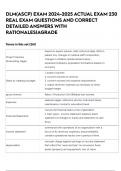
DLM(ASCP) EXAM 2024-2025 ACTUAL EXAM 230
REAL EXAM QUESTIONS AND CORRECT
DETAILED ANSWERS WITH
RATIONALES|AGRADE
Terms in this set (261)
based on expert opinion, stats, historical data, shifts in
patient mix, changes in medical staff composition,
Project Volumes
changes in inflation/reimbursement ratws,
(forecasting stage)
expansion/cutbacks, population fluctuations based on
economy
1. project volumes
2. convert volumes to revenue
Steps to creating a budget 3. convert volumes into expense requirements
4. Adjust revenue/ expenses as necessary to meet
budget margin
gross revenue Rates x Production Unit (Billable test volume)
salaries/wages, reference service, instrument lease,
Expenses
maintenance contracts, education/travel
convey the financial status of an organization
4 main types - income statement, balance sheet
Financial Statements
statement of changes in equity and statement of cash
flows.
summarizes the operations of an organization with a
income statement focus on its revenues, expenses, and profitability.
contains operational results over a period of time.
noncash charge against earnings on income statement
depreciation that reflect the "wear and tear" on a business' fixed
assets (property and equipment). loss of value
, amount received when final disposition occurs at end of
salvage value
the asset's useful life.
annual depreciation (initial cost - salvage value)/ useful life
Profit net income -expense
cashflow net income + depreciation
Net income divided by total revenues. It measures the
Total Profit Margin
amount of total profit per dollar of total revenues.
cost not related to the volume of services delivered (ex.
fixed costs facilities cost, lab admin, instrument leases, maintenance
contracts)
directly related to the volume of services delivered (ex.
variable cost
supplies, labor costs)
technique use to analyze the effects of volume changes
Profit Analysis on profit. can also be used to analyze effects of volume
changes on costs.
fixed costs + variable costs
Total Costs
Variable costs = variable cost rate x volume
difference between per unit revenue and per unit
variable cost. gives the amount left to cover the fixed
contribution margin
costs. after fixed costs are covered what's left
contributes to the profit.
Volume needed to produce zero profit. Revenues cover
all accounting costs.
accounting breakeven
Total Revenue (cost x volume) - Total Variable (variable
cost rate x volume) - fixed costs = $0
occurs when all accounting costs plus a profit target are
economic breakeven covered
total revenue - total variable cost- fixed cost = profit
used for reference/send out testing. Determine cost of
Surcharge/Cost Plus doing a procedure then add markup factor to get
appropriate price.
REAL EXAM QUESTIONS AND CORRECT
DETAILED ANSWERS WITH
RATIONALES|AGRADE
Terms in this set (261)
based on expert opinion, stats, historical data, shifts in
patient mix, changes in medical staff composition,
Project Volumes
changes in inflation/reimbursement ratws,
(forecasting stage)
expansion/cutbacks, population fluctuations based on
economy
1. project volumes
2. convert volumes to revenue
Steps to creating a budget 3. convert volumes into expense requirements
4. Adjust revenue/ expenses as necessary to meet
budget margin
gross revenue Rates x Production Unit (Billable test volume)
salaries/wages, reference service, instrument lease,
Expenses
maintenance contracts, education/travel
convey the financial status of an organization
4 main types - income statement, balance sheet
Financial Statements
statement of changes in equity and statement of cash
flows.
summarizes the operations of an organization with a
income statement focus on its revenues, expenses, and profitability.
contains operational results over a period of time.
noncash charge against earnings on income statement
depreciation that reflect the "wear and tear" on a business' fixed
assets (property and equipment). loss of value
, amount received when final disposition occurs at end of
salvage value
the asset's useful life.
annual depreciation (initial cost - salvage value)/ useful life
Profit net income -expense
cashflow net income + depreciation
Net income divided by total revenues. It measures the
Total Profit Margin
amount of total profit per dollar of total revenues.
cost not related to the volume of services delivered (ex.
fixed costs facilities cost, lab admin, instrument leases, maintenance
contracts)
directly related to the volume of services delivered (ex.
variable cost
supplies, labor costs)
technique use to analyze the effects of volume changes
Profit Analysis on profit. can also be used to analyze effects of volume
changes on costs.
fixed costs + variable costs
Total Costs
Variable costs = variable cost rate x volume
difference between per unit revenue and per unit
variable cost. gives the amount left to cover the fixed
contribution margin
costs. after fixed costs are covered what's left
contributes to the profit.
Volume needed to produce zero profit. Revenues cover
all accounting costs.
accounting breakeven
Total Revenue (cost x volume) - Total Variable (variable
cost rate x volume) - fixed costs = $0
occurs when all accounting costs plus a profit target are
economic breakeven covered
total revenue - total variable cost- fixed cost = profit
used for reference/send out testing. Determine cost of
Surcharge/Cost Plus doing a procedure then add markup factor to get
appropriate price.