

Please check the examination details below before entering your candidate information
Candidate surname Other names
Centre Number Candidate Number
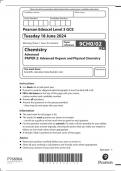
Pearson Edexcel Level 3 GCE
Tuesday 18 June 2024
Morning (Time: 1 hour 45 minutes) Paper
reference 9CH0/02
Chemistry
Advanced
PAPER 2: Advanced Organic and Physical Chemistry
You must have: Total Marks
Scientific calculator, Data Booklet, ruler
Instructions
• Use black ink or ball‑point pen.
• IfFillpencil is used for diagrams/sketches/graphs it must be dark (HB or B).
• centre number
in the boxes at the top of this page with your name,
and candidate number.
• Answer all questions.
• Answer the questions in the spaces provided
– there may be more space than you need.
Information
• The total mark for this paper is 90.
• The marks for each question are shown in brackets
– use this as a guide as to how much time to spend on each question.
• toForstructure
the question marked with an asterisk (*), marks will be awarded for your ability
your answer logically, showing the points that you make are related or
follow on from each other where appropriate.
• A Periodic Table is printed on the back cover of this paper.
Advice
• Read each question carefully before you start to answer it.
• Show all your working in calculations and include units where appropriate.
• your answers if you have time at the end.
Check
Turn over
P76896A
©2024 Pearson Education Ltd.
F:1/1/1/1/
*P76896A0132*
, Answer ALL questions.
Some questions must be answered with a cross in a box . If you change your mind about an
DO NOT WRITE IN THIS AREA DO NOT WRITE IN THIS AREA DO NOT WRITE IN THIS AREA
answer, put a line through the box and then mark your new answer with a cross .
1 This question is about organic compounds that contain a halogen atom or a
nitrogen atom.
(a) Equal amounts of four bromoalkanes were added to separate test tubes
containing 2 cm3 of a silver nitrate solution.
The mixtures were heated in a water bath.
Which bromoalkane would be the first to form a precipitate?
(1)
A 1‑bromobutane
B 2‑bromobutane
C 1‑bromo‑2‑methylpropane
D 2‑bromo‑2‑methylpropane
(b) Which pair of reactants will form an N‑substituted amide?
(1)
A CH3COCl and NH3
B CH3CH2OH and NH3
C CH3COCl and CH3NH2
D CH3CH2OH and CH3NH2
2
*P76896A0232*
, (c) Ammonia reacts with bromoethane as shown.
2NH3 + CH3CH2Br → NH4Br + CH3CH2NH2
DO NOT WRITE IN THIS AREA DO NOT WRITE IN THIS AREA DO NOT WRITE IN THIS AREA
(i) Explain, by referring to the reaction mechanism, the roles of ammonia in the
formation of each of the products of this reaction.
(3)
. . . . . . . . . . . .. .. .. .. .. .. .. .. .. .. . . . . . . . . . . . . . . . . . . . . . . . . . . . . . . . . . . . . . . . . . . . . . . . . . . . . . . . . . . . . . . . . . . . . . ............................................................................................................................................ ................ . . . . . . . . . . . . . . . . . . . .
. . . . . . . . . . . .. .. .. .. .. .. .. .. .. .. . . . . . . . . . . . . . . . . . . . . . . . . . . . . . . . . . . . . . . . . . . . . . . . . . . . . . . . . . . . . . . . . . . . . . ............................................................................................................................................ ................ . . . . . . . . . . . . . . . . . . . .
. . . . . . . . . . . .. .. .. .. .. .. .. .. .. .. . . . . . . . . . . . . . . . . . . . . . . . . . . . . . . . . . . . . . . . . . . . . . . . . . . . . . . . . . . . . . . . . . . . . . ............................................................................................................................................ ................ . . . . . . . . . . . . . . . . . . . .
. . . . . . . . . . . .. .. .. .. .. .. .. .. .. .. . . . . . . . . . . . . . . . . . . . . . . . . . . . . . . . . . . . . . . . . . . . . . . . . . . . . . . . . . . . . . . . . . . . . . ............................................................................................................................................ ................ . . . . . . . . . . . . . . . . . . . .
. . . . . . . . . . . .. .. .. .. .. .. .. .. .. .. . . . . . . . . . . . . . . . . . . . . . . . . . . . . . . . . . . . . . . . . . . . . . . . . . . . . . . . . . . . . . . . . . . . . . ............................................................................................................................................ ................ . . . . . . . . . . . . . . . . . . . .
. . . . . . . . . . . .. .. .. .. .. .. .. .. .. .. . . . . . . . . . . . . . . . . . . . . . . . . . . . . . . . . . . . . . . . . . . . . . . . . . . . . . . . . . . . . . . . . . . . . . ............................................................................................................................................ ................ . . . . . . . . . . . . . . . . . . . .
. . . . . . . . . . . .. .. .. .. .. .. .. .. .. .. . . . . . . . . . . . . . . . . . . . . . . . . . . . . . . . . . . . . . . . . . . . . . . . . . . . . . . . . . . . . . . . . . . . . . ............................................................................................................................................ ................ . . . . . . . . . . . . . . . . . . . .
(ii) What conditions are needed for this reaction?
(1)
Method of heating Solvent
A heat in a sealed tube ethanol
B heat under reflux ethanol
C heat in a sealed tube water
D heat under reflux water
3
*P76896A0332* Turn over
, (d) The halogenoalkane, 1‑bromobutane, can be formed by the reaction of
butan‑1‑ol with sodium bromide and sulfuric acid.
DO NOT WRITE IN THIS AREA DO NOT WRITE IN THIS AREA DO NOT WRITE IN THIS AREA
CH3CH2CH2CH2OH + NaBr + H2SO4 → CH3CH2CH2CH2Br + NaHSO4 + H2O
Calculate the atom economy, by mass, for the formation of 1‑bromobutane.
Give your answer to one decimal place.
[Ar values: H = 1.0 C = 12.0 O = 16.0 Na = 23.0 S = 32.1 Br = 79.9]
(2)
(Total for Question 1 = 8 marks)
4
*P76896A0432*
Candidate surname Other names
Centre Number Candidate Number
Pearson Edexcel Level 3 GCE
Tuesday 18 June 2024
Morning (Time: 1 hour 45 minutes) Paper
reference 9CH0/02
Chemistry
Advanced
PAPER 2: Advanced Organic and Physical Chemistry
You must have: Total Marks
Scientific calculator, Data Booklet, ruler
Instructions
• Use black ink or ball‑point pen.
• IfFillpencil is used for diagrams/sketches/graphs it must be dark (HB or B).
• centre number
in the boxes at the top of this page with your name,
and candidate number.
• Answer all questions.
• Answer the questions in the spaces provided
– there may be more space than you need.
Information
• The total mark for this paper is 90.
• The marks for each question are shown in brackets
– use this as a guide as to how much time to spend on each question.
• toForstructure
the question marked with an asterisk (*), marks will be awarded for your ability
your answer logically, showing the points that you make are related or
follow on from each other where appropriate.
• A Periodic Table is printed on the back cover of this paper.
Advice
• Read each question carefully before you start to answer it.
• Show all your working in calculations and include units where appropriate.
• your answers if you have time at the end.
Check
Turn over
P76896A
©2024 Pearson Education Ltd.
F:1/1/1/1/
*P76896A0132*
, Answer ALL questions.
Some questions must be answered with a cross in a box . If you change your mind about an
DO NOT WRITE IN THIS AREA DO NOT WRITE IN THIS AREA DO NOT WRITE IN THIS AREA
answer, put a line through the box and then mark your new answer with a cross .
1 This question is about organic compounds that contain a halogen atom or a
nitrogen atom.
(a) Equal amounts of four bromoalkanes were added to separate test tubes
containing 2 cm3 of a silver nitrate solution.
The mixtures were heated in a water bath.
Which bromoalkane would be the first to form a precipitate?
(1)
A 1‑bromobutane
B 2‑bromobutane
C 1‑bromo‑2‑methylpropane
D 2‑bromo‑2‑methylpropane
(b) Which pair of reactants will form an N‑substituted amide?
(1)
A CH3COCl and NH3
B CH3CH2OH and NH3
C CH3COCl and CH3NH2
D CH3CH2OH and CH3NH2
2
*P76896A0232*
, (c) Ammonia reacts with bromoethane as shown.
2NH3 + CH3CH2Br → NH4Br + CH3CH2NH2
DO NOT WRITE IN THIS AREA DO NOT WRITE IN THIS AREA DO NOT WRITE IN THIS AREA
(i) Explain, by referring to the reaction mechanism, the roles of ammonia in the
formation of each of the products of this reaction.
(3)
. . . . . . . . . . . .. .. .. .. .. .. .. .. .. .. . . . . . . . . . . . . . . . . . . . . . . . . . . . . . . . . . . . . . . . . . . . . . . . . . . . . . . . . . . . . . . . . . . . . . ............................................................................................................................................ ................ . . . . . . . . . . . . . . . . . . . .
. . . . . . . . . . . .. .. .. .. .. .. .. .. .. .. . . . . . . . . . . . . . . . . . . . . . . . . . . . . . . . . . . . . . . . . . . . . . . . . . . . . . . . . . . . . . . . . . . . . . ............................................................................................................................................ ................ . . . . . . . . . . . . . . . . . . . .
. . . . . . . . . . . .. .. .. .. .. .. .. .. .. .. . . . . . . . . . . . . . . . . . . . . . . . . . . . . . . . . . . . . . . . . . . . . . . . . . . . . . . . . . . . . . . . . . . . . . ............................................................................................................................................ ................ . . . . . . . . . . . . . . . . . . . .
. . . . . . . . . . . .. .. .. .. .. .. .. .. .. .. . . . . . . . . . . . . . . . . . . . . . . . . . . . . . . . . . . . . . . . . . . . . . . . . . . . . . . . . . . . . . . . . . . . . . ............................................................................................................................................ ................ . . . . . . . . . . . . . . . . . . . .
. . . . . . . . . . . .. .. .. .. .. .. .. .. .. .. . . . . . . . . . . . . . . . . . . . . . . . . . . . . . . . . . . . . . . . . . . . . . . . . . . . . . . . . . . . . . . . . . . . . . ............................................................................................................................................ ................ . . . . . . . . . . . . . . . . . . . .
. . . . . . . . . . . .. .. .. .. .. .. .. .. .. .. . . . . . . . . . . . . . . . . . . . . . . . . . . . . . . . . . . . . . . . . . . . . . . . . . . . . . . . . . . . . . . . . . . . . . ............................................................................................................................................ ................ . . . . . . . . . . . . . . . . . . . .
. . . . . . . . . . . .. .. .. .. .. .. .. .. .. .. . . . . . . . . . . . . . . . . . . . . . . . . . . . . . . . . . . . . . . . . . . . . . . . . . . . . . . . . . . . . . . . . . . . . . ............................................................................................................................................ ................ . . . . . . . . . . . . . . . . . . . .
(ii) What conditions are needed for this reaction?
(1)
Method of heating Solvent
A heat in a sealed tube ethanol
B heat under reflux ethanol
C heat in a sealed tube water
D heat under reflux water
3
*P76896A0332* Turn over
, (d) The halogenoalkane, 1‑bromobutane, can be formed by the reaction of
butan‑1‑ol with sodium bromide and sulfuric acid.
DO NOT WRITE IN THIS AREA DO NOT WRITE IN THIS AREA DO NOT WRITE IN THIS AREA
CH3CH2CH2CH2OH + NaBr + H2SO4 → CH3CH2CH2CH2Br + NaHSO4 + H2O
Calculate the atom economy, by mass, for the formation of 1‑bromobutane.
Give your answer to one decimal place.
[Ar values: H = 1.0 C = 12.0 O = 16.0 Na = 23.0 S = 32.1 Br = 79.9]
(2)
(Total for Question 1 = 8 marks)
4
*P76896A0432*


