

Water
Structure
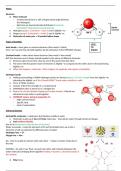
o Polar molecule
- Covalent bonds form a 104.5-degree bond angle between
the Hydrogens
- Electrons are Asymmetrically distributed involved in
Hydrophilic Molecules/Universal Solvents
o Hydrogen group 1 (1 electron – loses 1) end is Slightly +ve
o Oxygen group 6 (6 electrons – needs 2) end is slightly -ve
o Molecules of water join -> H bonded lattice shape
Types of bonding
NEED
Ionic bonds = atom gives or receives electrons (Non-metal + Metal) TO
Form -ve/+ve ions that ate held together by the attraction of the OPPOSITE charges KNOW!
Covalent bonds = when atoms share electrons (Non-metal + Non-metal)
BUT the electrons aren’t always shared equally by the atoms of different elements:
o Electrons spend more time close to one of the atoms than the other
o The atom with the greater share of electrons is Slightly -ve compared to the other atom in the bond being
Slightly +ve
o When this happens, molecules = Polar (regions of negativity and regions of positivity)
Hydrogen bonds
o Making and breaking of WEAK Hydrogen bonds are formed approx. 0.17nm in length from the slightly +ve
attracting the slightly -ve If the H bonds DIDN’T break water would be a solid
o Occur In HIGH numbers
o Contain 1/20 of the strength of a covalent bond
o STRONGEST when 3 atoms lie in a straight line
o Reason for circular droplet shaping and surface tension: H bonds are
attracted to each other so pull together
o COHESIVE nature, giving it properties of:
- High surface tension
- Specific heat
- Heat of vaporization
Universal Solvent
Hydrophilic molecules = substances that dissolve readily in water
o Molecules made up of Ions OR Polar molecules – that attract water through electrical charges
1. Ionic sodium chloride
Due to its Asymmetrical distribution of electrons
Water surrounds + coats the elements of Cl and Na (breaks them up as the 2
elements of salt are attracted to different parts of water)
Hydrogen ions -> Cl-
Oxygen ion -> Na+
SO… they’re unable to interact with each other – 2 layers of water molecules in
the way
INSTEAD… Na and Cl can ‘float’ around each other with H bonds (between the
water molecules) bringing them together floating = become a dissolved solute in
the solution
2. Polar Urea
, Urea molecule forms H bonds with the surround water molecules (doesn’t break it up)
H bonds
Urea molecule
Hydrophobic Molecules = contain a large amount of non-polar bonds
1. Saturated Hydrocarbons oil
CAN’T mix with water as there’s no available bonds (saturated) for water molecules to penetrate and make H bonds with
Water as a universal solvent and medium for chemical reactions – helps to transport dissolved compounds in/out of
cells
o the Cytosol (the aqueous component of the cytoplasm where various organelles are found in
prokaryotes/eukaryotes) is mainly made up of water
o Many solutes are polar molecules: Amino acids, Proteins, and nucleic acids
o Water allows for the Blood to carry Ionic + Covalent ions (hormones, sugars, etc)
o Because water is efficient as a Transport medium (Universal solvent + Cohesive/Adhesive) + Enzyme action
retention (acts as a coolant), it enables quicker chemical reactions in cells
Solute = sugar OR solid
Solvent = water OR liquid used for dissolving
Solution = mixture created from the process
Characteristics
1. High Specific heat capacity (High boiling point, Acts as a Coolant, Habitat for aquatic organisms)
High SHC – due to the H bonding between water molecules. Despite being easy to break they’re also easy to make so
occur in high numbers.
Means the energy required to beak the H bonds and allow the temp to increase is high – and even HIGHER to change the
state into gas seen through the use of 3,000-watt kettles to boil water
a) High Boiling point
The high amount of H bonding between water molecules means a lot of energy is needed to break the bonds, and
increase the temperature
b) Acts as a coolant
helps buffer temperature changes during chemical reactions where thermal energy is produced as a waste product (in
Prokaryotic and Eukaryotic cells)
maintain a constant temp in cellular environments is important as enzymes have very specific temp ranges for their
efficacy/efficiency – stops denaturing
c) Habitat for aquatic organisms pt. 1
Provides a stable and constant environment for organisms (won’t change temp or turn into gas easily)
Useful for aquatic organisms as heatwaves + cold winter nights don’t impact them in the short-term
Large bodies of water take months to change temperature, allowing for a slight gradual increase that will not affect the
organism
2. Cohesive (surface tension) + Adhesive
C = the attraction of water molecules to each other, making them when possible move as 1 mass more Cohesive than
they are Adhesive
Gives water its circular shaping of a water droplet, so when put on a larger scale (like lakes) Surface tension forms – used
by:
o Insects nicknamed ‘Pond skaters’ to travel across the water + hunt, using the vibrations on the surface as
indications towards prey
o Drinking, plants drawing up water from their roots OR people through straws
A = the attraction of water molecules to other polar materials i.e. when you wash your hands they become wet (water
doesn’t just slide right off them)
Structure
o Polar molecule
- Covalent bonds form a 104.5-degree bond angle between
the Hydrogens
- Electrons are Asymmetrically distributed involved in
Hydrophilic Molecules/Universal Solvents
o Hydrogen group 1 (1 electron – loses 1) end is Slightly +ve
o Oxygen group 6 (6 electrons – needs 2) end is slightly -ve
o Molecules of water join -> H bonded lattice shape
Types of bonding
NEED
Ionic bonds = atom gives or receives electrons (Non-metal + Metal) TO
Form -ve/+ve ions that ate held together by the attraction of the OPPOSITE charges KNOW!
Covalent bonds = when atoms share electrons (Non-metal + Non-metal)
BUT the electrons aren’t always shared equally by the atoms of different elements:
o Electrons spend more time close to one of the atoms than the other
o The atom with the greater share of electrons is Slightly -ve compared to the other atom in the bond being
Slightly +ve
o When this happens, molecules = Polar (regions of negativity and regions of positivity)
Hydrogen bonds
o Making and breaking of WEAK Hydrogen bonds are formed approx. 0.17nm in length from the slightly +ve
attracting the slightly -ve If the H bonds DIDN’T break water would be a solid
o Occur In HIGH numbers
o Contain 1/20 of the strength of a covalent bond
o STRONGEST when 3 atoms lie in a straight line
o Reason for circular droplet shaping and surface tension: H bonds are
attracted to each other so pull together
o COHESIVE nature, giving it properties of:
- High surface tension
- Specific heat
- Heat of vaporization
Universal Solvent
Hydrophilic molecules = substances that dissolve readily in water
o Molecules made up of Ions OR Polar molecules – that attract water through electrical charges
1. Ionic sodium chloride
Due to its Asymmetrical distribution of electrons
Water surrounds + coats the elements of Cl and Na (breaks them up as the 2
elements of salt are attracted to different parts of water)
Hydrogen ions -> Cl-
Oxygen ion -> Na+
SO… they’re unable to interact with each other – 2 layers of water molecules in
the way
INSTEAD… Na and Cl can ‘float’ around each other with H bonds (between the
water molecules) bringing them together floating = become a dissolved solute in
the solution
2. Polar Urea
, Urea molecule forms H bonds with the surround water molecules (doesn’t break it up)
H bonds
Urea molecule
Hydrophobic Molecules = contain a large amount of non-polar bonds
1. Saturated Hydrocarbons oil
CAN’T mix with water as there’s no available bonds (saturated) for water molecules to penetrate and make H bonds with
Water as a universal solvent and medium for chemical reactions – helps to transport dissolved compounds in/out of
cells
o the Cytosol (the aqueous component of the cytoplasm where various organelles are found in
prokaryotes/eukaryotes) is mainly made up of water
o Many solutes are polar molecules: Amino acids, Proteins, and nucleic acids
o Water allows for the Blood to carry Ionic + Covalent ions (hormones, sugars, etc)
o Because water is efficient as a Transport medium (Universal solvent + Cohesive/Adhesive) + Enzyme action
retention (acts as a coolant), it enables quicker chemical reactions in cells
Solute = sugar OR solid
Solvent = water OR liquid used for dissolving
Solution = mixture created from the process
Characteristics
1. High Specific heat capacity (High boiling point, Acts as a Coolant, Habitat for aquatic organisms)
High SHC – due to the H bonding between water molecules. Despite being easy to break they’re also easy to make so
occur in high numbers.
Means the energy required to beak the H bonds and allow the temp to increase is high – and even HIGHER to change the
state into gas seen through the use of 3,000-watt kettles to boil water
a) High Boiling point
The high amount of H bonding between water molecules means a lot of energy is needed to break the bonds, and
increase the temperature
b) Acts as a coolant
helps buffer temperature changes during chemical reactions where thermal energy is produced as a waste product (in
Prokaryotic and Eukaryotic cells)
maintain a constant temp in cellular environments is important as enzymes have very specific temp ranges for their
efficacy/efficiency – stops denaturing
c) Habitat for aquatic organisms pt. 1
Provides a stable and constant environment for organisms (won’t change temp or turn into gas easily)
Useful for aquatic organisms as heatwaves + cold winter nights don’t impact them in the short-term
Large bodies of water take months to change temperature, allowing for a slight gradual increase that will not affect the
organism
2. Cohesive (surface tension) + Adhesive
C = the attraction of water molecules to each other, making them when possible move as 1 mass more Cohesive than
they are Adhesive
Gives water its circular shaping of a water droplet, so when put on a larger scale (like lakes) Surface tension forms – used
by:
o Insects nicknamed ‘Pond skaters’ to travel across the water + hunt, using the vibrations on the surface as
indications towards prey
o Drinking, plants drawing up water from their roots OR people through straws
A = the attraction of water molecules to other polar materials i.e. when you wash your hands they become wet (water
doesn’t just slide right off them)


