NCLEX Prep for Nutrition Exam Questions and Answers 2024 Update
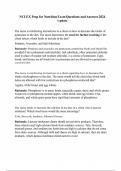
The nurse is reinforcing instructions to a client on how to decrease the intake of potassium in the diet. The nurse determines the need for further teaching if the client selects which foods to include in the diet? Potatoes, Avocados, and Salt-Substitute Rationale: Potatoes and avocados are potassium-containing foods and should be avoided if on a potassium-restricted diet. Salt substitute, often potassium chloride used in place of regular salt (sodium chloride), is a source of potassium. Eggs, bread, and lettuce are all foods low in potassium and are allowed in a potassiumrestricted diet. The nurse is reinforcing instructions to a client regarding how to decrease the intake of phosphorus in the diet. The nurse would tell the client that which food items are allowed with few restrictions in a phosphorus-restricted diet? Apples, white bread, and egg whites. Rationale: Phosphorus is in many foods, especially meats, dairy, and whole grains. Foods low in phosphorus include apples, white bread, and egg whites. Fish, almonds, and whole-grain pasta have significant amounts of phosphorus. The nurse needs to increase the calcium in the diet of a client who is lactose intolerant. Which food items would the nurse encourage? Tofu, Broccoli, Sardines, Mustard Greens Rationale: Lactose-intolerant clients should not eat dairy products. Therefore, these clients need high-calcium foods from nondairy sources. Tofu, broccoli, mustard greens, and sardines are foods that are high in calcium that do not come from dairy sources. Although milk and cheese are high in calcium, they are dairy products, which lactose-intolerant clients need to avoid The nurse reinforces dietary instructions to a client at risk for hypokalemia about the foods high in potassium that should be included in the daily diet. The nurse determines the client has understood if the client plans to include which foods in the diet? Raisins, Kiwifruit, & Bananas Rationale: Foods that are high in potassium include bananas, cantaloupe, kiwifruit, oranges, and dried fruits such as raisins. Fruits low in potassium include apples, cherries, grapefruit, canned peaches, pineapple, and cranberries.
Document information
- Uploaded on
- August 25, 2024
- Number of pages
- 6
- Written in
- 2024/2025
- Type
- Exam (elaborations)
- Contains
- Questions & answers