Week 1: Globalization & Visual Culture
● Crane, Diana. (2002). "Culture and Globalization - Theoretical Models and Emerging
Trends". In D. Crane (Ed.), Global Culture - Media, Arts, Policy and Globalization.
London: Routledge: 1–26.
● de Kloet, Jeroen and Jaap Kooijman. 2016. "Karaoke Americanism Gangnam Style:
K-pop, Wondergirls and the Asian Unpopular". In Unpopular Culture, edited by Martin
Lüthe and Sascha Pöhlmann. Amsterdam: Amsterdam University Press: 113-128.
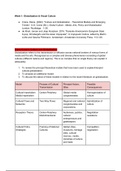
Diana Crane’s Culture and Globalization
Globalization refers to the transmission or diffusion across national borders of various forms of
media and the arts. Recognized as a complex and diverse phenomenon consisting of global
cultures (different nations and regions). This is so complex that no single theory can explain it
adequately.
1. To review the principal theoretical models that have been used to explain/interpret
cultural globalization;
2. To propose an additional model;
3. To discuss the status of these models in relation to the recent literature on globalization.
Model Process of Cultural Principal Actors, Possible
Transmission Sites Consequences
Cultural Imperialism Center-Periphery Global media Homogenization of
Media Imperialism conglomerates culture
Cultural Flows and Two-Way Flows Regional and national Hybridization of
Networks conglomerates and culture
corporations
Reception Theory Center-Periphery Audiences, publics, Negotiation
Multi-Directional cultural resistance
entrepreneurs and
gatekeepers
Cultural Policy Framing of National Global cities, Competition,
Strategies Cultures museums, heritage negotiation
sites, cultural
memory, media,
ministries of culture
and trade
, Cultural Imperialism Theory → Emerged during the 1960s through a Marxist critique of
advanced capitalism culture (Emphasis on consumerism and communications).
● Multinational and transnational corporations are key actors (producing goods, controlling
markets, disseminating products)
● Homogenous mass culture accepted passively by mass audiences.
Cultural Imperialism → A cultural domination over weaker nations → Inherently vague, implies
negative behavior and intentions of powerful countries (Especially the United States)
● Is used as a useful perspective because it can be used to analyze the extent which
some national actors have more impact than others on global culture (shaping and
reshape culture values, identities, and perceptions)
Example: Hollywood dominating the international film market.
Huge audience for film in the United States → Huge Profits → Huge Spending → Huge Return
Example: McDonald’s. Domination from one part of the world to another!
Cultural Flows and Networks → Media, technology, ideologies and ethnicity → Influences do
not always originate from the same place or go in the same direction. Receivers can be
originators. Hybridization over homogenization.
1. International media conglomerates are extending their influence and control over certain
types of global cultures.
2. The increasing importance of regions as producers and markets for their own media
provides support for a network model of cultural globalization.
Each region has its own dynamic.
Reception Theory → Concentrating on the responses of the audience→ It hypothesizes that
audiences respond actively rather than passively. Different racial, ethnic and national groups
respond differently → Used to explain responses to cultural globalization by the public in
different countries.
● Critics argue that the audience has little effect on global media and cultural policy.
● Expands beyond the examination of audience reactions to specific globalized media
products in order to include artists, promoters, and distributors
1. Reception theory looks at people’s responses to specific cultural products
a. Suggests that all national cultures will absorb a homogenous global culture and
increasingly similar
2. Theorizes the long-term effects of cultural products on national and cultural identity
a. Suggests that national cultures will assimilate aspects of many other cultures and
more diverse
Cultural Policy Strategies → Organizations and Countries attempting to preserve, position and
project their culture in a global space.
● Seen as a disorderly process, filled with tension, competition and conflict.
● Crane, Diana. (2002). "Culture and Globalization - Theoretical Models and Emerging
Trends". In D. Crane (Ed.), Global Culture - Media, Arts, Policy and Globalization.
London: Routledge: 1–26.
● de Kloet, Jeroen and Jaap Kooijman. 2016. "Karaoke Americanism Gangnam Style:
K-pop, Wondergirls and the Asian Unpopular". In Unpopular Culture, edited by Martin
Lüthe and Sascha Pöhlmann. Amsterdam: Amsterdam University Press: 113-128.
Diana Crane’s Culture and Globalization
Globalization refers to the transmission or diffusion across national borders of various forms of
media and the arts. Recognized as a complex and diverse phenomenon consisting of global
cultures (different nations and regions). This is so complex that no single theory can explain it
adequately.
1. To review the principal theoretical models that have been used to explain/interpret
cultural globalization;
2. To propose an additional model;
3. To discuss the status of these models in relation to the recent literature on globalization.
Model Process of Cultural Principal Actors, Possible
Transmission Sites Consequences
Cultural Imperialism Center-Periphery Global media Homogenization of
Media Imperialism conglomerates culture
Cultural Flows and Two-Way Flows Regional and national Hybridization of
Networks conglomerates and culture
corporations
Reception Theory Center-Periphery Audiences, publics, Negotiation
Multi-Directional cultural resistance
entrepreneurs and
gatekeepers
Cultural Policy Framing of National Global cities, Competition,
Strategies Cultures museums, heritage negotiation
sites, cultural
memory, media,
ministries of culture
and trade
, Cultural Imperialism Theory → Emerged during the 1960s through a Marxist critique of
advanced capitalism culture (Emphasis on consumerism and communications).
● Multinational and transnational corporations are key actors (producing goods, controlling
markets, disseminating products)
● Homogenous mass culture accepted passively by mass audiences.
Cultural Imperialism → A cultural domination over weaker nations → Inherently vague, implies
negative behavior and intentions of powerful countries (Especially the United States)
● Is used as a useful perspective because it can be used to analyze the extent which
some national actors have more impact than others on global culture (shaping and
reshape culture values, identities, and perceptions)
Example: Hollywood dominating the international film market.
Huge audience for film in the United States → Huge Profits → Huge Spending → Huge Return
Example: McDonald’s. Domination from one part of the world to another!
Cultural Flows and Networks → Media, technology, ideologies and ethnicity → Influences do
not always originate from the same place or go in the same direction. Receivers can be
originators. Hybridization over homogenization.
1. International media conglomerates are extending their influence and control over certain
types of global cultures.
2. The increasing importance of regions as producers and markets for their own media
provides support for a network model of cultural globalization.
Each region has its own dynamic.
Reception Theory → Concentrating on the responses of the audience→ It hypothesizes that
audiences respond actively rather than passively. Different racial, ethnic and national groups
respond differently → Used to explain responses to cultural globalization by the public in
different countries.
● Critics argue that the audience has little effect on global media and cultural policy.
● Expands beyond the examination of audience reactions to specific globalized media
products in order to include artists, promoters, and distributors
1. Reception theory looks at people’s responses to specific cultural products
a. Suggests that all national cultures will absorb a homogenous global culture and
increasingly similar
2. Theorizes the long-term effects of cultural products on national and cultural identity
a. Suggests that national cultures will assimilate aspects of many other cultures and
more diverse
Cultural Policy Strategies → Organizations and Countries attempting to preserve, position and
project their culture in a global space.
● Seen as a disorderly process, filled with tension, competition and conflict.