
UCI BioSci D170 Integument Williams
Reading: Chapter 5
What are the five functions of the skin (integument)?
1. Protection. Epidermis is waterproof -> prevents water loss. Produces a layer of pigment that
protects against UV radiation.
2. Thermoregulation. The skin’s capillaries and sweat glands regulate heat loss.
3. Excretion. Skin excretes sweat: urea, salts, and water.
4. Production of vitamin D. Epidermal cells + UV radiation = vitamin D (absorbs calcium).
5. Sensory reception. Skin contains sensory receptors that are associated w/ nerve endings.
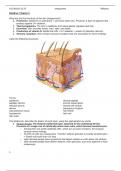
Label the following structures:
Terms:
epidermis dermal papillae
papillary dermis eccrine sweat gland
reticular dermis arrector pili muscle
dermis sebaceous oil gland
subcutaneous tissue hair follicle
hypodermis hair root
hair shaft
The Epidermis: Describe the basics of each layer, using the appropriate key words.
● Stratum basale: The deepest epidermal layer, attached to the underlying dermis.
Consists of a single row of mitotically-active stem cells, which become keratinocytes.
○ Among them are tactile epithelial cells, which act as touch receptors. Encompass
sensory nerve endings.
○ 10-25% of cells are melanocytes. Transfer melanin granules to nearby keratinocytes. -
> Shield cell nuclei from UV rays.
○ Light-skinned people have lysosomes that digest melanin in cells above the stratum.
○ Dark-skinned people have darker melanin, more granules, and more pigment in each
melanocyte.
1
Reading: Chapter 5
What are the five functions of the skin (integument)?
1. Protection. Epidermis is waterproof -> prevents water loss. Produces a layer of pigment that
protects against UV radiation.
2. Thermoregulation. The skin’s capillaries and sweat glands regulate heat loss.
3. Excretion. Skin excretes sweat: urea, salts, and water.
4. Production of vitamin D. Epidermal cells + UV radiation = vitamin D (absorbs calcium).
5. Sensory reception. Skin contains sensory receptors that are associated w/ nerve endings.
Label the following structures:
Terms:
epidermis dermal papillae
papillary dermis eccrine sweat gland
reticular dermis arrector pili muscle
dermis sebaceous oil gland
subcutaneous tissue hair follicle
hypodermis hair root
hair shaft
The Epidermis: Describe the basics of each layer, using the appropriate key words.
● Stratum basale: The deepest epidermal layer, attached to the underlying dermis.
Consists of a single row of mitotically-active stem cells, which become keratinocytes.
○ Among them are tactile epithelial cells, which act as touch receptors. Encompass
sensory nerve endings.
○ 10-25% of cells are melanocytes. Transfer melanin granules to nearby keratinocytes. -
> Shield cell nuclei from UV rays.
○ Light-skinned people have lysosomes that digest melanin in cells above the stratum.
○ Dark-skinned people have darker melanin, more granules, and more pigment in each
melanocyte.
1


