8/4/24, 9:38 AM
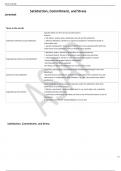
Satisfaction, Commitment, and Stress
Jeremiah
Terms in this set (8)
typically stable over time and across jobs/careers
linked to:
1. self esteem: positive linear relationship with job and life satisfaction
Individual contributors to job satisfaction 2. affective disposition: tendency to respond to situations in similarly favorable or
unfavorable ways
3. genetic predisposition: Arvey et al.s male MZ twin study separated after birth had
similar levels of job satisfaction; 30% of variability due to genetics
1. distributive justice: fairness of distribution of resources/outcomes
2. procedural justice: fairness of procedures used to determine outcomes
3. interactional justice: fairness in how outcomes communicated to workers
Organizational Justice and Job Satisfaction
-interpersonal: how people treated in interactions
-informational: how info is explained
all of these are related to satisfaction but not sure which is best
-longevity, psychological, and physical health benefits (psychological is the most
benefitted)
Outcomes of job satisfaction -job performance, absenteeism, and turnover rates all have low-moderate CCs ( job
performance is moderated by other variables, e.g., pay; also performance affects
satisfaction)
low to moderate CC on job outcome measures; larger for satisfaction rather than
performance or turnover. 3 types:
1. affective commitment: emotional attachment to org (most highly and consistently
Organizational commitment correlated with job outcomes)
2. continuous commitment: belief that you have to stay for financial reasons or lack of
alternatives
3. normative commitment: loyalty/obligation to org to stay
Satisfaction, Commitment, and Stress
1/2
Satisfaction, Commitment, and Stress
Jeremiah
Terms in this set (8)
typically stable over time and across jobs/careers
linked to:
1. self esteem: positive linear relationship with job and life satisfaction
Individual contributors to job satisfaction 2. affective disposition: tendency to respond to situations in similarly favorable or
unfavorable ways
3. genetic predisposition: Arvey et al.s male MZ twin study separated after birth had
similar levels of job satisfaction; 30% of variability due to genetics
1. distributive justice: fairness of distribution of resources/outcomes
2. procedural justice: fairness of procedures used to determine outcomes
3. interactional justice: fairness in how outcomes communicated to workers
Organizational Justice and Job Satisfaction
-interpersonal: how people treated in interactions
-informational: how info is explained
all of these are related to satisfaction but not sure which is best
-longevity, psychological, and physical health benefits (psychological is the most
benefitted)
Outcomes of job satisfaction -job performance, absenteeism, and turnover rates all have low-moderate CCs ( job
performance is moderated by other variables, e.g., pay; also performance affects
satisfaction)
low to moderate CC on job outcome measures; larger for satisfaction rather than
performance or turnover. 3 types:
1. affective commitment: emotional attachment to org (most highly and consistently
Organizational commitment correlated with job outcomes)
2. continuous commitment: belief that you have to stay for financial reasons or lack of
alternatives
3. normative commitment: loyalty/obligation to org to stay
Satisfaction, Commitment, and Stress
1/2