

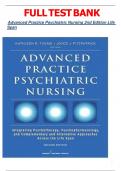
FULL TEST BANK
Advanced Practice Psychiatric Nursing 2nd Edition Life
Span
?
, Table of Contents
Chapter 1 Introduction to Development of the Science, Education, and Credentialing forPsychiatric-MentaL Health Advanced
Practice Nursing .................................................................................................................................................................................... 3
Chapter 2. Shared Decision Making: Concordance Between Psychiatric-MentaL Health AdvancedPractice Registered Nurse and
Client ................................................................................................................................................................................................... 10
Chapter 3. Synergy of Integrative Treatment ....................................................................................................................................... 22
Chapter 4. Overview of Psychotherapy ............................................................................................................................................... 29
Chapter 5. Overview of Psychopharmacology ..................................................................................................................................... 49
Chapter 6. Overview of Complementary/Integrative Approaches ....................................................................................................... 64
Chapter 7. Stages of Treatment............................................................................................................................................................ 73
Chapter 8. Integrative Management of Disordered Mood ................................................................................................................... 89
Chapter 9. Integrative Management of Anxiety-Related Conditions ................................................................................................... 95
Chapter 10. Integrative Management of Psychotic Symptoms .......................................................................................................... 108
Chapter 11. Integrative Management of Sleep Disturbances ............................................................................................................. 129
Chapter 12. Integrative Management of Disordered Eating .............................................................................................................. 137
Chapter 13. Integrative Management of Disordered Cognition ......................................................................................................... 150
Chapter 14. Integrative Management of Disordered Attention .......................................................................................................... 163
Chapter 15. Integrated Management of Self-Directed Injury............................................................................................................. 174
Chapter 16. Integrated Management of Other-Directed Violence ..................................................................................................... 187
Chapter 17. Integrative Management of Disordered Impulse Control ............................................................................................... 202
Chapter 18. Co-Occurring Substance Misuse and Psychiatric Syndromes ........................................................................................ 213
Chapter 19. Medical Problems and Psychiatric Syndromes............................................................................................................... 225
Chapter 20. Pregnancy During Psychiatric Syndromes ..................................................................................................................... 248
Chapter 21. Forensic Issues and Psychiatric Syndromes ................................................................................................................... 270
Chapter 22. QSEN Competencies: Application to Advanced Practice MentaL Health Nursing ....................................................... 278
Chapter 23. Telehealth ....................................................................................................................................................................... 292
Chapter 24. Global Perspectives and the Future of Advanced Practice Psychiatric-MentaL HealthNursing global ......................... 303
, Chapter 1 Introduction to Development of the Science, Education, and Credentialing forPsychiatric-
MentaL Health Advanced Practice Nursing
MULTIPLE CHOICE
1. Which understanding is the basis for the nursing actions focused on minimizing mentaL
health promotion of families with chronically mentaLly ill members?
a. Family members are at an increased risk for mentaL illness.
b. The mentaL health attention system is not prepared to deal with family crises.
c. Family members are seldom prepared to cope with a chronically ill individual.
d. The chronically mentaLly ill receive attention best when delivered in a formal setting.
ACCURATE ANSWER- A
When families live with a dominant member who has a persistent and severe mentaL disorder the
outcomes are often expressed as family members who are at increased risk for physical and
mentaL illnesses. The remaining options are not necessarily true.
2. Which nursing activity shows the nurse actively engaged in the primary prevention of
mentaL disorders?
a. Providing a cLient, whose depression is well managed, with medication on time
b. Making regular follow-up visits to a new mother at risk for post-partum
depression
c. Providing the family of a cLient, diagnosed with depression, information on
suicide prevention
d. Assisting a cLient who has obsessive compulsive tendencies prepare and practice
for a job interview
ACCURATE ANSWER- B
, Primary prevention helps to reduce the occurrence of mentaL disorders by staying involved with
a cLient. Providing medication and information on existing illnesses are examples of secondary
prevention which helps to reduce the prevalence of mentaL disorders. Assisting a mentaLly ill
cLient with preparation for a job interview is tertiary prevention since it involves rehabilitation.
3. Which intervention reflects attention being focused on the cLients intentions regarding his
diagnosis of severe depression?
a. Being placed on suicide precautions
b. Encouraging visits by his family members
c. Receiving a combination of medications to address his emotional needs
d. Being asked to decide where he will attend his prescribed therapy sessions
ACCURATE ANSWER- D
A primary factor in cLient treatment includes consideration of the cLients intentions regarding
his or her own attention. CLients are central to the process that determines their attention as their
abilities allow. Under the guidance of PMH nurses and other mentaL health personnel, cLients
are encouraged to make decisions and to actively engage in their own treatment plans to meet
their needs. The remaining options are focused on specifics of the determined plan of attention.
4. When a cLients family asks why their chronically mentaLly ill adult child is being discharged
to a community-based living facility, the nurse responds:
a. It is a way to meet the need for social support.
b. It is too expensive to keep stabilized cLients in acute attention settings.
c. This type of facility will provide the specialized attention that is needed.
d. Being out in the community will help provide hope and purpose for living.
ACCURATE ANSWER- D
Hospitalization may be necessary for acute attention, but, when cLients are stabilized, they move
into community-based, cLient-centered settings or are discharged home with continued outcLient
treatment in the community. Concentrated efforts are made to reduce the cLients sick role by
Advanced Practice Psychiatric Nursing 2nd Edition Life
Span
?
, Table of Contents
Chapter 1 Introduction to Development of the Science, Education, and Credentialing forPsychiatric-MentaL Health Advanced
Practice Nursing .................................................................................................................................................................................... 3
Chapter 2. Shared Decision Making: Concordance Between Psychiatric-MentaL Health AdvancedPractice Registered Nurse and
Client ................................................................................................................................................................................................... 10
Chapter 3. Synergy of Integrative Treatment ....................................................................................................................................... 22
Chapter 4. Overview of Psychotherapy ............................................................................................................................................... 29
Chapter 5. Overview of Psychopharmacology ..................................................................................................................................... 49
Chapter 6. Overview of Complementary/Integrative Approaches ....................................................................................................... 64
Chapter 7. Stages of Treatment............................................................................................................................................................ 73
Chapter 8. Integrative Management of Disordered Mood ................................................................................................................... 89
Chapter 9. Integrative Management of Anxiety-Related Conditions ................................................................................................... 95
Chapter 10. Integrative Management of Psychotic Symptoms .......................................................................................................... 108
Chapter 11. Integrative Management of Sleep Disturbances ............................................................................................................. 129
Chapter 12. Integrative Management of Disordered Eating .............................................................................................................. 137
Chapter 13. Integrative Management of Disordered Cognition ......................................................................................................... 150
Chapter 14. Integrative Management of Disordered Attention .......................................................................................................... 163
Chapter 15. Integrated Management of Self-Directed Injury............................................................................................................. 174
Chapter 16. Integrated Management of Other-Directed Violence ..................................................................................................... 187
Chapter 17. Integrative Management of Disordered Impulse Control ............................................................................................... 202
Chapter 18. Co-Occurring Substance Misuse and Psychiatric Syndromes ........................................................................................ 213
Chapter 19. Medical Problems and Psychiatric Syndromes............................................................................................................... 225
Chapter 20. Pregnancy During Psychiatric Syndromes ..................................................................................................................... 248
Chapter 21. Forensic Issues and Psychiatric Syndromes ................................................................................................................... 270
Chapter 22. QSEN Competencies: Application to Advanced Practice MentaL Health Nursing ....................................................... 278
Chapter 23. Telehealth ....................................................................................................................................................................... 292
Chapter 24. Global Perspectives and the Future of Advanced Practice Psychiatric-MentaL HealthNursing global ......................... 303
, Chapter 1 Introduction to Development of the Science, Education, and Credentialing forPsychiatric-
MentaL Health Advanced Practice Nursing
MULTIPLE CHOICE
1. Which understanding is the basis for the nursing actions focused on minimizing mentaL
health promotion of families with chronically mentaLly ill members?
a. Family members are at an increased risk for mentaL illness.
b. The mentaL health attention system is not prepared to deal with family crises.
c. Family members are seldom prepared to cope with a chronically ill individual.
d. The chronically mentaLly ill receive attention best when delivered in a formal setting.
ACCURATE ANSWER- A
When families live with a dominant member who has a persistent and severe mentaL disorder the
outcomes are often expressed as family members who are at increased risk for physical and
mentaL illnesses. The remaining options are not necessarily true.
2. Which nursing activity shows the nurse actively engaged in the primary prevention of
mentaL disorders?
a. Providing a cLient, whose depression is well managed, with medication on time
b. Making regular follow-up visits to a new mother at risk for post-partum
depression
c. Providing the family of a cLient, diagnosed with depression, information on
suicide prevention
d. Assisting a cLient who has obsessive compulsive tendencies prepare and practice
for a job interview
ACCURATE ANSWER- B
, Primary prevention helps to reduce the occurrence of mentaL disorders by staying involved with
a cLient. Providing medication and information on existing illnesses are examples of secondary
prevention which helps to reduce the prevalence of mentaL disorders. Assisting a mentaLly ill
cLient with preparation for a job interview is tertiary prevention since it involves rehabilitation.
3. Which intervention reflects attention being focused on the cLients intentions regarding his
diagnosis of severe depression?
a. Being placed on suicide precautions
b. Encouraging visits by his family members
c. Receiving a combination of medications to address his emotional needs
d. Being asked to decide where he will attend his prescribed therapy sessions
ACCURATE ANSWER- D
A primary factor in cLient treatment includes consideration of the cLients intentions regarding
his or her own attention. CLients are central to the process that determines their attention as their
abilities allow. Under the guidance of PMH nurses and other mentaL health personnel, cLients
are encouraged to make decisions and to actively engage in their own treatment plans to meet
their needs. The remaining options are focused on specifics of the determined plan of attention.
4. When a cLients family asks why their chronically mentaLly ill adult child is being discharged
to a community-based living facility, the nurse responds:
a. It is a way to meet the need for social support.
b. It is too expensive to keep stabilized cLients in acute attention settings.
c. This type of facility will provide the specialized attention that is needed.
d. Being out in the community will help provide hope and purpose for living.
ACCURATE ANSWER- D
Hospitalization may be necessary for acute attention, but, when cLients are stabilized, they move
into community-based, cLient-centered settings or are discharged home with continued outcLient
treatment in the community. Concentrated efforts are made to reduce the cLients sick role by


