
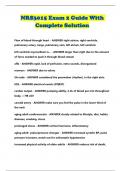
NRS3015 Exam 2 Guide Wit h Comp lete Solut ion Flow of blood through heart - ANSWER right atrium, right ventricle, pulmonary artery, lungs, pulmonary vein, left atrium, left ventricle left ventricle myocardium is... - ANSWER larger than right due to the amount of force needed to push it through blood stream afib - ANSWER rapid, lack of perfusion, extra sounds, disorganized mumurs - ANSWER due to valves SA node - ANSWER considered the pacemaker (rhythm), in the right atria ECG - ANSWER electrical events (PQRST) cardiac output - ANSWER pumping ability, 4-6L of blood per min throughout body, = HR xSV carotid artery - ANSWER make sure you feel the pulse in the lower third of the neck aging adult cardiovascular - ANSWER closely related to lifestyle, diet, habits, diseases, smoking. stress prolonged stress - ANSWER cortisol hormone, inflammatory aging adult- pulse/pressure changes - ANSWER increased systolic BP, pulse pressure increases, watch out for orthostatic hypotension increased physical activity of older adults - ANSWER reduces risk of death, health teaching is important cardiovascular disease - ANSWER #1 cause of death around the world genetics and environment on CVD - ANSWER gender (females have higher risk for certain diseases), ethnicity, exercise chest tightness/shortness of breath/fatigue & cough - ANSWER ask patient OLDSCART pt having heart failure s/sx - ANSWER dilated pupils, skin pale, anxiety, falling O_2 saturation, tachycardia, dec. urine output, pitting edema, dec. BP, dyspnea, crackles, wheezes most common mumur - ANSWER mitral valve bell of stethoscope will have you listen to... - ANSWER softer sounds angina - ANSWER chest pain myocardial infarction - ANSWER heart attack coronary atherosclerosis - ANSWER abnormal accumulation of lipid deposits in arterial walls CAD - ANSWER most prevalent disease in adults atherosclerosis s/sx - ANSWER ischemia, angina, men and females don't always present the same, females- epigastric distre ss atherosclerosis risks - ANSWER myocardial infarction, heart failure, sudden cardiac death modifiable risk factors for CAD - ANSWER diet, tobacco, HTN, diabetes, cholesterol
Preview 2 out of 12 pages
Exam (elaborations)
NRS3015 Exam 2 Guide With Complete Solution
Preview 2 out of 12 pages
NRS3015 Exam 2 Guide With Complete Solution...
Content preview
Document information
- Uploaded on
- August 1, 2024
- Number of pages
- 12
- Written in
- 2024/2025
- Type
- Exam (elaborations)
- Contains
- Questions & answers
$12.49
Wrong document? Swap it for free
Within 14 days of purchase and before downloading, you can choose a different document. You can simply spend the amount again.
Written by students who passed
Immediately available after payment
Read online or as PDF

Reputation scores are based on the amount of documents a seller has sold for a fee and the reviews they have received for those documents. There are three levels: Bronze, Silver and Gold. The better the reputation, the more your can rely on the quality of the sellers work.
Available in package deal
Package deal
NRS3015 BUNDLED EXAMS WITH SOLUTION

