

22
Cloning 22.1 -22.3
17/01/23
Plant cloning
2 types:
1) Vegetative propagation (natural)
2) Micropropagation (artificial)
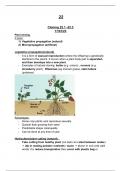
vegetative propagation(natural)
- It is a form of asexual reproduction where the offspring is genetically
identical to the parent. It occurs when a plant body part is separated,
and then develops into a new plant.
- Examples of natural cloning: bulbs (e.g. onions) , runners (e.g.
strawberry plant) , Rhizomes (eg marram grass), stem tubers
(potatoes)
Advantages:
- Some crop plants cant reproduce sexually
- Quicker than growing from seed
- Predictable shape /size/quality
- Can be done at any time of year
Horticulture/plant cutting (natural):
- Take cutting from healthy plant (cut stem at a slant between nodes)
→ dip in rooting powder/ nutrients / auxin → place in soil and add
water (to reduce transpiration then cover with plastic bag or
, remove some leaves)→ fast growth + not much genetic variation +
ensure good quality
- So farmers use this ability of plants to do vegetative
propagation →to then generate lots of crops
micropropagation (artificial)
2 ways:
- Often involve genetic manipulation e.g. GE ( so ge a plant that has
ability to grow quickly or become pest/ disease resistant →
useful in agriculture/farming)
- Look back on 21
- You can grow large number of plant from meristem tissue taken from
a sample plant
- Needs to be pathogen free
The basic principles of micropropagation
- Take a small sample of tissue from the plant you want to clone - the
meristem tissue from shoot tips and axial buds is often dissected out in
sterile conditions to avoid contamination by fungi and bacteria
- sample sterilised by immersing it in sterilising agents such as bleach
, ethanol , or sodium dichloroisocyanurate. The latter does not need to
be rinsed off which means the tissue is more likely to remain sterile. The
material removed from the plant is called the explant
- The explant is placed in a sterile culture medium containing a
balance of plant hormones (including auxins and cytokinins) which
stimulate mitosis. The cells proliferate , forming a mass of identical
cells known as a callus
- The callus is divided up and individual cells or clumps from the
callus are transferred to a new culture medium containing different
mixture of hormones and nutrients which stimulates the
development of tiny , genetically identical plantlets
- The plantlets are potted into compost where they are grown into small
plants
- The young plants are planted out to grow and produce a crop
Animal cloning
Natural (rare)
- making monozygotic twins (embryo splits in uterus)
- starfish limb being cut → can grow into whole starfish
Cloning 22.1 -22.3
17/01/23
Plant cloning
2 types:
1) Vegetative propagation (natural)
2) Micropropagation (artificial)
vegetative propagation(natural)
- It is a form of asexual reproduction where the offspring is genetically
identical to the parent. It occurs when a plant body part is separated,
and then develops into a new plant.
- Examples of natural cloning: bulbs (e.g. onions) , runners (e.g.
strawberry plant) , Rhizomes (eg marram grass), stem tubers
(potatoes)
Advantages:
- Some crop plants cant reproduce sexually
- Quicker than growing from seed
- Predictable shape /size/quality
- Can be done at any time of year
Horticulture/plant cutting (natural):
- Take cutting from healthy plant (cut stem at a slant between nodes)
→ dip in rooting powder/ nutrients / auxin → place in soil and add
water (to reduce transpiration then cover with plastic bag or
, remove some leaves)→ fast growth + not much genetic variation +
ensure good quality
- So farmers use this ability of plants to do vegetative
propagation →to then generate lots of crops
micropropagation (artificial)
2 ways:
- Often involve genetic manipulation e.g. GE ( so ge a plant that has
ability to grow quickly or become pest/ disease resistant →
useful in agriculture/farming)
- Look back on 21
- You can grow large number of plant from meristem tissue taken from
a sample plant
- Needs to be pathogen free
The basic principles of micropropagation
- Take a small sample of tissue from the plant you want to clone - the
meristem tissue from shoot tips and axial buds is often dissected out in
sterile conditions to avoid contamination by fungi and bacteria
- sample sterilised by immersing it in sterilising agents such as bleach
, ethanol , or sodium dichloroisocyanurate. The latter does not need to
be rinsed off which means the tissue is more likely to remain sterile. The
material removed from the plant is called the explant
- The explant is placed in a sterile culture medium containing a
balance of plant hormones (including auxins and cytokinins) which
stimulate mitosis. The cells proliferate , forming a mass of identical
cells known as a callus
- The callus is divided up and individual cells or clumps from the
callus are transferred to a new culture medium containing different
mixture of hormones and nutrients which stimulates the
development of tiny , genetically identical plantlets
- The plantlets are potted into compost where they are grown into small
plants
- The young plants are planted out to grow and produce a crop
Animal cloning
Natural (rare)
- making monozygotic twins (embryo splits in uterus)
- starfish limb being cut → can grow into whole starfish


