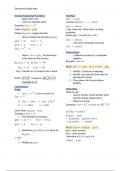
Derivatives Study Note
Solving Exponential Functions: Trig Rule:
- Apply chain rule 𝑓(𝑥) = 𝑥𝑠𝑖𝑛𝑥
- Look at 2 separate parts -product rule 𝑓(𝑥) = 𝑥 · 𝑠𝑖𝑛(𝑥)
2𝑥
Example: 𝑓(𝑥) = 𝑒 𝑓(𝑥) = 𝑠𝑖𝑛(2𝑥)
' '
Chain: ℎ (𝑔(𝑥)) · 𝑔 (𝑥) - Use chain rule - When the x is being
'
Where ℎ (𝑔(𝑥)) = original function multiplied
' Where g(x) = 2x and h(x) = sin x
- Hence multiply the function by 𝑔 (𝑥)
𝑥 𝑓(𝑥) = 3𝑠𝑖𝑛(𝑥)
𝑔(𝑥) = 2𝑥 ℎ (𝑥) = 𝑒
' ' 𝑥 - Just solve using basic trig rules
𝑔 (𝑥) = 2 ℎ (𝑥) = 𝑒 '
' 2𝑥 𝑓 (𝑥) = 3𝑐𝑜𝑠(𝑥)
𝑓 (𝑥) = 𝑒 · 2
Product Rule:
𝑥
- When 𝑒 is × # (5), The derivative - 2 different functions of x multiplied
is the same as the function together
𝑥 −𝑒
𝑥
Example: 𝑥𝑙𝑛𝑥 or
Ex: 𝑓(𝑥) = 5𝑒 or 𝑓(𝑥) = 2
𝑥 ' ' '
'
𝑓 (𝑥) = 5𝑒
𝑥
𝑓'(𝑥) =
−𝑒 RULE: 𝑓 (𝑥) = 𝑔 (𝑥) · ℎ(𝑥) + ℎ (𝑥) · 𝑔(𝑥)
2
- only 1 function so no product rule in place 1. Identify 2 functions multiplying
2. Identify g(x) and h(x) then take the
𝑥
RULE : 𝑎 = 𝑁 is equal to 𝑙𝑜𝑔 𝑎𝑁 = 𝑋 derivatives of each
3. Plug values into formula above
- Log base e = ln
Simplify
Log functions:
Rules: Chain Rule:
𝑙𝑛 3 When to use:
1. 𝑓(𝑥) = 𝑒 e and ln cancel out
- Have a function inside another other
𝑓(𝑥) = 3
function (inside always has x)
2
2. 𝑓(𝑥) = 2𝑙𝑛5 = 𝑓(𝑥) = 𝑙𝑛 5 - Raise to a power
6
3. 𝑥 = 𝑙𝑛8/3 𝑥 = 𝑙𝑛 8
3
Examples: (3𝑥 + 5) or 𝑙𝑛3𝑥 or (7𝑥 + 9
' '
Chain Rule: ℎ (𝑔(𝑥)) · 𝑔 (𝑥) 2
𝑐𝑜𝑠 (4𝑥) = 𝑐𝑜𝑠(4𝑥)
2
Example: 𝑙𝑛(2𝑥 + 1) ' '
ℎ (𝑔(𝑥)) · 𝑔 (𝑥)
1. First identify h(x) and g(x)
= 2(𝑐𝑜𝑠(4𝑥)) · (𝑑𝑦/𝑑𝑥 𝑐𝑜𝑠 4𝑥 )
𝑔(𝑥) = 2𝑥 + 1 ℎ (𝑥) = 𝑙𝑛 (𝑥)
= 2(𝑐𝑜𝑠(4𝑥)) · − 4𝑠𝑖𝑛4𝑥
' ' 1
𝑔 (𝑥) = 2 ℎ (𝑥) = 𝑥
' ' '
RULE: 𝑓 (𝑥) = ℎ (𝑔(𝑥)) · 𝑔 (𝑥)
'
2. Substitute 𝑔(𝑥) into ℎ (𝑥) to solve for g(x) = inner function
'
ℎ (𝑔(𝑥)) h(x) = outer function
1 *derivative of 𝑓(𝑥) ℎ(𝑔(𝑥)) is
= 2𝑥 +1 ' '
' ℎ (𝑔(𝑥) · 𝑔 (𝑥)
3. Multiply by 𝑔 (𝑥)
Solving Exponential Functions: Trig Rule:
- Apply chain rule 𝑓(𝑥) = 𝑥𝑠𝑖𝑛𝑥
- Look at 2 separate parts -product rule 𝑓(𝑥) = 𝑥 · 𝑠𝑖𝑛(𝑥)
2𝑥
Example: 𝑓(𝑥) = 𝑒 𝑓(𝑥) = 𝑠𝑖𝑛(2𝑥)
' '
Chain: ℎ (𝑔(𝑥)) · 𝑔 (𝑥) - Use chain rule - When the x is being
'
Where ℎ (𝑔(𝑥)) = original function multiplied
' Where g(x) = 2x and h(x) = sin x
- Hence multiply the function by 𝑔 (𝑥)
𝑥 𝑓(𝑥) = 3𝑠𝑖𝑛(𝑥)
𝑔(𝑥) = 2𝑥 ℎ (𝑥) = 𝑒
' ' 𝑥 - Just solve using basic trig rules
𝑔 (𝑥) = 2 ℎ (𝑥) = 𝑒 '
' 2𝑥 𝑓 (𝑥) = 3𝑐𝑜𝑠(𝑥)
𝑓 (𝑥) = 𝑒 · 2
Product Rule:
𝑥
- When 𝑒 is × # (5), The derivative - 2 different functions of x multiplied
is the same as the function together
𝑥 −𝑒
𝑥
Example: 𝑥𝑙𝑛𝑥 or
Ex: 𝑓(𝑥) = 5𝑒 or 𝑓(𝑥) = 2
𝑥 ' ' '
'
𝑓 (𝑥) = 5𝑒
𝑥
𝑓'(𝑥) =
−𝑒 RULE: 𝑓 (𝑥) = 𝑔 (𝑥) · ℎ(𝑥) + ℎ (𝑥) · 𝑔(𝑥)
2
- only 1 function so no product rule in place 1. Identify 2 functions multiplying
2. Identify g(x) and h(x) then take the
𝑥
RULE : 𝑎 = 𝑁 is equal to 𝑙𝑜𝑔 𝑎𝑁 = 𝑋 derivatives of each
3. Plug values into formula above
- Log base e = ln
Simplify
Log functions:
Rules: Chain Rule:
𝑙𝑛 3 When to use:
1. 𝑓(𝑥) = 𝑒 e and ln cancel out
- Have a function inside another other
𝑓(𝑥) = 3
function (inside always has x)
2
2. 𝑓(𝑥) = 2𝑙𝑛5 = 𝑓(𝑥) = 𝑙𝑛 5 - Raise to a power
6
3. 𝑥 = 𝑙𝑛8/3 𝑥 = 𝑙𝑛 8
3
Examples: (3𝑥 + 5) or 𝑙𝑛3𝑥 or (7𝑥 + 9
' '
Chain Rule: ℎ (𝑔(𝑥)) · 𝑔 (𝑥) 2
𝑐𝑜𝑠 (4𝑥) = 𝑐𝑜𝑠(4𝑥)
2
Example: 𝑙𝑛(2𝑥 + 1) ' '
ℎ (𝑔(𝑥)) · 𝑔 (𝑥)
1. First identify h(x) and g(x)
= 2(𝑐𝑜𝑠(4𝑥)) · (𝑑𝑦/𝑑𝑥 𝑐𝑜𝑠 4𝑥 )
𝑔(𝑥) = 2𝑥 + 1 ℎ (𝑥) = 𝑙𝑛 (𝑥)
= 2(𝑐𝑜𝑠(4𝑥)) · − 4𝑠𝑖𝑛4𝑥
' ' 1
𝑔 (𝑥) = 2 ℎ (𝑥) = 𝑥
' ' '
RULE: 𝑓 (𝑥) = ℎ (𝑔(𝑥)) · 𝑔 (𝑥)
'
2. Substitute 𝑔(𝑥) into ℎ (𝑥) to solve for g(x) = inner function
'
ℎ (𝑔(𝑥)) h(x) = outer function
1 *derivative of 𝑓(𝑥) ℎ(𝑔(𝑥)) is
= 2𝑥 +1 ' '
' ℎ (𝑔(𝑥) · 𝑔 (𝑥)
3. Multiply by 𝑔 (𝑥)