

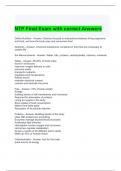
NTP Final Exam with correct Answers
Define Nutrition - Answer -Science focused on interactions between living organisms and food, and how the body uses and consumes food
Nutrients - Answer -Chemical substances contained in food that are necessary to sustain life
Six Macronutrients - Answer -Water, fats, proteins, carbohydrates, vitamins, minterals
Water - Answer -55-60% of body mass
found in all tissues
improves oxygen delivery to cells
removes waste
transports nutrients
regulates body temperature
flushes toxins
maintain electrical content
cushion and lubricate the joints
Fats - Answer -15% of body weight
Energy
building blocks of cell membranes and hormones
Required for absorption of proteins
Lining for organs in the body
Slow uptake of food consumption
Makes food taste good
Absorption of fat soluble vitamins
Proteins - Answer -Building blocks of the body
Uses 50K proteins for everything
Enzymes manage biochecmical processes
Antibodies fight infection
Hemoglobin carries oxygen and hormones
Hormones regulate metabolism
All are a combo of 20 different amino acids
Make up 95% of muscle tissue
Carbohydrates - Answer -fuel for the brain
quick source of energy helps regulate protein and fat metabolism
source of fiber which eliminates waste
fights inections
promotes growth of body tissue
Two Micro nutrients - Answer -Minerals, Vitamins
Minerals - Answer -4% of the body
Solely from food sources
what remain of ash when tissues are burned
103 known, at least 1 is necessary for health
have electrical charge
Control osmotic pressure across cell membrane
Cofactors for enzymes and maintain ph balance
Increase alkaline with calcium
Increase acidity with phosphorase
Transfer nutrients across cell membrane
Contract and relax muscles - cal/mg
regulate tissue growth
provide support
Vitamins - Answer -Less than 1% of the body
cannot be manufactured by the body
best when absorbed with cofactors
helpers in metabolism
activates enzymes
antioxidants
essential for growth, vitality, and health
methyl donors - b12, betaine
immune system modulators
5 Miles stones that led to the modern diet - Answer -Agricultural revolution
Introduction of refined sugar
Industrial revolution
Food giants
World War 2
Agricultural Revolution - Answer -Hunter gathers to planters
feast/fast to consistent intake
Introduction of refined sugar - Answer -learned how to take natural sources and make sugar
Industrial revolution - Answer -mechanize the food process industry
Food giants - Answer -Kellog, kraft, nestle creating foods of convienience
World War 2 - Answer -Chemical revolution
Hydrogenated oils
Preservatives
Dr. Prices contribution - Answer -Traveled the world to examine traditional diets
Variety
White flower and processed sugar led to tooth decay
Fat soluble vitamin ADEF
quality over quantity
equal omega 3s and 6s
Activator x or vitamin K2
Dr. Pottenger's Contributions - Answer -Adrenal glands allowed for quicker recovery
Cats eating table scraps were less healthy than those eating raw scraps
Cooking may render food less nutritional
Takes 4 generations to reverse birth defects
Intake and sources of fats - Answer -30%
fish oil, flax seed, wheat germ, nuts, avocados, butter, coconut oil
Intake and sources of proteins - Answer -30%
eggs, chicken, dairy, fish
Intake and sources of carbohydrates - Answer -40% unrefined and complex
grains, breads, legumes, fruits, veggies
5 steps of the consultation process - Answer -disclaimer and Initial interview, NAQ and food journal, functional evaluation, recommendations/the plan, follow ups
Initial Interview - Answer -how can we help them?
build the rapport
information gathering
understand concerns
read and sign disclaimer
look for underlying cause of the problem
NAQ and Food journal - Answer -sign and symptoms, and food concerns
Information gathering
eating patterns
prioritize health concerns
diet and lifestyle
Quantity of food and timing
evaluate priorities
40/30/30 balance
Define Nutrition - Answer -Science focused on interactions between living organisms and food, and how the body uses and consumes food
Nutrients - Answer -Chemical substances contained in food that are necessary to sustain life
Six Macronutrients - Answer -Water, fats, proteins, carbohydrates, vitamins, minterals
Water - Answer -55-60% of body mass
found in all tissues
improves oxygen delivery to cells
removes waste
transports nutrients
regulates body temperature
flushes toxins
maintain electrical content
cushion and lubricate the joints
Fats - Answer -15% of body weight
Energy
building blocks of cell membranes and hormones
Required for absorption of proteins
Lining for organs in the body
Slow uptake of food consumption
Makes food taste good
Absorption of fat soluble vitamins
Proteins - Answer -Building blocks of the body
Uses 50K proteins for everything
Enzymes manage biochecmical processes
Antibodies fight infection
Hemoglobin carries oxygen and hormones
Hormones regulate metabolism
All are a combo of 20 different amino acids
Make up 95% of muscle tissue
Carbohydrates - Answer -fuel for the brain
quick source of energy helps regulate protein and fat metabolism
source of fiber which eliminates waste
fights inections
promotes growth of body tissue
Two Micro nutrients - Answer -Minerals, Vitamins
Minerals - Answer -4% of the body
Solely from food sources
what remain of ash when tissues are burned
103 known, at least 1 is necessary for health
have electrical charge
Control osmotic pressure across cell membrane
Cofactors for enzymes and maintain ph balance
Increase alkaline with calcium
Increase acidity with phosphorase
Transfer nutrients across cell membrane
Contract and relax muscles - cal/mg
regulate tissue growth
provide support
Vitamins - Answer -Less than 1% of the body
cannot be manufactured by the body
best when absorbed with cofactors
helpers in metabolism
activates enzymes
antioxidants
essential for growth, vitality, and health
methyl donors - b12, betaine
immune system modulators
5 Miles stones that led to the modern diet - Answer -Agricultural revolution
Introduction of refined sugar
Industrial revolution
Food giants
World War 2
Agricultural Revolution - Answer -Hunter gathers to planters
feast/fast to consistent intake
Introduction of refined sugar - Answer -learned how to take natural sources and make sugar
Industrial revolution - Answer -mechanize the food process industry
Food giants - Answer -Kellog, kraft, nestle creating foods of convienience
World War 2 - Answer -Chemical revolution
Hydrogenated oils
Preservatives
Dr. Prices contribution - Answer -Traveled the world to examine traditional diets
Variety
White flower and processed sugar led to tooth decay
Fat soluble vitamin ADEF
quality over quantity
equal omega 3s and 6s
Activator x or vitamin K2
Dr. Pottenger's Contributions - Answer -Adrenal glands allowed for quicker recovery
Cats eating table scraps were less healthy than those eating raw scraps
Cooking may render food less nutritional
Takes 4 generations to reverse birth defects
Intake and sources of fats - Answer -30%
fish oil, flax seed, wheat germ, nuts, avocados, butter, coconut oil
Intake and sources of proteins - Answer -30%
eggs, chicken, dairy, fish
Intake and sources of carbohydrates - Answer -40% unrefined and complex
grains, breads, legumes, fruits, veggies
5 steps of the consultation process - Answer -disclaimer and Initial interview, NAQ and food journal, functional evaluation, recommendations/the plan, follow ups
Initial Interview - Answer -how can we help them?
build the rapport
information gathering
understand concerns
read and sign disclaimer
look for underlying cause of the problem
NAQ and Food journal - Answer -sign and symptoms, and food concerns
Information gathering
eating patterns
prioritize health concerns
diet and lifestyle
Quantity of food and timing
evaluate priorities
40/30/30 balance


