
Social Psychology Notes
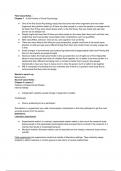
Chapter 1 - A Brief History of Social Psychology Early Study: Explored how presence of others influences performance. Social Loafing: People may work less hard in groups. ABC Triad: Affect, Behavior, Cognition. Perspective Influences: Various factors affect how situations are interpreted. Environmental Influence: Small changes can lead to significant behavioral shifts. Relationship Myths: Debunking common misconceptions about relationships. IRB: Reviews controversial studies to ensure ethical standards. Chapter 3 - Features of Experimental Studies Internal Validity: Ensures causation between independent and dependent variables. Confederate: An actor in experiments. Laboratory and Field Experiments: Differences in realism and setting. External Validity: Generalizing findings beyond the study. Non-Experimental Studies: Explore correlations but cannot prove causation. Validity and Reliability: Ensuring consistency and accuracy in measurements. Chapter 3: The Self Self-Concept: Understanding what constitutes the self. Self-Knowledge: Sources and types of self-awareness. Self-Esteem: High vs. low self-esteem characteristics. Self-Deception: Strategies to maintain a positive self-view. Cultural Differences: Independent vs. interdependent self-construals. Chapter 4 - Behavior Control Meaning and Action: Actions are based on culturally learned meanings. Entity vs. Incremental Theory: Fixed vs. improvable traits. Goals and Plans: Importance of setting and pursuing goals. Freedom and Choice: Decision-making processes and perceived autonomy. Self-Regulation: Standards, monitoring, and willpower. Chapter 5 - Social Cognition Impression Formation: Snap judgments about others. Thinking Goals: Right answers, confirming beliefs, and quick decisions. Priming and Framing: Influences on thinking and behavior. Thought Suppression: Techniques for managing unwanted thoughts. Attribution and Biases: Internal vs. external explanations and common cognitive biases. Conclusion: Human Thought and Behavior Language and Symbols: Unique to human thought. Counterfactual Thinking: Reflecting on alternatives. Human Thought: Capable of both errors and profound insights.
Document information
- Uploaded on
- July 16, 2024
- Number of pages
- 15
- Written in
- 2023/2024
- Type
- Class notes
- Professor(s)
- Joshua feinberg
- Contains
- Class 1 - 5


