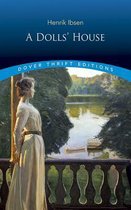
‘Paradise Lost Books 9 & 10’ by John Milton and ‘A Doll’s House’ by Henrik Ibsen
“Appearance and reality are two very different things”. In the light of this view, consider ways in which
Ibsen and Milton explore evil and corruption.
Reality is the state of things as they actually exist, as opposed to an idealistic or notional idea of them. Ap-
pearance is the way someone or something looks. Evil and corruption seem to be found explicitly and im-
plicitly as various forms. Daniel Webster quotes “The world is governed more by appearance than realities
so that it is fully as necessary to seem to know something as to know it”. Henrik Ibsen, a revolutionary Nor-
wegian playwright, reformed the contemporary audience’s perspectives of an individual with a righteous ap-
pearance, but in reality is consumed with corruption (and vice versa) through his conventional characters
such as Torvald Helmer and Nils Krogstad within a society governed by reputation through his didactic real-
ist play “A Doll’s House”. Similarly, John Milton, a driven, religious and intellectual activist in the midst of
political dilemmas rebelled a government promoting licensing through his exploration of the orthodox views
of evil and corruption dating back to humanity’s fall in his controversial epic poem ‘Paradise Lost’.
It is widely known in modern society that a person is not always what they seem. Within both texts, the au-
thors showcase this exact predicament where a person who may seem completely harmless and innocent, in
fact posses corrupted qualities. In ‘A Doll’s House’ by Henrik Ibsen, Torvald and Nora Helmer appear to be
a typical married couple in Norway during the 1800’s. In the beginning of Act One, Torvald is shown to be a
very caring husband where he “(puts an arm around her waist)” and remains very caring towards Nora in
front of guests, for example, “Come, Mrs Linde. This area is for mothers only” showing compassion and
consideration for his wife, Nora. To add to, throughout the play, Torvald calls his wife endearing names like
“skylark”, “squanderbird” and “squirrel”. However, as the play progresses and Torvald’s hidden evil and
corruption upheld by society’s demand for the patriarchy begins to premise, where the endearing nicknames
he gives Nora no longer seem so sweet, but rather degrading through the animalistic imagery connoted with
them. The highest peak of his immoral persona hidden behind the mask of a righteous man of the household,
is when he uses his self-entitled authority to advance on his wife sexually: “(follows her) You’ve still the
tarantella in your blood…makes you even more desirable”, the case being borderline close to sexual assault.
Modern viewers would find it ludicrous and would’ve immediately sought persecution against such a case.
However, contemporary viewers would have not lifted even a finger on the underlying issue. The male sex
was dominant at the time, with women being passed down from the male figures in their household to the
next like mere objects, hence the appropriate title of the realistic play ‘A Doll’s House’ connoting themes of
female entrapment within the patriarchal society. The realist play, where Ibsen is even considered the ‘Fa-
ther of modern drama’ because of it, shocks the contemporary 18th century Norway during a time of hesita-
tion to advance whilst the rest of Europe progressed during the heights of historical revolutions. The story
brings to light underlying issues of clear inequality between the genders - highlighting not only movements
of feminism, but inspiring humanistic ideas. Social Demokraten comments “…there are thousands of such
doll-homes, where the husband treats his wife as a child he amuses himself with, and so what the wives be-
come…” Appearance-wise, The Helmer household is functioning happily in regards to the Christmas tree,
decorations, and the abundance of furniture they hold particularly at the beginning of the play: “comfortably
and tastefully”, “rocking chair” and “leather-bound books” with Torvald Helmer being the family’s
provider and must upheld his stable reputation. However, the reality which begins to surface is mirrored in
the deterioration of the Christmas tree; a symbol of happiness and family-time drastically changes from Act
One to Act Two “the Christmas tree stands, stripped and dishevelled”. Henrik Ibsen, a realist dramatist,
backlashes popular Greek traditional theatre with his stock character - Torvald Helmer - a father and husband
who abide by societal principles but rejects his wife’s basic human rights. And, by exposing evil and corrup-
tion which the society continues to embrace, he desperately surfaces the real issue many households suffer
from. Similarly, John Milton’s ‘Paradise Lost Books 9 & 10’ showcase a God-centred relationship exuding
the virtues found in religion, the goal for every married couple at the time. The first introduction of Adam
and Eve begun with “sacred Light”, a huge contrast to Satan after his iconic soliloquy, thus presenting the
sheer godlike inspiration within the couple. In addition to, at the beginning, they were characterised with
“joynt hands” depicting their unwavering love for one another. However, as the poem progresses, Adam’s
higher status as a male figure, especially in terms of the Chain of Being, is evidently shown where he refers
to the angel Raphael in an attempt to persuade Eve from separating from him. To be acquainted to an angel,
a higher form than a human being insinuate Adam’s power over Eve shown as Adam takes responsibility
over Eve despite their equal responsibility of each other and the Garden of Eden. In addition, Milton’s tone
“Appearance and reality are two very different things”. In the light of this view, consider ways in which
Ibsen and Milton explore evil and corruption.
Reality is the state of things as they actually exist, as opposed to an idealistic or notional idea of them. Ap-
pearance is the way someone or something looks. Evil and corruption seem to be found explicitly and im-
plicitly as various forms. Daniel Webster quotes “The world is governed more by appearance than realities
so that it is fully as necessary to seem to know something as to know it”. Henrik Ibsen, a revolutionary Nor-
wegian playwright, reformed the contemporary audience’s perspectives of an individual with a righteous ap-
pearance, but in reality is consumed with corruption (and vice versa) through his conventional characters
such as Torvald Helmer and Nils Krogstad within a society governed by reputation through his didactic real-
ist play “A Doll’s House”. Similarly, John Milton, a driven, religious and intellectual activist in the midst of
political dilemmas rebelled a government promoting licensing through his exploration of the orthodox views
of evil and corruption dating back to humanity’s fall in his controversial epic poem ‘Paradise Lost’.
It is widely known in modern society that a person is not always what they seem. Within both texts, the au-
thors showcase this exact predicament where a person who may seem completely harmless and innocent, in
fact posses corrupted qualities. In ‘A Doll’s House’ by Henrik Ibsen, Torvald and Nora Helmer appear to be
a typical married couple in Norway during the 1800’s. In the beginning of Act One, Torvald is shown to be a
very caring husband where he “(puts an arm around her waist)” and remains very caring towards Nora in
front of guests, for example, “Come, Mrs Linde. This area is for mothers only” showing compassion and
consideration for his wife, Nora. To add to, throughout the play, Torvald calls his wife endearing names like
“skylark”, “squanderbird” and “squirrel”. However, as the play progresses and Torvald’s hidden evil and
corruption upheld by society’s demand for the patriarchy begins to premise, where the endearing nicknames
he gives Nora no longer seem so sweet, but rather degrading through the animalistic imagery connoted with
them. The highest peak of his immoral persona hidden behind the mask of a righteous man of the household,
is when he uses his self-entitled authority to advance on his wife sexually: “(follows her) You’ve still the
tarantella in your blood…makes you even more desirable”, the case being borderline close to sexual assault.
Modern viewers would find it ludicrous and would’ve immediately sought persecution against such a case.
However, contemporary viewers would have not lifted even a finger on the underlying issue. The male sex
was dominant at the time, with women being passed down from the male figures in their household to the
next like mere objects, hence the appropriate title of the realistic play ‘A Doll’s House’ connoting themes of
female entrapment within the patriarchal society. The realist play, where Ibsen is even considered the ‘Fa-
ther of modern drama’ because of it, shocks the contemporary 18th century Norway during a time of hesita-
tion to advance whilst the rest of Europe progressed during the heights of historical revolutions. The story
brings to light underlying issues of clear inequality between the genders - highlighting not only movements
of feminism, but inspiring humanistic ideas. Social Demokraten comments “…there are thousands of such
doll-homes, where the husband treats his wife as a child he amuses himself with, and so what the wives be-
come…” Appearance-wise, The Helmer household is functioning happily in regards to the Christmas tree,
decorations, and the abundance of furniture they hold particularly at the beginning of the play: “comfortably
and tastefully”, “rocking chair” and “leather-bound books” with Torvald Helmer being the family’s
provider and must upheld his stable reputation. However, the reality which begins to surface is mirrored in
the deterioration of the Christmas tree; a symbol of happiness and family-time drastically changes from Act
One to Act Two “the Christmas tree stands, stripped and dishevelled”. Henrik Ibsen, a realist dramatist,
backlashes popular Greek traditional theatre with his stock character - Torvald Helmer - a father and husband
who abide by societal principles but rejects his wife’s basic human rights. And, by exposing evil and corrup-
tion which the society continues to embrace, he desperately surfaces the real issue many households suffer
from. Similarly, John Milton’s ‘Paradise Lost Books 9 & 10’ showcase a God-centred relationship exuding
the virtues found in religion, the goal for every married couple at the time. The first introduction of Adam
and Eve begun with “sacred Light”, a huge contrast to Satan after his iconic soliloquy, thus presenting the
sheer godlike inspiration within the couple. In addition to, at the beginning, they were characterised with
“joynt hands” depicting their unwavering love for one another. However, as the poem progresses, Adam’s
higher status as a male figure, especially in terms of the Chain of Being, is evidently shown where he refers
to the angel Raphael in an attempt to persuade Eve from separating from him. To be acquainted to an angel,
a higher form than a human being insinuate Adam’s power over Eve shown as Adam takes responsibility
over Eve despite their equal responsibility of each other and the Garden of Eden. In addition, Milton’s tone