
a)
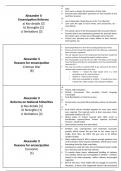
1861
Serfs were no longer the possession of their lords.
Peasants paid redemption payments for their freedom & the
Alexander II land they received.
b)
Emancipation Reforms Led to Alexander II being known as the ‘Tsar Liberator'
a) Key details [3] Gave serfs the right to marry freely, own possessions, etc –
more liberty.
b) Strengths [2] c)
c) limitations [3] The partial nature of the Emancipation Edict aroused criticism.
Peasants had to pay redemption payments for land well above
the market value, so they were still largely tied to the land.
Control over peasants was simply shifted to local councils,
land captains, etc.
Russia depended on its army for its prestige abroad & @ home.
The loss of the Crimean War against GB in Feb 1856 was a substantial
blow to Russia’s reputation.
The war exposed many of the weaknesses that had been masked by
previous victories & showed the need for military reform.
Alexander II The emancipation occurred only 5yrs after the defeat, even though
Reasons for emancipation there had been advocates for emancipation w/in the imperial family
since the 18th C.
Crimean War The army was costly to maintain (40% of gov revenue) & the lack of
railways meant supply chains were slow.
[8] o Solution 1 – replace the large regular army w a small
peacetime army & a trained reserve.
o Solution 2 – improve the economy.
o Both were incompatible w serfdom – S1 would mean more
trained serfs, which created a risk of peasant rebellion.
a)
Poland. Initial relaxation.
Finland. Concessions. Diet accepted; Finnish language
encouraged.
Early liberalisation of controls on jews.
Alexander II b)
Reforms on National Minorities Finnish policy successful till Russification policies of Alexander
Ill.
a) Key details [3] c)
b) Strengths [1] Early Polish reforms whetted appetite for even more which
were rejected. This inspired revolt, & then repression. Poles
c) limitations [3] potentially rebellious till 1917.
Liberal policy to Poland reversed after 1863 revolt, &
Russification imposed.Name 'Poland' replaced by'Vistula
Province'. 10,000 exiled.
Liberal policy towards lews also halted.
Serfdom was unproductive and restricted economic
growth, which meant the gov had to incr taxes, esp in
vodka. Even then, by 1855, the gov was in 54 million
roubles of debt.
Many nobles found it diff to extract enough produce from
Alexander II serfs to finance their luxurious lifestyles, which led to many
borrowing from the State Loan Bank.
Reasons for emancipation Landowners could oft only sell serf-produced grain locally
Economic for a low price due to the lack railways.
To resolve these issues, widespread building of railways
[5] was needed, which was incompatible w serfdom - serfdom
aimed to tie down peasants, whilst railways encouraged
migration.
BUT @ the time, most nobles did not engage in economic
literature, & those who supported reform had envisioned
, an agrarian society after emancipation.
He was quite liberal, even @ the end of his reign - General Loris-
Melikov’s suggestion of giving elected representatives a chance to
express their opinions to the gov was accepted by Alexander II on the
day People's Will assassinated him.
Emancipation – gave serfs more liberty & placated them (prevented
uprisings).
Alexander II Edu reforms allowed students to grow from 3,600 to 10,000.
Success of his reign Zemstva provided wider suffrage - 40% of members chosen by
peasants
Successful Cumbersome, secretive, formalistic old system replaced by new
structure based on open trials in public, argued out by lawyers, in
[7] front of a jury.
Milutin’s reforms reduced the financial burden of having a massive
standing army & helped spread literacy; army educated 2-3 million
soldiers 1870s-90s.
Growth of railways cont(1,100km to 22,000km,) helped by gov
subsidies.
His refusal to allow the participation of the public in gov meant potential
supporters of reform were alienated & reforming elements w/in the
bureaucracy could not overcome its innate conservatism.
Emancipation - peasants had to compensate their previous owners
through redemption payments but, due to the land they received being
often of poor quality, most peasants struggled to pay.
Alexander II The emancipation resulted in disputes over land ownership that lasted
decades.
Success of his reign It took Russian forces one full year to quell the 1863 January Insurrection
in Poland – military reforms weren’t that effective.
Unsuccessful The defeat of Turkey in 1878 only illustrates that a weak enemy can be
easily defeated.
[8] The relaxation in unis, followed by repression, helped the development
of rev groups amongst the intelligentsia.
Voting system for the Zemstvo & Duma favoured nobles who dominated
assemblies, so local affairs still run by gentry.
Initial relaxation of censorship encouraged criticism, which led to
tightening up, which led to increased criticism etc, so overall discontent
grew – contributed to A2’s assassination.
• The emancipation was only enacted to prevent an uprising.
• Voting system for the Zemstvo & Duma favoured nobles
who dominated assemblies, so local affairs still run by
gentry.
• Initial relaxation of censorship encouraged criticism, which
Alexander II led to tightening up.
How liberal was Russian gov? • His refusal to allow the participation of the public in gov
meant potential supporters of reform were alienated &
Evidence that gov not was liberal: reforming elements w/in the bureaucracy could not
overcome its innate conservatism.
[6] • The relaxation of unis was followed by a period of
repression after a failed assassination attempt.
1866 – Liberal edu minister Golovnin was rplaced by
Tolstoy who placed emphasis on traditional subjects &
tightened gov control over schools.
1861
Serfs were no longer the possession of their lords.
Peasants paid redemption payments for their freedom & the
Alexander II land they received.
b)
Emancipation Reforms Led to Alexander II being known as the ‘Tsar Liberator'
a) Key details [3] Gave serfs the right to marry freely, own possessions, etc –
more liberty.
b) Strengths [2] c)
c) limitations [3] The partial nature of the Emancipation Edict aroused criticism.
Peasants had to pay redemption payments for land well above
the market value, so they were still largely tied to the land.
Control over peasants was simply shifted to local councils,
land captains, etc.
Russia depended on its army for its prestige abroad & @ home.
The loss of the Crimean War against GB in Feb 1856 was a substantial
blow to Russia’s reputation.
The war exposed many of the weaknesses that had been masked by
previous victories & showed the need for military reform.
Alexander II The emancipation occurred only 5yrs after the defeat, even though
Reasons for emancipation there had been advocates for emancipation w/in the imperial family
since the 18th C.
Crimean War The army was costly to maintain (40% of gov revenue) & the lack of
railways meant supply chains were slow.
[8] o Solution 1 – replace the large regular army w a small
peacetime army & a trained reserve.
o Solution 2 – improve the economy.
o Both were incompatible w serfdom – S1 would mean more
trained serfs, which created a risk of peasant rebellion.
a)
Poland. Initial relaxation.
Finland. Concessions. Diet accepted; Finnish language
encouraged.
Early liberalisation of controls on jews.
Alexander II b)
Reforms on National Minorities Finnish policy successful till Russification policies of Alexander
Ill.
a) Key details [3] c)
b) Strengths [1] Early Polish reforms whetted appetite for even more which
were rejected. This inspired revolt, & then repression. Poles
c) limitations [3] potentially rebellious till 1917.
Liberal policy to Poland reversed after 1863 revolt, &
Russification imposed.Name 'Poland' replaced by'Vistula
Province'. 10,000 exiled.
Liberal policy towards lews also halted.
Serfdom was unproductive and restricted economic
growth, which meant the gov had to incr taxes, esp in
vodka. Even then, by 1855, the gov was in 54 million
roubles of debt.
Many nobles found it diff to extract enough produce from
Alexander II serfs to finance their luxurious lifestyles, which led to many
borrowing from the State Loan Bank.
Reasons for emancipation Landowners could oft only sell serf-produced grain locally
Economic for a low price due to the lack railways.
To resolve these issues, widespread building of railways
[5] was needed, which was incompatible w serfdom - serfdom
aimed to tie down peasants, whilst railways encouraged
migration.
BUT @ the time, most nobles did not engage in economic
literature, & those who supported reform had envisioned
, an agrarian society after emancipation.
He was quite liberal, even @ the end of his reign - General Loris-
Melikov’s suggestion of giving elected representatives a chance to
express their opinions to the gov was accepted by Alexander II on the
day People's Will assassinated him.
Emancipation – gave serfs more liberty & placated them (prevented
uprisings).
Alexander II Edu reforms allowed students to grow from 3,600 to 10,000.
Success of his reign Zemstva provided wider suffrage - 40% of members chosen by
peasants
Successful Cumbersome, secretive, formalistic old system replaced by new
structure based on open trials in public, argued out by lawyers, in
[7] front of a jury.
Milutin’s reforms reduced the financial burden of having a massive
standing army & helped spread literacy; army educated 2-3 million
soldiers 1870s-90s.
Growth of railways cont(1,100km to 22,000km,) helped by gov
subsidies.
His refusal to allow the participation of the public in gov meant potential
supporters of reform were alienated & reforming elements w/in the
bureaucracy could not overcome its innate conservatism.
Emancipation - peasants had to compensate their previous owners
through redemption payments but, due to the land they received being
often of poor quality, most peasants struggled to pay.
Alexander II The emancipation resulted in disputes over land ownership that lasted
decades.
Success of his reign It took Russian forces one full year to quell the 1863 January Insurrection
in Poland – military reforms weren’t that effective.
Unsuccessful The defeat of Turkey in 1878 only illustrates that a weak enemy can be
easily defeated.
[8] The relaxation in unis, followed by repression, helped the development
of rev groups amongst the intelligentsia.
Voting system for the Zemstvo & Duma favoured nobles who dominated
assemblies, so local affairs still run by gentry.
Initial relaxation of censorship encouraged criticism, which led to
tightening up, which led to increased criticism etc, so overall discontent
grew – contributed to A2’s assassination.
• The emancipation was only enacted to prevent an uprising.
• Voting system for the Zemstvo & Duma favoured nobles
who dominated assemblies, so local affairs still run by
gentry.
• Initial relaxation of censorship encouraged criticism, which
Alexander II led to tightening up.
How liberal was Russian gov? • His refusal to allow the participation of the public in gov
meant potential supporters of reform were alienated &
Evidence that gov not was liberal: reforming elements w/in the bureaucracy could not
overcome its innate conservatism.
[6] • The relaxation of unis was followed by a period of
repression after a failed assassination attempt.
1866 – Liberal edu minister Golovnin was rplaced by
Tolstoy who placed emphasis on traditional subjects &
tightened gov control over schools.


