
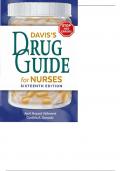
Davis`s Drug Guide For Nurses sixteenth edition.
Davis’s DRUG GUIDE FOR NURSES® Sixteenth edition HOW TO USE DAVIS’S DRUG GUIDE FOR NURSES............................ 1 EVIDENCE-BASED PRACTICE AND PHARMACOTHERAPEUTICS: Implications for Nurses ....................................................... 6 PHARMACOGENOMICS......................................................... 9 MEDICATION ERRORS: Improving Practices and Patient Safety............ 12 DETECTING AND MANAGING ADVERSE DRUG REACTIONS ................. 18 OVERVIEW OF RISK EVALUATION AND MITIGATION SYSTEMS (REMS)... 22 SPECIAL DOSING CONSIDERATIONS.......................................... 23 The Pediatric Patient ......................................................... 23 The Older Adult Patient ...................................................... 23 The Patient of Reproductive Age.............................................. 24 Renal Impairment ........................................................... 24 Hepatic Impairment ......................................................... 24 Heart Failure ................................................................ 24 Body Size .................................................................... 24 Drug Interactions ............................................................ 25 THE CYTOCHROME P450 SYSTEM ............................................ 26 EDUCATING PATIENTS ABOUT SAFE MEDICATION USE ..................... 29 CLASSIFICATIONS .............................................................. 31 Anti-Alzheimer’s agents ...................................................... 31 Antianemics ................................................................. 32 Antianginals ................................................................. 33 Antianxiety agents............................................................ 34 Antiarrhythmics.............................................................. 35 Antiasthmatics ............................................................... 36 Anticholinergics ............................................................. 37 Anticoagulants ............................................................... 39 Anticonvulsants .............................................................. 40 Antidepressants.............................................................. 41 Antidiabetics................................................................. 43 Antidiarrheals ............................................................... 45 Antiemetics .................................................................. 46 Antifungals................................................................... 47 Antihistamines ............................................................... 48 Antihypertensives ............................................................ 49 Anti-infectives................................................................ 51 Antineoplastics............................................................... 52 Antiparkinson agents......................................................... 54 Antiplatelet agents ........................................................... 56 Antipsychotics ............................................................... 56 Antipyretics .................................................................. 58 Antiretrovirals ............................................................... 59 Antirheumatics .............................................................. 60 Antituberculars .............................................................. 61 Antiulcer agents.............................................................. 62 CONTENTS x Antivirals .................................................................... 64 Beta blockers................................................................ 65 Bone resorption inhibitors .................................................. 67 Bronchodilators ............................................................. 68 Calcium channel blockers ................................................... 69 Central nervous system stimulants ........................................... 71 Corticosteroids .............................................................. 72 Diuretics .................................................................... 73 Hormones ................................................................... 75 Immunosuppressants ........................................................ 76 Laxatives..................................................................... 77 Lipid lowering agents ........................................................ 78 Minerals/electrolytes/pH modifiers........................................... 79 Natural/Herbal Products ..................................................... 80 Nonopioid analgesics ........................................................ 81 Nonsteroidal anti-inflammatory agents ....................................... 82 Opioid analgesics ............................................................ 84 Sedative/hypnotics ........................................................... 85 Skeletal muscle relaxants .................................................... 87 Thrombolytics ............................................................... 88 Vaccines/immunizing agents ................................................. 90 Vascular headache suppressants ............................................. 90 Vitamins ..................................................................... 91 Weight control agents ........................................................ 92 DRUG MONOGRAPHS IN ALPHABETICAL ORDER BY GENERIC NAME ...... 95– 1298 DRUGS APPROVED IN CANADA ................................................ 1299 NATURAL/HERBAL PRODUCTS ................................................ 1325 MEDICATION SAFETY TOOLS.................................................. 1351 APPENDICES .................................................................... 1367 Appendix A. Recent Drug Approvals .......................................... 1369 Appendix B. Combination Drugs ............................................. 1379 Appendix C. Ophthalmic Medications......................................... 1398 Appendix D. Medication Administration Techniques .......................... 1406 Appendix E. Administering Medications to Children........................... 1409 Appendix F. Formulas Helpful for Calculating Doses .......................... 1410 Appendix G. Pediatric Dosage Calculations ................................... 1412 Appendix H. Normal Values of Common Laboratory Tests..................... 1413 Appendix I. Controlled Substance Schedules.................................. 1415 Appendix J. Equianalgesic Dosing Guidelines ................................. 1418 Appendix K. Food Sources for Specific Nutrients.............................. 1421 Appendix L. Insulins and Insulin Therapy..................................... 1423 Appendix M. Canadian and U.S. Pharmaceutical Practices .................... 1425 Appendix N. Routine Pediatric and Adult Immunizations ...................... 1427 BIBLIOGRAPHY ................................................................. 1434 COMPREHENSIVE GENERIC/TRADE/CLASSIFICATIONS INDEX ............. 1435 Davis’s Drug Guide for Nurses provides comprehensive, up-to-date drug information in well- organized, nursing-focused monographs. It also includes extensive supplemental material in 16 appendices, thoroughly addresses the issue of safe medication administration, and educates the reader about 50 different therapeutic classes of drugs. In this 16th edition, we have continued the tradition of focusing on safe medication administration by including Medication Safety Tools and even more information about health care’s most vulnerable patients: children, the elderly, pregnant women, and breast feeding mothers. Look for more Pedi, Geri, OB, and Lactation headings throughout the monographs. In addition, we’ve included information relevant to Canadian students and nurses. You’ll find an appendix comparing Canadian and U.S. pharmaceutical practices, more Canada-only combination drugs in the Combination Drugs appendix, and additional Canadian brand names in the drug monographs. To help you find this information quickly, we’ve also added a maple leaf icon ( ) in the index next to each Canadian entry. We have added pharmacogenomic information throughout numerous monographs to guide the nurse in selecting and monitoring various drug therapies. To help you find this information quickly, we’ve added a double helix icon ( ) to denote this information as it applies to specific drugs. Use this book to enhance your competence in implementing and evaluating medication therapies. The following sections describe the organization of Davis’s Drug Guide for Nurses and explain how to quickly find the information you need. Safe Medication Use Articles “Medication Errors: Improving Practices and Patient Safety,” “Detecting and Managing Adverse Drug Reactions,” “Overview of Risk Evaluation and Mitigation Systems (REMS),” “Special Dosing Considerations,” and “Educating Patients About Safe Medication Use” comprise the safe medication use articles and provide an overview of the medication safety issues that confront practitioners and patients. Leading off this series, the medication errors article familiarizes you with the systems issues and clinical situations repeatedly implicated in medication errors and suggests practical means to avoid them. It also teaches you about high alert medications, which have a greater potential to cause patient harm than other medications. “Detecting and Managing Adverse Drug Reactions” explains the different types of adverse reactions and provides guidance on how to detect and manage them. “Risk Evaluation and Mitigation Strategies (REMS)” explains strategies developed by the pharmaceutical industry and required by the Food and Drug Administration (FDA) to minimize adverse drug reactions from potentially dangerous drugs. We have highlighted the drugs that currently have approved REMS programs associated with their use by adding a REMS label at the top of applicable drug monographs. “Special Dosing Considerations” identifies the patient populations, such as neonates and patients with renal impairment, who require careful dose adjustments to ensure optimal therapeutic outcomes. “Educating Patients About Medication Use” reviews the most important teaching points for nurses to discuss with their patients and their families. In addition to these safety articles, other critical information is highlighted in red throughout the drug monographs. This allows the reader to quickly identify important information and to see how nursing practice, including assessment, implementation, and patient teaching, relates to it. Classifications Profile Medications in the same therapeutic class often share similar mechanisms of action, assessment guidelines, precautions, and interactions. The Classifications Profile provides summaries of the major therapeutic classifications used in Davis’s Drug Guide for Nurses. It also provides patient teaching information common to all agents within the class and a list of drugs within each class. 1 2 DAVIS’S DRUG GUIDE FOR NURSES Medication Safety Tools Updated for this edition is a section with tables and charts that nurses can use for a quick but thorough reference to information that will help them avoid making medication errors. It includes lists of drugs that are associated with adverse reactions and falls in the elderly; proper dosing for pediatric intravenous medications; confused drug names; FDA-approved Tall Man letters and more. Drug Monographs Drug monographs are organized in the following manner: High Alert Status: Some medications, such as chemotherapeutic agents, anticoagulants, and insulins, have a greater potential for harm than others. These medications have been identified by the Institute for Safe Medication Practices as high alert drugs. Davis’s Drug Guide for Nurses includes a high alert tab in the upper right corner of the monograph header in appropriate medications to alert the nurse to the medication’s risk. The term “high alert” is used in other parts of the monograph as well, to help the nurse administer these medications safely. See the article “Medication Errors: Improving Practices and Patient Safety” for a complete list of high alert medications in Davis’s Drug Guide for Nurses. Refer to ISMP.org for all solutions, groups, and individual high alert drugs. Generic/Brand Name: The generic name appears first, with a pronunciation key, followed by an alphabetical list of trade names. Canadian trade names are preceded by a maple leaf ( ). Brand names that have been discontinued have a slash through them (Decadron). Common names, abbreviations, and selected foreign names are also included. Classification: The therapeutic classification, which categorizes drugs by the disease state they are used to treat, appears first, followed by the pharmacologic classification, which is based on the drug’s mechanism of action. Controlled Substance Schedule: All drugs regulated by federal law are placed into one of five schedules, based on the drug’s medicinal value, harmfulness, and potential for abuse or addiction. Schedule I drugs, the most dangerous and having no medicinal value, are not included in Davis’s Drug Guide for Nurses. (See Appendix I for a description of the Schedule of Controlled Substances.) Pregnancy Category: The FDA recently recommended discontinuation of the Pregnancy Category system (A, B, C, D, and X) since this categorization may not appropriately communicate the risk that a drug may have during pregnancy or breast feeding. Based on this guidance, the Pregnancy Categories have been removed from each of the drug monographs. These pregnancy letter categories have been replaced in drug prescribing information with a narrative summary that describes the potential risk of using the drug during pregnancy and breast feeding as well as in women and men of reproductive potential. The drug monographs have been enhanced with this detailed information in these patient populations. Indications: Medications are approved by the FDA for specific disease states. This section identifies the diseases or conditions for which the drug is commonly used and includes significant unlabeled uses as well. Action: This section contains a concise description of how the drug produces the desired therapeutic effect. Pharmacokinetics: Pharmacokinetics refers to the way the body processes a medication by absorption, distribution, metabolism, and excretion. This section also includes information on the drug’s half-life. Absorption: Absorption describes the process that follows drug administration and its subsequent delivery to systemic circulation. If only a small fraction is absorbed following oral administration (diminished bioavailability), then the oral dose must be much greater than the parenteral dose. HOW TO USE DAVIS’S DRUG GUIDE FOR NURSES 3 Absorption into systemic circulation also follows other routes of administration such as topical, transdermal, intramuscular, subcutaneous, rectal, and ophthalmic routes. Drugs administered intravenously are 100% bioavailable. Distribution: This section comments on the drug’s distribution in body tissues and fluids. Distribution becomes important in choosing one drug over another, as in selecting an antibiotic that will penetrate the central nervous system to treat meningitis or in avoiding drugs that cross the placenta or concentrate in breast milk. Information on protein binding is included for drugs that are 95% bound to plasma proteins, which has implications for drug-drug interactions. Metabolism and Excretion: Drugs are primarily eliminated from the body either by hepatic conversion to active or inactive compounds (metabolism or biotransformation) and subsequent excretion by the kidneys, or by renal elimination of unchanged drug. Therefore, drug metabolism and excretion information is important in determining dosage regimens and intervals for patients with impaired renal or hepatic function. The creatinine clearance (CCr) helps quantify renal function and guides dosage adjustments. Formulas to estimate CCr are included in Appendix F. Half-Life: The half-life of a drug is the amount of time it takes for the drug concentration to decrease by 50% and roughly correlates with the drug’s duration of action. Half-lives are given for drugs assuming the patient has normal renal or hepatic function. Conditions that alter the half-life are noted. Time/Action Profile: The time/action profile table provides the drug’s onset of action, peak effect, and duration of activity. This information can aid in planning administration schedules and allows the reader to appreciate differences in choosing one route over another. Contraindications and Precautions: Situations in which drug use should be avoided are listed as contraindications. In general, most drugs are contraindicated in pregnancy or lactation, unless the potential benefits outweigh the possible risks to the mother or baby (e.g., anticonvulsants, antihypertensives, and antiretrovirals). Contraindications may be absolute (i.e., the drug in question should be avoided completely) or relative, in which certain clinical situations may allow cautious use of the drug. The precautions portion includes disease states or clinical situations in which drug use involves particular risks or in which dosage modification may be necessary. Extreme cautions are noted separately to draw attention to conditions under which use of the drug results in serious, potentially life-threatening consequences. Adverse Reactions and Side Effects: Although it is not possible to include all reported reactions, major side effects for all drugs are included. Life-threatening adverse reactions or side effects are CAPITALIZED, and the most frequent side effects are underlined. Those underlined generally have an incidence of 10% or greater. Those not underlined occur in fewer than 10% but more than 1% of patients. Although life-threatening reactions may be rare (fewer than 1%), they are included because of their significance. The following abbreviations are used for body systems: CNS: central nervous system EENT: eye, ear, nose, and throat Resp: respiratory CV: cardiovascular GI: gastrointestinal GU: genitourinary Derm: dermatologic Endo: endocrinologic F and E: fluid and electrolyte Hemat: hematologic Local: local Metab: metabolic MS: musculoskeletal Neuro: neurologic Misc: miscellaneous Rep: reproductive Interactions: Drug interactions are a significant risk for patients. As the number of medications a patient receives increases, so does the likelihood of drug-drug interactions. This section provides the most important drug-drug interactions and their physiological effects. Significant drug-food and drug- 4 DAVIS’S DRUG GUIDE FOR NURSES natural product interactions are also noted as are recommendations for avoiding or minimizing these interactions. Route and Dosage: Routes of administration are grouped together and include recommended doses for adults, children, and other more specific age groups (such as geriatric patients). Dosage units are expressed in the terms in which they are usually prescribed. For example, penicillin G dosage is given in units rather than in milligrams. Dosing intervals also are provided in the manner in which they are frequently ordered. If a specific clinical situation (indication) requires a different dose or interval, this is listed separately for clarity. Specific dosing regimens for hepatic or renal impairment are also included. Availability: This section lists the strengths and concentrations of available dose forms. Such information is useful in planning more convenient regimens (fewer tablets/capsules, less injection volume) and in determining whether certain dosage forms are available (suppositories, oral concentrates, sustained- or extended-release forms). Flavors of oral liquids and chewable tablets have been included to improve compliance and adherence in pediatric patients. General availability and average wholesale prices of commonly prescribed drugs have also been added as an aid to nurses with prescriptive authority. Nursing Implications: This section helps the nurse apply the nursing process to pharmacotherapeutics. The subsections provide a step-by-step guide to clinical assessment, implementation (drug administration), and evaluation of the outcomes of pharmacologic therapy. Assessment: This section includes guidelines for assessing patient history and physical data before and during drug therapy. Assessments specific to the drug’s various indications are also included. The Lab Test Considerations section provides the nurse with information regarding which laboratory tests to monitor and how the results may be affected by the medication. It also includes dose modifications required for changes in lab values. Toxicity and Overdose alerts the nurse to therapeutic serum drug concentrations that must be monitored and signs and symptoms of toxicity. The antidote and treatment for toxicity or overdose of appropriate medications also are included. Potential Nursing Diagnoses: The two or three most pertinent North American Nursing Diagnoses Association (NANDA) diagnoses that potentially apply to a patient receiving the medication are listed. Each diagnosis includes the pharmacologic effect from which the diagnosis has been derived. For instance, the patient receiving immunosuppressant drugs should be diagnosed with Risk for Infection. The diagnosis is followed by the term Side Effects in parentheses. Since patient education is fundamental to all nurse-patient interactions, the diagnosis Deficient Knowledge should be assumed to be a nursing diagnosis applicable to all drugs. Implementation: Guidelines specific for medication administration are discussed in this subsection. High Alert information, i.e., information that directly relates to preventing medication errors with inherently dangerous drugs, is included first if applicable. Sound-alike look-alike name confusion alerts are also included here. Other headings in this section provide data regarding routes of administration. PO describes when and how to administer the drug, whether tablets may be crushed or capsules opened, and when to administer the medication in relation to food. In addition, we have identified which opioids have abuse deterrent properties and describe the mechanism of these properties within the monograph. The IV Administration section includes specific information about administering the medication intravenously. This section has been thoroughly updated and contains a prominent IV Administration heading that introduces this section. Bold, red headings are included to highlight the recommended diluents and concentrations. These headings complement the rate heading and make this critical information easy to find. Several subsections comprise the IV Administration section. The first section, IV Push, which refers to administering medications from a syringe directly into a saline lock, Y-site of IV tubing, or a 3-way stopcock, provides details for reconstitution, concentration, dilution, and rate. HOW TO USE DAVIS’S DRUG GUIDE FOR NURSES 5 Rate is also included in both other methods of IV administration, direct or intermittent infusion. Intermittent Infusion and Continuous Infusion specify standard dilution solutions and amounts, stability information, and rates. In addition, a quick reference for information about dilution amounts in neonates and infants, who are extremely sensitive to excess fluids, is contained in the new Medication Safety Tools section. Y-Site Compatibility/Incompatibility identifies medications compatible or incompatible with each drug when administered via Y-site injection or 3-way stopcock in IV tubing. Additive Compatibility/Incompatibility identifies medications compatible or incompatible when admixed in solution. Compatibility of diluted medications administered through a Y-site for continuous or intermittent infusion is usually limited to 24 hours. Solution Compatibility/Incompatibility identifies compatible or incompatible solutions for dilution for administration purposes. Compatibility information is compiled from Micromedex and the manufacturer’s package insert. Patient/Family Teaching: This section includes information that should be taught to patients and/or families of patients. Side effects that should be reported, information on minimizing and managing side effects, details on administration, and follow-up requirements are presented. The nurse also should refer to the Implementation section for specific information to teach to the patient and family about taking the medication. Home Care Issues discusses aspects to be considered for medications taken in the home setting. Evaluation: Outcome criteria for determination of the effectiveness of the medication are provided. REFERENCES 1. Phillips LD, Gorski LA. Manual of I.V. Therapeutics. 6th Edition. F.A. Davis Company: Philadelphia, 2014. Note: The content below is an excerpt from an article written exclusively for the 12th edition of Davis’s Drug Guide for Nurses. To access the full article, visit DavisPlus, F.A. Davis’s online center for student and instructor ancillaries, at . The purpose of evidence-based practice is to improve the outcomes of treatment for patients. How pharmacologic agents affect patients is often the subject of research; such research is required by the Food and Drug Administration (FDA) before and after drug approval. Any medication can be the subject of an evidence-based clinical review article. But what does “evidence-based” mean and how does it relate to nursing? According to Ingersoll, “Evidence-based nursing practice is the conscientious, explicit, and judicious use of theory-derived, research-based information in making decisions about care delivery to individuals or groups of patients and in consideration of individual needs and preferences” (2000, p. 152). Still subject to debate are questions about the sufficiency and quality of evidence. For example, what kind of evidence is needed? How much evidence is necessary to support, modify, or change clinical practice? And, were the studies reviewed of “good” quality and are their results valid? In general, clinicians use hierarchy of evidence schemas to rank types of research reports from the most valuable and scientifically rigorous to the least useful. The hierarchy makes clear that some level of evidence about the effect of a particular treatment or condition exists, even if the evidence is considered weak. Figure 1 illustrates a hierarchy of evidence pyramid with widely accepted rankings: the most scientifically rigorous at the top, the least scientifically rigorous at the bottom. Practitioners and clinicians should look for the highest level of available evidence to answer their clinical questions. However, it is important that clinicians also apply the second fundamental principle of EBP, which is that evidence alone is not sufficient to make clinical decisions. Decision makers must always trade off the benefits and risks, and the costs associated with alternative treatment options, and by doing so, consider the patients’ values and preferences. Figure 1: Hierarchy of Scientific Evidence Pyramid 6 EVIDENCE-BASED PRACTICE AND PHARMACOTHERAPEUTICS 7 Evidence-Based Practice and Its Importance in Pharmacology Evidence-based practices in pharmacology generally are derived from well-designed randomized controlled trials (RCTs) or other experimental designs that investigate drugs’ therapeutic and non- therapeutic effects. However, although FDA-approved pharmacologic agents have undergone rigorous testing through RCTs, nurses have the responsibility to evaluate the findings for the best scientific evidence available and to determine the most appropriate, safest, and efficacious drugs for their patients. While numerous databases are available through Internet searches, two valuable and quickly accessible resources for evaluating the current highest level of pharmacologic evidence are 1) the Cochrane Database of Systematic Reviews and the Central Register of Controlled Trials and 2) the National Guidelines Clearinghouse (NGC), supported by the Agency for Healthcare Research and Quality (AHRQ). The Cochrane library and databases provide full text of high-quality, regularly updated systematic reviews, protocols, and clinical trials. The Web address is http:// AHRQ’s Evidence-Based Practice Centers (EPCs) provide evidence reports and technology assessments that can assist nurses in their efforts to provide the highest quality and safest pharmacologic health care available. The EPCs systematically review the relevant scientific literature, conduct additional analyses (when appropriate) prior to developing their reports and assessments, and provide guideline comparisons. The Web address is . Evidence-based systematic reports and guidelines provide nurses with instantaneous access to the most current knowledge, enabling them to critically appraise the scientific evidence and its appropriateness to their patient population. This is especially important given the need for nurses to keep abreast of the rapidly changing pharmacologic agents in use. New drugs are approved each month, compelling nurses to know these drugs’ intended uses, therapeutic effects, interactions, and adverse effects. Evidence-based practice requires a shift from the traditional paradigm of clinical practice— grounded in intuition, clinical experience, and pathophysiologic rationale— to a paradigm in which nurses must combine clinical expertise, patient values and preferences, and clinical circumstances with the integration of the best scientific evidence in order to make conscientious, well-informed, research-based decisions that affect nursing patient care. *** Linda S. Weglicki, PhD, RN, MSN Health Scientist Administrator Office of Extramural Programs National Institute of Nursing Research National Institutes of Health Bethesda, Maryland Introduction Multiple variables influence the selection and optimization of drug therapy for each individual patient. Pharmacogenomics, the study of the influence of individual genetic variations on drug response in patients, may yield additional information to further enhance safe and effective medication use. Whereas the field originally focused on the effects of specific variants within individual genes on drug response (i.e., pharmacogenetics), efforts increasingly examine the role of multiple variants across the genome and their potential relationship to drug therapy outcomes. As our understanding of pharmacogenomics and the biological relevance of specific genetic variants in individuals’ drug metabolizing enzymes, drug transporter proteins, and drug target receptors to certain drug responses has increased, we have learned that multiple variations across the genome can contribute to significant and relatively predictable treatment outcomes. Virtually every therapeutic area involving medication use includes a drug for which documented genetic variability has the potential to affect drug response. Some of this information is included in the FDA-approved package insert prescribing information. For some agents, the suitability of a specific drug or the determination of an appropriate initial dose for an individual patient based on pharmacogenetic information has been incorporated into dosing algorithms and patient care. As such, it is essential that health care professionals can interpret and utilize this information to facilitate safer and more effective use of medications for individual patients. Genetic Variation within the Human Genome The human genome is comprised of approximately 3 billion nucleotide base pair sequences that encode for molecular DNA with, except for identical twins, each individual having his/her own unique human genome sequence. Four nucleotide bases (adenine, guanine, cytosine, and thymine) are responsible for constituting the sequence of each single strand of DNA. Variations in nucleotide sequences can occur, and contribute to alterations in the expression and activities of certain genes. The location of these variations within a DNA sequence on a particular chromosome can have a profound impact on the ultimate biological activity or characteristic of that gene or lead to little or unknown consequences. Proteins are involved in most enzymatic, structural, and biologic functions associated with drug disposition and effects. The processes involved in DNA replication, RNA transcription, and translation to synthesized proteins are complex. Each of these processes is potentially susceptible to consequences of DNA sequence variations. Genetic variations can take many forms, including single nucleotide base substitutions (e.g., a cytosine substituted for an adenine), insertions or deletions of a nucleotide base within a sequence, and deletions or extra copies of entire DNA sequences. Variations in DNA that occur at a frequency of greater than 1% in the population are called polymorphisms. The most common genetic variations in humans are referred to as single nucleotide polymorphisms (SNPs) and result from the substitution of one nucleotide base for another. The specific location of a SNP within a gene is important. As mentioned previously, genetic variations can be of unknown or no clinical consequence or they can lead to a truncated, dysfunctional, or complete lack of protein product that is associated with an alteration in drug response. Clinical Significance of Genetic Polymorphisms SNPs and other genetic variations influence drug response at different levels through alterations in the activities of enzymes or proteins involved in drug absorption, transport, metabolism, elimination, or at the drug target receptor (site of drug action). Clinically relevant polymorphisms have been identified for genes that encode for most of the common enzymes involved in drug metabolism. Most enzymes 9 10 DAVIS’S DRUG GUIDE FOR NURSES are localized intracellularly throughout a wide variety of tissues in the body, including the enterocytes that line the intestine and within hepatocytes. Variants that cause diminished or absent enzyme activity decrease drug metabolism processes. In this case, if the drug is metabolized to an inactive product, then the prolonged persistence of the parent drug in the body could result in excessive pharmacologic effects and potential toxicities may occur. If the drug requires enzymatic conversion to a pharmacologically active metabolite, drug response may be reduced or absent. In contrast, if the variation is due to extra copies of a gene that results in increased enzymatic activity, opposite effects on drug metabolism and response can occur. Similar outcomes can be associated with polymorphisms in genes that encode for membrane transporter proteins that are responsible for drug transport into cells (influx), as well as proteins that participate in energy-dependent processes that export drugs out of cells (efflux transporters). Polymorphisms in drug transport proteins can influence drug response by altering drug gastrointestinal absorption, uptake and distribution in tissues, exposure to intracellular drug metabolizing enzymes, and elimination via the bile or urine. Finally, some genes that encode for certain drug receptors are highly polymorphic, resulting in attenuated or exaggerated drug responses. The number of polymorphic genes responsible for variations in drug response at drug receptors is relatively small compared to those associated with drug metabolizing enzymes or transport proteins; however, this area has undergone the least amount of study to date. Incorporating Pharmacogenomic Information into Clinical Practice Most drugs are initiated in individual patients based on knowledge about their safety and effectiveness within the general population. Information regarding patient characteristics (e.g., age, ethnicity, renal/hepatic function, concomitant disease, etc.) known to contribute to variability in drug response, when available, is considered at this time. Currently, there are more than 50 drugs with pharmacogenomic information included in the package insert. For selected agents, dosing recommendations based on an individual’s genetic information (i.e., genotype) for specific drugs and drug classes are also considered. Genomic biomarkers can play an important role in identifying responders and non-responders, avoiding drug toxicity, and adjusting the dose of drugs to optimize their efficacy and safety. However, the typical strategy for most drug therapy is to monitor the patient’s response to treatment and modify regimens as necessary. Patients who develop exaggerated pharmacologic responses or elicit no pharmacologic effect may be expressing a phenotype suggestive of altered drug disposition or target receptor effect that could be associated with an underlying genetic polymorphism. As we continue to learn more about these associations and can incorporate pharmacogenomic information into decisions regarding drug therapy for individual patients, the ultimate goal is to improve therapeutic outcomes by limiting drug exposure to patients that are most likely to derive no therapeutic benefit and/or experience toxic drug effects. For example, some genetic variants are associated with hypersensitivity reactions to a specific drug. A prescriber who is contemplating initiating that drug for a patient may determine whether the patient possesses that variant in his or her DNA. If that specific variant is present, the prescriber might select an alternate agent, thereby avoiding a potentially life-threatening hypersensitivity reaction. In another example, patients who are determined to have a genetic variant that results in an inactive metabolizing enzyme would not be appropriate candidates for an analgesic drug that requires that enzyme to convert the drug to the active analgesia-producing form. On the other hand, if that metabolizing enzyme is responsible for conversion of an active parent drug to an inactive metabolite, the starting dose of the drug may be reduced or perhaps an alternate drug might be selected. Several Clinical Laboratory Improvement Amendment (CLIA)-approved laboratories offer pharmacogenetic testing to identify relevant genetic polymorphisms that predict drug response and can be used to initiate appropriate drugs and dosing regimens for individual patients. Some of these tests, while recommended in drug prescribing information, are costly and may not be covered by insurance. Patients may not fully understand the utility of undergoing genetic testing and providing a specimen for DNA analysis, which is typically performed on a blood, saliva, buccal swab, or other tissue collection. On the other hand, patients who are engaged in their medical care may be familiar PHARMACOGENOMICS 11 with the concept of “personalized medicine” and seek information about available tests to “individualize” their own drug therapy. Currently, four drugs are required to have pharmacogenetic
Document information
- Uploaded on
- June 21, 2024
- Number of pages
- 292
- Written in
- 2023/2024
- Type
- Exam (elaborations)
- Contains
- Questions & answers


