

CCMC Practice Exam Questions and 100% Correct Answers
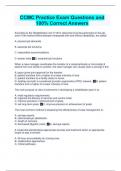
According to the Rehabilitation Act of 1973, tasks that must be performed on the job, even if the method differs between employees with and without disabilities, are called: A. physical job demands B. essential job functions C. reasonable accommodations D. worker traits B. essential job functions When a case manager coordinates the transfer of a catastrophically or chronically ill patient from one facility to another, the case manager can usually claim a savings if the: A. payor gives prior approval for the transfer. B. patient transfers from a higher to a lower intensity of care. C. patient transfers to a facility closer to home. D. facilities are both in a preferred provider organization (PPO) network. B. patient transfers from a higher to a lower intensity of care. The main purpose of client involvement in developing a rehabilitation plan is to: A. meet regulatory requirements. B. organize the delivery of services and control costs. C. improve precision in achievement of goals. D. set long-term goals. C. improve precision in achievement of goals. The most common method of assessing the effectiveness of case management is: A. savings reports. B. client/employer satisfaction. C. length of recovery. D. decreased litigation costs. A. savings reports. A model that standardizes appropriate services and treatment within an appropriate length of stay is termed: A. 24-hour accountability for nursing care. B. collaborative approaches. C. critical pathways. D. staff model health maintenance organization (HMO). C. critical pathways.
Document information
- Uploaded on
- June 6, 2024
- Number of pages
- 18
- Written in
- 2023/2024
- Type
- Exam (elaborations)
- Contains
- Questions & answers


