

HAZWOPER 40 Hour Training Review Questions and Answers
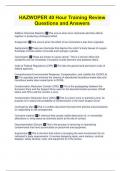
Additive Chemical Reaction This occurs when toxic chemicals add their effects together in producing a biological effect. Antagonism This occurs when the effect of two chemicals is less than expected. Asphyxiants These are chemicals that deprive the victim's body tissues of oxygen. Examples include carbon monoxide and hydrogen cyanide. Carcinogens These are known to cause cancer. This is a chronic effect and symptoms are not immediate. Examples include benzene and asbestos fibers. Code of Federal Regulations (CFR) This lists the general and permanent rules of federal agencies. Comprehensive Environmental Response, Compensation, and Liability Act (CERCLA) This regulates and enforces the cleanup of abandoned hazardous waste sites and hazardous waste sites created prior to RCRA. Contamination Reduction Corridor (CRC) This is the passageway between the Exclusion Zone and the Support Zone used for the decontamination process. OSHA letters and CPLs call the corridor a zone. Contamination Reduction Zone (CRZ) This is a warm zone or transition zone. Its purpose is to reduce the probability of contamination in the clean Support Zone. Contingency plan This is a written document that sets forth policies and procedures for responding to site emergencies. Corrosive material A chemical that causes visible destruction of, or irreversible alterations in, living tissue by chemical action at the site of contact. Decontamination (Decon) This is the process of removing or neutralizing contaminants that have accumulated on personnel and equipment. Ergonomics This is the term that refers to arranging the work environment for an individual's body requirements. It involves designing tasks, work stations, controls, displays, safety devices, tools, and equipment to fit the worker.
Document information
- Uploaded on
- June 4, 2024
- Number of pages
- 6
- Written in
- 2023/2024
- Type
- Exam (elaborations)
- Contains
- Questions & answers


