68W LPC Exam With Complete Solutions
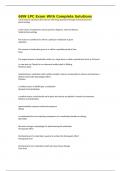
68W LPC Exam With Complete Solutions Is the study of substances that interact with living organisms through chemical processes pharmacology Is the science of substances used to prevent, diagnose, and treat disease Medical pharmacology The reason or conditions for which a particular medication is given Indication The amount of medication given at or within a specified period of time Dose The largest amount of medication either as a single dose or within a period time (such as 24 hours) i.e max dose for Tylenol for an otherwise healthy adult is 3000mg Maximum Dose administering a medication with variable strength, interval, and quantity to achieve and maintain a desired, observable physiological effect Titration a medical reason to NEVER give a medication Absolute Contraindication a medical reason a med should not be given but may be acceptable in certain circumstances Relative contraindication hypersensitivity response induced by exposure Allergy an unintended but not surprising consequence of a medication (besides an allergy) Side effect the desire change in physiology for administering the medication Therapeutic effect the blood level of a medication required to achieve the therapeutic effect Therapeutic level the blood level of a medication which will cause tissue damage Toxic level When medication is at its highest concentration Peak the lowest blood level of a medication between doses Trough the time for the body to eliminate 1/2 of the dose of medication Half-life a relatively constant blood level of medication which is sustained after 5-6 half-lives of medication Steady State the body has adapted to having a medication regularly and now requires higher or more frequent doses to achieve the therapeutic effect Tolerance when infectious organisms adapt to antibiotics or antivirals and it takes either higher doses of the same medication or a change to a different medication to kill the organisms Resistance the process of the body to break down and eliminate medications Metabolism the recommended time period between doses of a medication Dosing interval the time until a medication's therapeutic effect begins Onset the time until the medication's therapeutic effect wears off Duration of Effect the length of time a course of medication is continued to ensure the desired effect is maintained Duration of Therapy All of the limitations, considerations and instructions required, regarding a medication, to help achieve the desired physiological response while minimizing side effects Dosing parameters other medical problems which may affect metabolism or may make the patient more susceptible for a side effect or toxicity Comorbidities medications which kill or inhibit the reproduction of bacteria Antibiotics categorizes bacteria into either a GRAM POSITIVE or GRAM NEGATIVE Gram Stain Testing usually constant for each dose, but may change Strength of medication this is usually based on an hourly time interval or a number of times per day Frequency of each dose indicates the presence of peptidoglycan (is the substance that forms a tough and rigid cell wall) retains color of gram stain Gram positive indicates that the cell membrane out structure consists of a cytoplasmic membrane surrounded by a thin layer of peptidoglycn does not retain color from gram staining Gram negative bacteria that thrives only in an oxygen environment Aerobic bacteria that only grow well in the absence of oxygen Anaerobic T/F antibiotics are not effective on virus and fungi True Fungi are living organisms which can reproduce how? sexually or asexually damaging or destructive to liver cells hepatotoxic 1. Metabolized in the liver 2. Max dose of 1g given 3 times a day 3. 15mg/kg 4 times a day for children less than 12 years of age Acetaminophen How much Acetaminophen will cause harm to your liver? 150mg/kg or 7-10g Is a non-narcotic opioid agonist used for moderate to moderately severe pain Tramadol (Ultram) Tramadol dosage 50-100 mg every 4-6 hours not to exceed 400mg daily What medication has been prohibited for use in combat theaters except in cases of medical necessity because of concern for worsened hemorrhaging due to its affect on platelet function Aspirin NSAIDs block how many cyclo-oxygenase (COX) COX 1 and COX 2 involved in the formation of prostaglandins that maintain the integrity of the gastrointestinal mucosa (NSAIDs) COX-1 made primary in response to injury of inflammation (NSAIDs) COX-2 inhaled medications used to open the bronchi for improved airflow, usually in asthmatics Bronchodilators What are the 2 types of bronchodialators Short Acting Beta Agonists (SABA) Long Acting Beta Agonists (LABA) rapidly open the bronchi and are useful in acute cases such as asthma attacks and pneumonia SABA Work to open and drain mucous membranes in the nasal passages and eustachian tube Decongestants Primary histamine receptors are what? H1 and H2 causes bronchoconstricition local swelling, itching, motion sickness, and allergic rhinitis H1 receptors cause increased acid production in the stomach ie ranitidine (zantac) and cimetidine (Tagamet) H2 receptors decrease nausea and vomiting Anti-emetics TCCC guidance published in August 2014 advocates the use of what drug over promethazine for the following reasons: is safer and has no Black Box Warnings Ondansetron smooth muscle relaxers that relax the cramping of diarrhea Antispasmodics cause watery stool to become more formed Antidiarrheals cause constipation to be relieved or prevented by adding bulk to the stool Stool softeners cause increased peristalsis to relieve constipation by altering water and electrolyte secretion producing net intestinal fluid accumulation Laxatives What are the three classifications of TBIs? Mild Moderate Severe Blast are the number once cause of TBI, but what other mechanisms can cause a TBI? 1. MVA 2. GSW 3. Unspecific blunt trauma 4. ABN and fast rope injuries What are red flags? ominous signs of a worsening condition Name at least three Red Flags that dictate evacuation to a higher echelon of care? 1. Declining LOC 2. Pupil asymmetry 3. Seizures 4. Repeated vomiting is the end result of a significant blow or penetrating injury to the head that disrupts normal brain function Traumatic Brain Injury (TBI) number one cause of TBI?
Document information
- Uploaded on
- May 27, 2024
- Number of pages
- 21
- Written in
- 2023/2024
- Type
- Exam (elaborations)
- Contains
- Questions & answers