

ATTITUDES
Francisco Morales - Enrique Rebolloso - Miguel Moya (1994)
Summary:
WHAT IS AN ATTITUDE?
Attitude is defined as the association between a specific object and a corresponding evaluation, according to Fazio (1989; p. 155).
Both object and evaluation are universally understood in this definition. They can be situational objects, people, or social problems.
The assessment encompasses the affect generated, emotions mobilized, emotional memories of past experiences, and even beliefs
about the object's ability to achieve desired goals.
When a person lacks experience with the object or has no interest in it, the object-evaluation association does not exist, which is
termed as non-attitude rather than attitude. This lack of prior assessment can be seen, for example, in LaPiere study of attitudes
towards the Chinese ethnic minority.
The strength of this association is influenced by three distinct processes: cognitive, affective, and behavioral. The cognitive process
arises from a detailed knowledge of the object, the affective process from intense positive or negative experiences, and the
behavioral process from direct involvement with the object.
An attitude, therefore, consists of three components: cognitive (perceptions and information), affective (feelings), and behavioral
(tendencies and actions toward the object). Although these components can be favorable or unfavorable, positive, or negative,
they all represent evaluations of the object.
Ajzen (1989) describes attitude as a latent variable, inferred from measurable responses that reflect a positive or negative overall
evaluation of the object. The complexity of the attitude is illustrated in Breckler's (1984) work on snakes, where Thurstone's
technique was employed to measure cognitive, affective, and behavioral components.
Each component was evaluated using different methods to ensure a complete representation of the attitude towards snakes,
highlighting the importance of assessing all aspects to utterly understand a specific attitude.
STRUCTURE OF ATTITUDES
Attitudes, according to Breckler's study, are made up of cognitive, affective, and behavioral components. These elements represent
a person's responses to the object of the attitude, being classified into information and beliefs, affect, or intention, and behavior.
Although distinct from each other, they all reflect an evaluative disposition towards the object (Ajzen, 1989, p. 245).
Rosenberg and Hovland proposed a hierarchical model where these components are subsets of total attitude, implying that
measures within each component must be highly correlated and less correlated with measures of other components. Breckler's
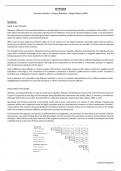
study confirms this model by showing significant correlations between measures of the same component (as seen in the Table),
while the correlations between different components are lower, but still present.
To characterize the cognitive component, its differentiation and integration are examined: the first refers to the number of beliefs
that a person uses when thinking about an attitudinal object, and the second to the evaluative consistency of those beliefs towards
the object. While LaPiere study lacks measures of the cognitive component, Breckler's work uses a variety of techniques to provide
a detailed and accurate view of these aspects of attitude.
1
Made by MatyBuda
, RELATIONSHIPS BETWEEN ATTITUDINAL COMPONENTS
The relationship between the cognitive and affective component is called affective-cognitive consistency, where the affect toward
an attitudinal object should reflect beliefs about that object. For example, if we believe that an object facilitates our goals, we can
expect to feel positive affection towards it. In contrast, if we perceive the object to hinder our interests, we are most likely to
experience negative affect. In Breckler's study, people who score high on the positive affect and mood scale, but low on negative
mood, could demonstrate cognitive consistency if they also show clear differences in their evaluative beliefs.
However, attitudes do not always show this expected affective-cognitive consistency, especially when the attitude objects are
ambiguous and can have mixed impacts on our interests. In addition, attitudes formed from intense affective experiences often
have a weaker cognitive component, which contradicts this consistency.
Affective-conative consistency refers to the coincidence between the affect toward an object of attitude and the behavioral
intention toward it. This consistency is expected because people tend to act congruently with their perceived feelings as positive
or negative. In addition, social pressures reinforce the coherence between affection and public behavior. Psychological theories
such as cognitive dissonance, self-perception, and impression management predict this kind of consistency, each with its specific
theoretical underpinnings.
ATTITUDE AS A THEME OR COGNITIVE FRAMEWORK
The existence of three attitudinal components raises the question of whether attitude is really different from its component
components. Lingle and Ostrom (1981) explore whether the cognitive representation of attitude, based on the beliefs that make
up the cognitive component, is distinctive in its own right. They argue that attitude acts as an organizational cognitive framework
that influences perception of the object and responses to it in ways that individual beliefs cannot achieve on their own.
To verify this, Lingle and Ostrom conducted studies where subjects formed attitudes toward the suitability of people for certain
occupations. They found that these attitudes were easier to remember than the specific details of relevant or irrelevant information
about occupations. Even a week later, the subjects recalled both the occupations judged and the attitudes expressed, regardless
of the nature of the informational details provided to them.
In addition, they found that attitudes facilitated information processing. In one experiment, subjects who formed an attitude
toward a similar occupation were able to make judgments more quickly about related occupations, compared to those who faced
different occupations and were unable to apply the previously formed attitude, having to process all available information again.
These findings suggest that attitude is not only distinctive of its cognitive components, but also plays a crucial role as an
organizational framework that simplifies response and information processing in the face of familiar attitudinal objects.
ATTITUDE AS A SCHEMA
Based on studies such as Levine and Murphy's, it is observed that attitudes can influence selective learning, where people tend to
remember better information that aligns with their positive or negative attitudes. For example, in their research on attitudes
toward communism, they found that individuals with favorable attitudes more effectively remembered communications endorsing
communism, while those with negative attitudes showed the opposite.
On the other hand, research such as that of Judd and Kull (1980, cited in Pratkanis, 1989) suggests that attitudes form bipolar
schemas, meaning that they contain knowledge that supports both positions for and against an issue. This approach facilitates the
learning and recall of information related to extremes of the attitude scale, where strongly rated information is more memorable
than neutral information.
In addition, Pratkanis (1989) expanded on this concept by studying various attitudes, such as those related to nuclear energy and
charity. He found that attitudes at the extremes of the attitude scale are remembered and processed more effectively than those
at the midpoint. This suggests that attitudes can have both bipolar and unipolar knowledge structures, depending on the topic and
the availability of arguments for and against in the social environment.
In short, attitudes not only influence how we perceive and remember information, but they also organize our cognitive schemas
in ways that facilitate the selective processing of information that supports our extreme positions, whether positive or negative.
ATTITUDE AS A HEURISTIC
In an experiment by Regan, Strauss, and Fazio (1974), an effect of attributive asymmetry was observed in subjects' judgment of a
person's behavior, depending on whether they felt sympathy or antipathy toward him. This asymmetry indicated that internal or
2
Made by MatyBuda
Francisco Morales - Enrique Rebolloso - Miguel Moya (1994)
Summary:
WHAT IS AN ATTITUDE?
Attitude is defined as the association between a specific object and a corresponding evaluation, according to Fazio (1989; p. 155).
Both object and evaluation are universally understood in this definition. They can be situational objects, people, or social problems.
The assessment encompasses the affect generated, emotions mobilized, emotional memories of past experiences, and even beliefs
about the object's ability to achieve desired goals.
When a person lacks experience with the object or has no interest in it, the object-evaluation association does not exist, which is
termed as non-attitude rather than attitude. This lack of prior assessment can be seen, for example, in LaPiere study of attitudes
towards the Chinese ethnic minority.
The strength of this association is influenced by three distinct processes: cognitive, affective, and behavioral. The cognitive process
arises from a detailed knowledge of the object, the affective process from intense positive or negative experiences, and the
behavioral process from direct involvement with the object.
An attitude, therefore, consists of three components: cognitive (perceptions and information), affective (feelings), and behavioral
(tendencies and actions toward the object). Although these components can be favorable or unfavorable, positive, or negative,
they all represent evaluations of the object.
Ajzen (1989) describes attitude as a latent variable, inferred from measurable responses that reflect a positive or negative overall
evaluation of the object. The complexity of the attitude is illustrated in Breckler's (1984) work on snakes, where Thurstone's
technique was employed to measure cognitive, affective, and behavioral components.
Each component was evaluated using different methods to ensure a complete representation of the attitude towards snakes,
highlighting the importance of assessing all aspects to utterly understand a specific attitude.
STRUCTURE OF ATTITUDES
Attitudes, according to Breckler's study, are made up of cognitive, affective, and behavioral components. These elements represent
a person's responses to the object of the attitude, being classified into information and beliefs, affect, or intention, and behavior.
Although distinct from each other, they all reflect an evaluative disposition towards the object (Ajzen, 1989, p. 245).
Rosenberg and Hovland proposed a hierarchical model where these components are subsets of total attitude, implying that
measures within each component must be highly correlated and less correlated with measures of other components. Breckler's
study confirms this model by showing significant correlations between measures of the same component (as seen in the Table),
while the correlations between different components are lower, but still present.
To characterize the cognitive component, its differentiation and integration are examined: the first refers to the number of beliefs
that a person uses when thinking about an attitudinal object, and the second to the evaluative consistency of those beliefs towards
the object. While LaPiere study lacks measures of the cognitive component, Breckler's work uses a variety of techniques to provide
a detailed and accurate view of these aspects of attitude.
1
Made by MatyBuda
, RELATIONSHIPS BETWEEN ATTITUDINAL COMPONENTS
The relationship between the cognitive and affective component is called affective-cognitive consistency, where the affect toward
an attitudinal object should reflect beliefs about that object. For example, if we believe that an object facilitates our goals, we can
expect to feel positive affection towards it. In contrast, if we perceive the object to hinder our interests, we are most likely to
experience negative affect. In Breckler's study, people who score high on the positive affect and mood scale, but low on negative
mood, could demonstrate cognitive consistency if they also show clear differences in their evaluative beliefs.
However, attitudes do not always show this expected affective-cognitive consistency, especially when the attitude objects are
ambiguous and can have mixed impacts on our interests. In addition, attitudes formed from intense affective experiences often
have a weaker cognitive component, which contradicts this consistency.
Affective-conative consistency refers to the coincidence between the affect toward an object of attitude and the behavioral
intention toward it. This consistency is expected because people tend to act congruently with their perceived feelings as positive
or negative. In addition, social pressures reinforce the coherence between affection and public behavior. Psychological theories
such as cognitive dissonance, self-perception, and impression management predict this kind of consistency, each with its specific
theoretical underpinnings.
ATTITUDE AS A THEME OR COGNITIVE FRAMEWORK
The existence of three attitudinal components raises the question of whether attitude is really different from its component
components. Lingle and Ostrom (1981) explore whether the cognitive representation of attitude, based on the beliefs that make
up the cognitive component, is distinctive in its own right. They argue that attitude acts as an organizational cognitive framework
that influences perception of the object and responses to it in ways that individual beliefs cannot achieve on their own.
To verify this, Lingle and Ostrom conducted studies where subjects formed attitudes toward the suitability of people for certain
occupations. They found that these attitudes were easier to remember than the specific details of relevant or irrelevant information
about occupations. Even a week later, the subjects recalled both the occupations judged and the attitudes expressed, regardless
of the nature of the informational details provided to them.
In addition, they found that attitudes facilitated information processing. In one experiment, subjects who formed an attitude
toward a similar occupation were able to make judgments more quickly about related occupations, compared to those who faced
different occupations and were unable to apply the previously formed attitude, having to process all available information again.
These findings suggest that attitude is not only distinctive of its cognitive components, but also plays a crucial role as an
organizational framework that simplifies response and information processing in the face of familiar attitudinal objects.
ATTITUDE AS A SCHEMA
Based on studies such as Levine and Murphy's, it is observed that attitudes can influence selective learning, where people tend to
remember better information that aligns with their positive or negative attitudes. For example, in their research on attitudes
toward communism, they found that individuals with favorable attitudes more effectively remembered communications endorsing
communism, while those with negative attitudes showed the opposite.
On the other hand, research such as that of Judd and Kull (1980, cited in Pratkanis, 1989) suggests that attitudes form bipolar
schemas, meaning that they contain knowledge that supports both positions for and against an issue. This approach facilitates the
learning and recall of information related to extremes of the attitude scale, where strongly rated information is more memorable
than neutral information.
In addition, Pratkanis (1989) expanded on this concept by studying various attitudes, such as those related to nuclear energy and
charity. He found that attitudes at the extremes of the attitude scale are remembered and processed more effectively than those
at the midpoint. This suggests that attitudes can have both bipolar and unipolar knowledge structures, depending on the topic and
the availability of arguments for and against in the social environment.
In short, attitudes not only influence how we perceive and remember information, but they also organize our cognitive schemas
in ways that facilitate the selective processing of information that supports our extreme positions, whether positive or negative.
ATTITUDE AS A HEURISTIC
In an experiment by Regan, Strauss, and Fazio (1974), an effect of attributive asymmetry was observed in subjects' judgment of a
person's behavior, depending on whether they felt sympathy or antipathy toward him. This asymmetry indicated that internal or
2
Made by MatyBuda


