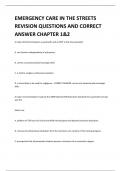
EMERGENCY CARE IN THE STREETS REVISION QUESTIONS AND CORRECT ANSWER
EMERGENCY CARE IN THE STREETS REVISION QUESTIONS AND CORRECT ANSWER CHAPTER 1&2 A major distinction between a paramedic and an EMT is that the paramedic A. can function independently of a physician. B. carries out advanced pharmacologic skills. C. is held to a higher professional standard. D. is more likely to be sued for negligence - CORRECT ANSWER -carries out advanced pharmacologic skills. A major recommendation made by the 2009 National EMS Education Standards for paramedic training was the: Select one: A. addition of 750 hours of clinical and field training above and beyond classroom education. B. removal of endotracheal intubation from the minimum core content of the training program. C. prerequisite that all paramedic students possess a minimum of an associate's degree. D. inclusion of a college-level anatomy and physiology course as part of the training program. - CORRECT ANSWER -inclusion of a college-level anatomy and physiology course as part of the training program. A paramedic is considered a health care professional, and as such should: Select one: A. maintain higher standards than other health care professionals. B. meet societal expectations whether he or she is on or off duty. C. obtain more than the required amount of continuing education. D. demand respect from others who are in the EMS profession. - CORRECT ANSWER -meet societal expectations whether he or she is on or off duty If an emergency medical responder is appropriately trained and competent, he or she should be able to: Select one: A. perform lifesaving interventions and transport the patient after paramedics have performed a detailed physical exam. B. recognize the seriousness of a patient's condition, provide basic life support care, and relay information to the paramedic.
Document information
- Uploaded on
- May 17, 2024
- Number of pages
- 21
- Written in
- 2023/2024
- Type
- Exam (elaborations)
- Contains
- Questions & answers