Med Surg HESI Practice Questions
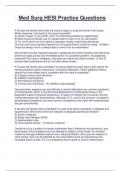
A 20-year-old female client calls the nurse to report a lump she found in her breast. Which response is the best for the nurse to provide? A) Check it again in one month, and if it is still there schedule an appointment. B) Most lumps are benign, but it is always best to come in for an examination. C) Try not to worry too much about it, because usually, most lumps are benign. D) If you are in your menstrual period it is not a good time to check for lumps. - B) Most lumps are benign, but it is always best to come in for an examination. (B) provides the best response because it addresses the client's anxiety most effectively and encourages prompt and immediate action for a potential problem. (A) postpones treatment if the lump is malignant, and does not relieve the client's anxiety. (C and D) provide false reassurance and do not help relieve anxiety. A 32-year-old female client complains of severe abdominal pain each month before her menstrual period, painful intercourse, and painful defecation. Which additional history should the nurse obtain that is consistent with the client's complaints? A) Frequent urinary tract infections. B) Inability to get pregnant. C) Premenstrual syndrome. D) Chronic use of laxatives. - B) Inability to get pregnant. Dysmenorrhea, dyspareunia, and difficulty or painful defecation are common symptoms of endometriosis, which is the abnormal displacement of endometrial tissue in the dependent areas of the pelvic peritoneum. A history of infertility (B) is another common finding associated with endometriosis. Although (A, C, and D) are common, nonspecific gynecological complaints, the most common complaints of the client with endometriosis are pain and infertility. A 46-year-old female client is admitted for acute renal failure secondary to diabetes and hypertension. Which test is the best indicator of adequate glomerular filtration? A) Serum creatinine. B) Blood Urea Nitrogen (BUN). C) Sedimentation rate. D) Urine specific gravity. - A) Serum creatinine. Creatinine (A) is a product of muscle metabolism that is filtered by the glomerulus, and blood levels of this substance are not affected by dietary or fluid intake. An elevated creatinine strongly indicates nephron loss, reducing filtration. (B) is also an indicator of renal activity, but it can be affected by non-renal factors such as hypovolemia and increased protein intake. (C) is a nonspecific test for acute or chronic inflammatory
Document information
- Uploaded on
- May 11, 2024
- Number of pages
- 41
- Written in
- 2023/2024
- Type
- Exam (elaborations)
- Contains
- Questions & answers