NURS 115 Exam 1
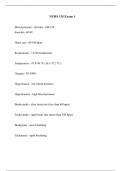
Blood pressure - Systolic: 100-120 diastolic: 60-80 Heart rate - 60-100 bpm Respirations - 12-20 breaths/min Temperature - 97.8-99 *F (36.5-37.2 *C) Oxygen - 95-100% Hypotension - low blood pressure Hypertension - high blood pressure Bradycardia - slow heart rate (less than 60 bpm) Tachycardia - rapid heart rate (more than 100 bpm) Bradypnea - slow breathing Tachypena - rapid breathingHypothermia - low body temperature (less than 95 *F) Hyperthermia - high body temperature (more than 104 *F) Hypoxemia - low oxygen levels Chain of infection - Infectious agent - Bacterium, Virus, parasite Source- Animal or insect, inanimate object Portal of exit- Blood, respiratory tract, GI tract Mode of transmission- contact, airborne, droplet, vector-borne Portal entry- GI tract, mucous membrane, respiratory tract, Susceptible host- Trauma, surgery, chronically ill, elderly When teaching a patient about fire safety, which activity does the nurse know is the leading cause of fire-related death? - heating with kerosene heaters - playing with matches - smoking - cooking - cooking Which restraint-free alternative is best for the nurse to use for an 84-year-old patient after hip replacement who has confusion and incontinence? - A 24- hour sitter and the patient's favorite television show - A room near the nurses' station and decreased sensory stimuli - Side rails up and decreased sensory stimuli- A pressure sensor alarm and a room near the nurses' station - A pressure sensor alarm and a room near the nurses' station What other health care professional should the nurse consult first when a patient has difficulty with activities of daily living (ADLs) such as bathing and dressing and why? - Social worker to arrange for needed assistive devices - Occupational therapist to evaluate the ability to perform ADLs - Physical therapist to evaluate the patient's need for assistive devices - Area agency on aging to arrange for Meals on Wheels - Occupational therapist to evaluate the ability to perform ADLs Which activity would be most appropriate for the registered nurse (RN) to delegate to unlicensed assistive personnel (UAP)? - Assisting with or performing the patient's ADLs - Teaching the patient use of assistive devices - Assessing the patient for fall risk and complications of restraint use - Evaluating the patient's ability to perform activities of daily living (ADLs) - Assisting with or performing the patient's ADLs A nurse working in a dermatology clinic observes that a patient who attends your practice typically arrives 10 to 15 minutes late to every appointment. Based on an understanding of first-order beliefs, what characteristics can the nurse associate with this level of beliefs? (Select all that apply.) - First-order beliefs serve as the basis of a person's belief system. - First-order beliefs begin to develop in early adolescence. - First-order beliefs are completely formed in childhood. - People seldom question their first-order beliefs.- Challenging a patient's first-order beliefs may cause cognitive upset. - - Firstorder beliefs serve as the basis of a person's belief system. - People seldom question their first-order beliefs. - Challenging a patient's first-order beliefs may cause cognitive upset. The nurse knows providing care that is consistent and predictable can make the health care experience less intimidating for the patient. What additional action can the nurse take to enhance this experience? - Never making promises to patients - Explaining what is going to take place beforehand - Protecting the patient from knowing why things are happening - Assuring the patient that his/her requests will get done eventually - Explaining what is going to take place beforehand
Document information
- Uploaded on
- May 8, 2024
- Number of pages
- 19
- Written in
- 2023/2024
- Type
- Exam (elaborations)
- Contains
- Questions & answers