FINALIZED HESI PHARMACOLOGY EXAM PRACTICE QUESTIONS AND ANSWERS
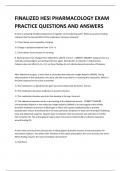
FINALIZED HESI PHARMACOLOGY EXAM PRACTICE QUESTIONS AND ANSWERS A client is receiving clonidine (Catapres) 0.1 mg/24hr via transdermal patch. Which assessment finding indicates that the desired effect of the medication has been achieved? A. Client denies recent episodes of angina. B. Change in peripheral edema from +3 to +1. C. Client denies recent nausea or vomiting. D. Blood pressure has changed from 180/120 to 140/70. Correct - CORRECT ANSWER -Catapres acts as a centrally-acting analgesic and antihypertensive agent. (D) indicates a reduction in hypertension. Catapres does not affect (A, B, or C), so these findings do not indicate desired outcomes of Catapres After abdominal surgery, a male client is prescribed low molecular weight heparin (LMWH). During administration of the medication, the client asks the nurse why he is receiving this medication. Which is the best response for the nurse to provide? A. This medication is a blood thinner given to prevent blood clot formation. Correct B. This medication enhances antibiotics to prevent infection. C. This medication dissolves any clots that develop in the legs. Incorrect D. This abdominal injection assists in the healing of the abdominal wound. - CORRECT ANSWER Unfractionated heparin or low molecular weight heparin (LMWH) is an anticoagulant that inhibits thrombin-mediated conversion of fibrinogen to fibrin and is given prophylactically to prevent postoperative venous thrombosis (A) or to treat pulmonary embolism or deep vein thrombosis following knee and abdominal surgeries. Heparin does not dissolve clots but prevents clot extension or further clot formation (C). The anticoagulant heparin does not prevent infection (B) or influence operative wound healing (D). A client with coronary artery disease who is taking digoxin (Lanoxin) receives a new prescription for atorvastatin (Lipitor). Two weeks after initiation of the Lipitor prescription, the nurse assesses the client. Which finding requires the most immediate intervention? A. Heartburn.
Document information
- Uploaded on
- May 5, 2024
- Number of pages
- 43
- Written in
- 2023/2024
- Type
- Exam (elaborations)
- Contains
- Questions & answers