Meta-ethical theories
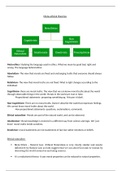
Meta-ethics- Studying the language used in ethics. What we mean by good bad, right and
wrong. The language behind ethics.
Absolutss- The view that morals are fxed and unchanging truths that everyone should always
follow.
Relatviss- The view that moral truths are not fxed. What is right changes according to the
individual.
Cognitviss- there are moral truths. The view that we can know moral truths about the world
through observable things in the world. Morals in the world are true or false.
-Propositoonl stntemeeots- proposing something eg. ‘this pen is black’.
Non-Cognitviss- There are no moral truths. Doesn’t describe the world but expresses feelings.
We cannot know moral truths about the world.
-Noo-propositoonl stntemeeots- questions, exclamations, commands.
Ethical naturaliss- Morals are part of the natural world, and can be observed.
Intuitoniss- Moral knowledge is received in a diferent way from science and logic. We ‘just
know’ moral truths inside ourselves.
Esotviss- moral statements are not statements of fact but rather emotions or beliefs.
Ethical naturalism
Meta Ethics – Natural Law. (Ethical Naturalism is very clearly similar and maybe
influenced by Natural Law as both suggest that we can about God and/or morals by
observing the world around us and using reason).
It’s a reductooist theory: it says moral properties can be reduced to natural properties.
Meta-ethics- Studying the language used in ethics. What we mean by good bad, right and
wrong. The language behind ethics.
Absolutss- The view that morals are fxed and unchanging truths that everyone should always
follow.
Relatviss- The view that moral truths are not fxed. What is right changes according to the
individual.
Cognitviss- there are moral truths. The view that we can know moral truths about the world
through observable things in the world. Morals in the world are true or false.
-Propositoonl stntemeeots- proposing something eg. ‘this pen is black’.
Non-Cognitviss- There are no moral truths. Doesn’t describe the world but expresses feelings.
We cannot know moral truths about the world.
-Noo-propositoonl stntemeeots- questions, exclamations, commands.
Ethical naturaliss- Morals are part of the natural world, and can be observed.
Intuitoniss- Moral knowledge is received in a diferent way from science and logic. We ‘just
know’ moral truths inside ourselves.
Esotviss- moral statements are not statements of fact but rather emotions or beliefs.
Ethical naturalism
Meta Ethics – Natural Law. (Ethical Naturalism is very clearly similar and maybe
influenced by Natural Law as both suggest that we can about God and/or morals by
observing the world around us and using reason).
It’s a reductooist theory: it says moral properties can be reduced to natural properties.