
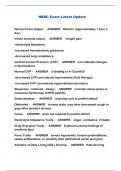
NBRC Exam Latest Update Normal Urine Output - ANSWER 40mL/hr (approximatley 1 Liter a day) Intake exceeds output - ANSWER -weight gain -electrolyte imbalance -increased hemodynamic pressures -decreased lung compliance Central Venous Pressure (CVP) - ANSWER can indicate changes in fluid balance Normal CVP - ANSWER 2-6mmHg or 4-12cmH20 -decreased CVP can indicate hypovalemia (fluid therapy) -increased CVP can indicate hypervalemia (diuretics) Stuporous, confused , sleepy - ANSWER consider sleep apnea or excessive O2 therapy (COPD patient) Semicomatose - ANSWER responds only to painful stimuli Obtunded - ANSWER drowsy state, may have decreased cough or gag reflux (protect airway) Coma - ANSWER does not respond to painful stimuli Electrolyte Imbalance Traits - ANSWER anger, combative, irritable Drug Overdose Traits - ANSWER Euphoria-intense feelings of emotions (joy) Panic Traits - ANSWER severe hypoxemia, tension pnemothorax, status asthmaticus, or possibly AAA (abdominal aortic anerysm) Activites of Daily Living (ADL) Scoring - ANSWER Katz Scoring System 0-dependent 6-independent Orthopnea - ANSWER difficulty breathing except in the upright position (CHF) Genreal malaise - ANSWER run down feeling, nausea, weakness, fatique, headache (consider electrolyte imbalance) COPD diet - ANSWER high fats, low carbs (carbs causes higher CO2) Edema - ANSWER caused by CHF and renal failure occurs primarily in arms and ankles Ascites - ANSWER accumulation of fluid in the abdomen generally caused by liver failure Clubbing of fingers - ANSWER caused by chronic hypoxemia presence of clubbing suggests pulmonary disease Venous distension or Jugular venous distension (JVD) - ANSWER occurs with CHF seen during exhalation in patients with obstructive lung disease Capillary refill - ANSWER indication of peripheral circulation color should return within 3 seconds Diaphoresis - ANSWER heart failure (recommend diuretics, positive inotropic agents) fever, infection (recommend antibiotics) anxiety, nervousness (recommend sedatives) tuberculosis/night sweats (recommend antitubercular drugs) Cheyne-Stokes Breathing - ANSWER gradually increasing then decreasing rate and depth in a cycle lasting from 30- 180 seconds, with periods of apnea lasting up to 60 seconds Cause: Increased intracranial pressure, brainstem inury, drug overdose Biot's Breathing - ANSWER increased respiratory rate and depth with irregular periods of apnea. Each breath has the same depth Cause: CNS problem Kussmaul's breathing - ANSWER increased respiratory rate (usually over 20 breaths/min), increased depth, irregular rhythm, breathing sounds labored Cause: metabolic acidosis, renal failure, diabetic ketoacidosis Dry or nonproductive cough may indicate - ANSWER a tumor in the lungs Productive cough may indicate - ANSWER an infection or chronic lung disease Tachycardia indications - ANSWER hypoxemia, anxiety, stress (recommend oxygen therapy) Bradycardia indications - ANSWER heart failure, shock, code/emergency (recommend atropine) Paradoxical pulse/pulsus paradoxus - ANSWER pulse/blood pressure varies with respiration. May indicate severe air trapping (status asthmaticus, tension pneumothorax, cardica tampanade)-felt on exhalation Tracheal deviation pulled toward the abnormal side (same side of pathology) - ANSWER -pulmonary atelectasis -pulmonary fibrosis -pneumonectomy
Preview 3 out of 22 pages
Exam (elaborations)
NBRC Exam Latest Update
Preview 3 out of 22 pages
NBRC Exam Latest Update...
Content preview
Document information
- Uploaded on
- April 16, 2024
- Number of pages
- 22
- Written in
- 2023/2024
- Type
- Exam (elaborations)
- Contains
- Unknown
$9.99
Wrong document? Swap it for free
Within 14 days of purchase and before downloading, you can choose a different document. You can simply spend the amount again.
Written by students who passed
Immediately available after payment
Read online or as PDF

Reputation scores are based on the amount of documents a seller has sold for a fee and the reviews they have received for those documents. There are three levels: Bronze, Silver and Gold. The better the reputation, the more your can rely on the quality of the sellers work.
Available in package deal
Package deal
NBRC PACKAGED EXAMS LATEST UPDATE

