UNE BioChem Unit 4 Final EXAM Questions with Correct Answers, RATED A+
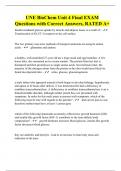
Insulin-mediated glucose uptake by muscle and adipose tissue is a result of: - Translocation of GLUT 4 receptors to the cell surface The two primary non-toxic methods of transport ammonia are using he amino acids: - glutamine and alanine a healthy, well-nourished 27-year old ate a large steak and egg breakfast. A few hours later, she consumed an ice cream sundae. The protein from her diet is denatured and then proteolyses to single amino acids. Several hours later, the majority of the nitrogen atoms from the protein in her diet would most likely be found incorporated into: - urine, glucose, gluconeogenesis a male infant who appeared normal at both began to develop lethargy, hypothermia and apnea at 42 hours after deliver. it was determined he had a deficiency in ornithine transcarbamoylase. A definciency in ornithine transcarbamoylase is an x-linked heritable disorder, although neither parent has ever presented with symptoms. In order for this male intact to present with symptoms, which of the following myst be true with regards to his parents? - dad can no pass to son, therefore mother must have at least 1 carrier gene which of the following statements accurately reflects how growth hormone (GH) and insulin-like growth factor (IGF-1) contribute to the lean athletic body composition? - growth hormone increases blood glucose, insulin-like growth factor decreases blood glucose they are anabolic and lipolytic - lead to an increase in lean body mass and reduction in fat mass they stimulate protein synthesei, while insulin simultaneously inhibits protein breakdown When cortisol is elevated it increases gluconeogenesis by increasing phosphoenolpyruvate carboxykinase (PEPCK). It does this by: - ketogenesis cortisol acts as an activator during fasting, the enzymes that are active are phsophorylated - pyruvate kinase and glucokinase in order for this to work you need to understand or know what pathways are active during fasting - these are catabolic and include lipolysis and glycogenolysis the other important one is glyconeogensis which sounds anabolic since you are making glucose, but you are making glucose, but you are making glucose from catabolic pathways - substrates are from amino acids breakdown and the ATP used to power the pathways of gluconeogensis comes from the catabolism of fat (lipolysis) The reaction of ammonia with α-ketoglutarate is catalyzed by _________ and requires _________ as a reactant. - glutamate dehydrogenase, NADH or NADPH which of the following amino acids is considered non essential because it is generated by the urea cycle - arginine Ubiquitination is a means of targeting a protein for which of the following cellular proceses? - proteasonal degradation most enzymes involved in protein digestion require cleavage for activation. these proteins are secreted as inactive protein forms called: - zymogens the urea cycle takes place in which of the following subcellular locations - the cytosol and the mitochondria which of the following enzymes is regulated by N-acetyl glutamate (NAGs) - CPS 1 mTOR pathway is related to the process of autophagy. When mTOR is active, this is most consistent with which of the following statements? - autophagy is inhibited which of the following reactions takes place in the mitochondria - the synthesis of carbamoyl phosphate
Document information
- Uploaded on
- April 12, 2024
- Number of pages
- 16
- Written in
- 2023/2024
- Type
- Exam (elaborations)
- Contains
- Questions & answers