Philosophy of Science
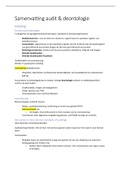
Lecture 1 – Introduction
What distinguishes science from non-science?
What’s special about scientific knowledge as opposed to other kinds of information or
knowledge?
The demarcation problem
Logical positivism
Real science should always be based on careful observations, strict empiricism. No place
for speculative claims that are not based on observation.
- Use of formal logic and mathematics to create an ideal and precise language of
science. To guard against unwarranted terminology and against leaps to conclusions
and unsupported theories.
- Strictly scientific worldview
- Why “positivism”?
o That what is available, what is given
Core ideas:
- Analytic vs synthetic statements
o Analytic: true or false only based on the meaning of the words used. They only
concern conventions for how we use words and symbols.
o Synthetic: true or false on the basis of the meaning of the words used and what
the world is like. They describe the world.
- Empirical sciences are concerned with synthetic statements. Empirical scientific
research is the only way of determining the truth or falsity of these statements.
- An ideal and precise language of science
o Gate-keeping: only statements that are firmly based on empirical observation
belong in the language of science.
o The verifiability criterion of meaning: the meaning of a synthetic statement is
its method of verification.
- Verifiability as demarcation criterion:
, o Only statements that satisfy the verifiability criterion are scientific, other
statements are non-scientific.
- Inductive method: from observations to general theories and empirical regularities /
laws
o Observations give rise to hypotheses and theories, and they serve to support /
confirm them. Let the data (observations) ‘speak for themselves’.
Example: behaviorism
Karl Popper’s core ideas
Fallibility and tentativeness of human knowledge. People make mistakes. Science is
never completely certain, since you cannot be sure not a single mistake was made.
- Dogmatic vs critical thinking
Problem of induction
Reasoning from a limited number of observations generalizing for the bigger group.
Reasoning from individual observations to general conclusions is logically invalid. So,
induction can never completely support general scientific laws and theories. Karl Popper says
that there is no use for induction in science since you cannot out rule mistakes. Scientific
statistical research is never 100% certain.
Falsifiability as demarcation criterion
Scientific knowledge is falsifiable knowledge. Scientific statements ought to be able to
clash with the world. Scientific knowledge can be proven wrong through experiments and
observation.
- Unicorns exist – not falsifiable.
- Unicorns don’t exist – falsifiable. (You only need to find one to prove the statement
wrong)
Freud: Every little boy has an Oedipus complex or is in denial of it. Unfalsifiable.
Marx: changes in the means of production lead to changes in labor conditions, which lead to
changes in political power, which in turn lead to changes in ideology. Communism. When
predictions were shown to be wrong, instead of rejecting the theory, Marxists changed the
theory. Clash with reality does not lead to rejecting the theory here.
,Scientific method for Popper
Starting from general claims, proving this wrong, falsify the theory, and come up with
a new method, researching this again. Science is about formulating theories in such a way that
they can be falsified by empirical observations. Theories must be tested and only accept those
that survive testing (so far).
Popper vs Positivism
Popper Positivism
Fallibility and risk-taking Striving for certainty
Theoretical conjectures as starting points Observations as starting points
Get rid of bad ideas as you go Don’t let any bad ideas in
, Lecture 2 – Science and Values
Naturalism
Are social sciences different from the natural sciences?
Reductionism
Methodological individualism: is a social movement more than the sum of the individuals
participating in it? How do we understand social movements? Through individual actions and
intentions or social dynamics?
Can one science be reduced to another?
Normativity
Values in science
Objectivity of values
Science should be value-free.
Science is objective insofar as values play no role in scientific research. Thesis is false.
Science is objective when only epistemic values are constitutive of scientific practice;
moral and political values must always remain contextual.
Example of counting people
- People move, die, be born all the time.
- Who do you count? Who is a citizen e.g.?
- How do you count all?
Impossible to count exact.
Both methods have their pros and cons
- Door-to-door; depends on people wanting to talk to government rep; more accurate for
people who are hard to locate; but expensive.
- Questionnaire: depends on effort to mail in; cheaper
Predictable errors!
Lecture 1 – Introduction
What distinguishes science from non-science?
What’s special about scientific knowledge as opposed to other kinds of information or
knowledge?
The demarcation problem
Logical positivism
Real science should always be based on careful observations, strict empiricism. No place
for speculative claims that are not based on observation.
- Use of formal logic and mathematics to create an ideal and precise language of
science. To guard against unwarranted terminology and against leaps to conclusions
and unsupported theories.
- Strictly scientific worldview
- Why “positivism”?
o That what is available, what is given
Core ideas:
- Analytic vs synthetic statements
o Analytic: true or false only based on the meaning of the words used. They only
concern conventions for how we use words and symbols.
o Synthetic: true or false on the basis of the meaning of the words used and what
the world is like. They describe the world.
- Empirical sciences are concerned with synthetic statements. Empirical scientific
research is the only way of determining the truth or falsity of these statements.
- An ideal and precise language of science
o Gate-keeping: only statements that are firmly based on empirical observation
belong in the language of science.
o The verifiability criterion of meaning: the meaning of a synthetic statement is
its method of verification.
- Verifiability as demarcation criterion:
, o Only statements that satisfy the verifiability criterion are scientific, other
statements are non-scientific.
- Inductive method: from observations to general theories and empirical regularities /
laws
o Observations give rise to hypotheses and theories, and they serve to support /
confirm them. Let the data (observations) ‘speak for themselves’.
Example: behaviorism
Karl Popper’s core ideas
Fallibility and tentativeness of human knowledge. People make mistakes. Science is
never completely certain, since you cannot be sure not a single mistake was made.
- Dogmatic vs critical thinking
Problem of induction
Reasoning from a limited number of observations generalizing for the bigger group.
Reasoning from individual observations to general conclusions is logically invalid. So,
induction can never completely support general scientific laws and theories. Karl Popper says
that there is no use for induction in science since you cannot out rule mistakes. Scientific
statistical research is never 100% certain.
Falsifiability as demarcation criterion
Scientific knowledge is falsifiable knowledge. Scientific statements ought to be able to
clash with the world. Scientific knowledge can be proven wrong through experiments and
observation.
- Unicorns exist – not falsifiable.
- Unicorns don’t exist – falsifiable. (You only need to find one to prove the statement
wrong)
Freud: Every little boy has an Oedipus complex or is in denial of it. Unfalsifiable.
Marx: changes in the means of production lead to changes in labor conditions, which lead to
changes in political power, which in turn lead to changes in ideology. Communism. When
predictions were shown to be wrong, instead of rejecting the theory, Marxists changed the
theory. Clash with reality does not lead to rejecting the theory here.
,Scientific method for Popper
Starting from general claims, proving this wrong, falsify the theory, and come up with
a new method, researching this again. Science is about formulating theories in such a way that
they can be falsified by empirical observations. Theories must be tested and only accept those
that survive testing (so far).
Popper vs Positivism
Popper Positivism
Fallibility and risk-taking Striving for certainty
Theoretical conjectures as starting points Observations as starting points
Get rid of bad ideas as you go Don’t let any bad ideas in
, Lecture 2 – Science and Values
Naturalism
Are social sciences different from the natural sciences?
Reductionism
Methodological individualism: is a social movement more than the sum of the individuals
participating in it? How do we understand social movements? Through individual actions and
intentions or social dynamics?
Can one science be reduced to another?
Normativity
Values in science
Objectivity of values
Science should be value-free.
Science is objective insofar as values play no role in scientific research. Thesis is false.
Science is objective when only epistemic values are constitutive of scientific practice;
moral and political values must always remain contextual.
Example of counting people
- People move, die, be born all the time.
- Who do you count? Who is a citizen e.g.?
- How do you count all?
Impossible to count exact.
Both methods have their pros and cons
- Door-to-door; depends on people wanting to talk to government rep; more accurate for
people who are hard to locate; but expensive.
- Questionnaire: depends on effort to mail in; cheaper
Predictable errors!