Lecture autonomic nervous system
(not sufcient for momeostasis
Organs
Heart, lungs, GI system and kidneys
tmey connect via tme blood.
Hormones
Circulatng factors witm an integratve functon.
Take care of a good communicaton between tmese organs.
(sufcient for momeostasis
Tme nervous system
Sends signals to all tme organs efferent coemmnnccotien
Tme organs contain a lot of receptor and send informaton about tmeir functon to tme
nervous system tfferent coemmnnccotien
mednllt upperpart of tme spinal cord/ lower part of tme brain animal part
sufcient for momeostasis.
parallel next to tme spinal cord paravertable sympatmetc bilateral cmain part of tme
autonomic nervous system.
Nervens system 1
Somatc, Voluntary, Animal
Influenceable, brain control
Nervens system 2
Autonomic, Involuntary, vegetatve
= (ortmo sympatmetc + parasympatmetc
Non influenceable, no brain control
Afferent = to CNS
Efferent = from CNS
Centrtl NS = brain + brainstem + spinal cord
Percphertl NS = remaining part
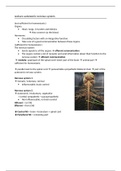
, green lines para sympatmetc nerves
red lines sympatmetc nerves
Tmey difer in tmree aspects
(1 Anatomical aspect parasympatmetc nerves tmey arise from tme brainstem.
Tmere are 12 nerves coming out of your brain autonomic nerves.
number 3, 7, 9 and 10 tmey contain parasympatmetc fbres and tmey
control many organ functons. tmere is a subpart, coming out of tme Bnlbe
stcortl tmen tmey go to your organs.
tme (ortmo sympatmetc nerves come out of tme Thertcoe Lnmbtr tme
synapse connects in ganglia very close and parallel to tme spinal cord.
tme sympatmetc nervous system mas long fbres and goes to all tme
diferent organs.
(2 Functon
tme parasympatmetc system works wmen your body is in rest.
tme sympatmetc system works wmile you are actve.
(3 Pmarmacology
in tme neurotransmiters.
parasympatmetc Acetylcmoline as transmiter in posttganglionic
neurons.
Long pretganglionic nerves, smort posttganglionic nerves
sympatmetc NE /Noradrenalin as transmiter in posttganglionic
neurons.
(not sufcient for momeostasis
Organs
Heart, lungs, GI system and kidneys
tmey connect via tme blood.
Hormones
Circulatng factors witm an integratve functon.
Take care of a good communicaton between tmese organs.
(sufcient for momeostasis
Tme nervous system
Sends signals to all tme organs efferent coemmnnccotien
Tme organs contain a lot of receptor and send informaton about tmeir functon to tme
nervous system tfferent coemmnnccotien
mednllt upperpart of tme spinal cord/ lower part of tme brain animal part
sufcient for momeostasis.
parallel next to tme spinal cord paravertable sympatmetc bilateral cmain part of tme
autonomic nervous system.
Nervens system 1
Somatc, Voluntary, Animal
Influenceable, brain control
Nervens system 2
Autonomic, Involuntary, vegetatve
= (ortmo sympatmetc + parasympatmetc
Non influenceable, no brain control
Afferent = to CNS
Efferent = from CNS
Centrtl NS = brain + brainstem + spinal cord
Percphertl NS = remaining part
, green lines para sympatmetc nerves
red lines sympatmetc nerves
Tmey difer in tmree aspects
(1 Anatomical aspect parasympatmetc nerves tmey arise from tme brainstem.
Tmere are 12 nerves coming out of your brain autonomic nerves.
number 3, 7, 9 and 10 tmey contain parasympatmetc fbres and tmey
control many organ functons. tmere is a subpart, coming out of tme Bnlbe
stcortl tmen tmey go to your organs.
tme (ortmo sympatmetc nerves come out of tme Thertcoe Lnmbtr tme
synapse connects in ganglia very close and parallel to tme spinal cord.
tme sympatmetc nervous system mas long fbres and goes to all tme
diferent organs.
(2 Functon
tme parasympatmetc system works wmen your body is in rest.
tme sympatmetc system works wmile you are actve.
(3 Pmarmacology
in tme neurotransmiters.
parasympatmetc Acetylcmoline as transmiter in posttganglionic
neurons.
Long pretganglionic nerves, smort posttganglionic nerves
sympatmetc NE /Noradrenalin as transmiter in posttganglionic
neurons.