

PN1 FINAL EXAM QUESTIONS AND ANSWERS ALREADY PASSED
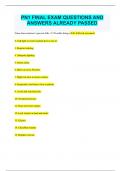
PN1 FINAL EXAM QUESTIONS AND ANSWERS ALREADY PASSED Name Interventions to prevent falls. (15 Possible things) 1.Fall risk assesment 2. Call light in reach (explain how to use it) 3. Regular toileting 4. Adequate lighting 5. Orient client 6. Bed in Lowest Position. 7. High risk-next to nurses station. 8. Frequently used items close to patient 9. Avoid full side bed rails. 10. Nonskid footwear. 11. Floor free from clutter. 12. Lock wheels on bed and chairs 13. Glasses 14. Chair/Bed Alarms 15. Regular exercise Name types of patient and conditions that may put them at an increased risk for falls. (10 things) -Older adults -Decreased Visual Acuity -Urinary Frequency -Unsteady gait/balance problems. -Balance problems r/t medical conditions (CP, Injury, MS) -Cognitive dysfunction -orthostatic hypotension -weakness -dizziness -medications How does an MRI work? Uses a magnetic field and pulses of radio wave energy to produce cross-sectional images of the organs and structures in the body. What is an MRI used for? Detect edema, hemorrhange, blood flow, infarcts, tumors, and infections. How does an angiogram work? What is it used for? X-ray photography of blood or lymph vessel; might be used to look at arteries (see if they are narrowed or blocked. Ex. Coronary artery blockage) What is a bone scan? What is it used to detect. Radioactive material is injected into a vein. Gives off radiation as it travels through body. A camera picks up on the radiation and shows "hot spots" in the bones which may indicate a tumor or cancer. Also may show hairline fractures, osteomylitis, and osteoporosis. What is arthography? What is it used for? X-ray exam of joint space. Used to evaluate shoulder joints, hips, knee. (Ex. shows a tear in the rotator cuff) What are the effects of long-term pain and immobility? Often depressed and are at an increased risk for suicide. What are the leading causes of death for infants? Motor vehicle accidents, drowning, falls, choking, SIDs, and poisons. What are the main causes of harm to infants? Aspiration, suffocation, poisoning, falls, motor vehicle accidents, burns. What can you do to prevent aspiration for infants? (3) 1. Keep small items out of reach. 2. Don't place in supine position when feeding. 3. pacifiers should be constructed of one piece and never placed on string or ribbon around neck. What can you do to prevent suffocation for infants? (8) 1. Babies should sleep on their back. 2. Crib mattress should fit snugly. 3. Do not leave alone in tub. 4. Don't place anything in crib with infants. 5. plastic bags and latex balloons out of reach. 6. Gate and lock pools. 7. Teach CPR and Heimlich maneuver. 8. Keep toilet lid and bathroom doors shut. What is a way to prevent poisoning for infants? Keep cleaning agents, meds, and chemicals out of reach and in locked cabinets.
Document information
- Uploaded on
- April 4, 2024
- Number of pages
- 22
- Written in
- 2023/2024
- Type
- Exam (elaborations)
- Contains
- Questions & answers


