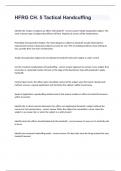
HFRG CH. 5 Tactical Handcuffing fully answers 2024/2025
HFRG CH. 5 Tactical HandcuffingIdentify the 3 types of subjects an officer will handcuff - correct answer Totally Cooperative Subject: The most common type of subject that officers will face. Majority of arrests will be misdemeanor. Potentially Uncooperative Subject: The most dangerous subject to handcuff. Usually intoxicated or experienced criminal. Intoxicated subjects account for over 70% of resisting incidents. Have nothing to lose, provide their own form of distraction. Totally Uncooperative Subject: Do not attempt to handcuff unless the subject is under control List the 3 tactical considerations of handcuffing - correct answer Approach to contact: every subject they encounter is a potential resistor. Remain on the edge of the Reactionary Gap until prepared to apply handcuffs. Control Upon Touch: the officer gains immediate control of the subject upon first touch. double push method, ensures a speedy application and minimizes the subject's ability to pull away. Speed in Application: speedcuffing method used in this system enables an officer to handcuff someone within 3 seconds. Identify the 3 criteria used to determine if an officer can legitimately handcuff a subject without the concern of civil repersussions - correct answer When the subject has committed a crime, when the subject is an escape risk, or when the subject is a safety hazard Identify when the officer should double-lock the handcuffs - correct answer As soon as it is tactically safe to do so Identify two common handcuffing myths - correct answer The key holes must be facing outward for easy handcuff removal
Written for
- Institution
- HFRG
- Course
- HFRG
Document information
- Uploaded on
- April 3, 2024
- Number of pages
- 2
- Written in
- 2023/2024
- Type
- Exam (elaborations)
- Contains
- Questions & answers
Subjects
-
hfrg ch 5 tactical handcuffing

Also available in package deal