FINANCE
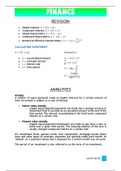
REVISION
• Simple Interest: 𝐴 = 𝑃(1 + 𝑖𝑛)
• Compound Interest: 𝐴 = 𝑃(1 + 𝑖)+
• Simple Depreciation: 𝐴 = 𝑃(1 − 𝑖𝑛)
• Compound Depreciation: 𝐴 = 𝑃(1 − 𝑖)+
- (.) /
• Nominal & Effective Interest Rates: 1 + 𝑖 = (1 + /
)
𝐴 = 𝑃(1 + 𝑖𝑛) Solving for 𝑛:
• 𝐴 = accumulated amount 𝐴 = 𝑃(1 + 𝑖)+
• 𝑃 = principal amount 𝐴
= (1 + 𝑖)+
• 𝑖 = interest rate 𝑃
• 𝑛 = time period 𝐴
𝑛 = log45-
𝑃
𝐴
log(𝑃)
𝑛=
log(1 + 𝑖)
ANNUITIES
Annuity:
A number of equal payments made at regular intervals for a certain amount of
time. An annuity is subject to a rate of interest
• Future value annuity
o regular equal deposits/payments are made into a savings account or
investment fund to provide an accumulated amount at the end of the
time period. The amount accumulating in the fund earns compound
interest at a certain rate.
• Present value annuity
o regular equal payments/instalments are made to pay back a loan or
bond over a given time period. The reducing balance of the loan is
usually charged compound interest at a certain rate.
For investment funds, pension funds, loan repayments, mortgage bonds (home
loan) and other types of annuities, payments are typically made each month. To
“default” on a payment means that a payment for a certain month was not paid.
The period of an investment is also referred to as the term of an investment.
SASHTI NOTES 1
REVISION
• Simple Interest: 𝐴 = 𝑃(1 + 𝑖𝑛)
• Compound Interest: 𝐴 = 𝑃(1 + 𝑖)+
• Simple Depreciation: 𝐴 = 𝑃(1 − 𝑖𝑛)
• Compound Depreciation: 𝐴 = 𝑃(1 − 𝑖)+
- (.) /
• Nominal & Effective Interest Rates: 1 + 𝑖 = (1 + /
)
𝐴 = 𝑃(1 + 𝑖𝑛) Solving for 𝑛:
• 𝐴 = accumulated amount 𝐴 = 𝑃(1 + 𝑖)+
• 𝑃 = principal amount 𝐴
= (1 + 𝑖)+
• 𝑖 = interest rate 𝑃
• 𝑛 = time period 𝐴
𝑛 = log45-
𝑃
𝐴
log(𝑃)
𝑛=
log(1 + 𝑖)
ANNUITIES
Annuity:
A number of equal payments made at regular intervals for a certain amount of
time. An annuity is subject to a rate of interest
• Future value annuity
o regular equal deposits/payments are made into a savings account or
investment fund to provide an accumulated amount at the end of the
time period. The amount accumulating in the fund earns compound
interest at a certain rate.
• Present value annuity
o regular equal payments/instalments are made to pay back a loan or
bond over a given time period. The reducing balance of the loan is
usually charged compound interest at a certain rate.
For investment funds, pension funds, loan repayments, mortgage bonds (home
loan) and other types of annuities, payments are typically made each month. To
“default” on a payment means that a payment for a certain month was not paid.
The period of an investment is also referred to as the term of an investment.
SASHTI NOTES 1