

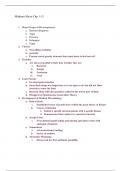
Midterm Micro Chp 1-13
1. Major Groups of Microorganisms
a. Bacteria-ubiquitous
b. Algae
c. Protozoa
d. Helminths
e. Fungi
2. Viruses
a. Noncellular/acellular
b. parasitic
c. Protein coated genetic elements that cause harm to the host cell
3. Parasites
a. Are always harmful to their host whether they are:
i. Bacterial
ii. Fungal
iii. Protozoan
iv. Viral
4. Louis Pasteur
a. Invented pasteurization
b. Swan flask shape was important as it was open to air but did not allow
bacteria to enter the flask
c. Bacteria along with dust particles settled in the lowest part of flask
d. Disapproved Spontaneous Generation Theory
5. Development of Medical Microbiology
a. Robert Koch
i. Established series of proofs that verified the germ theory of disease
ii. Causes of infection
1. Linked a specific microorganism with a specific disease
2. Demonstrated that Anthrax is caused by bacteria
b. Joseph Lister
i. First utilized handwashing and misting operation rooms with
antiseptic chemicals
c. Semmelweis
i. Advocated hand washing
ii. Savior of mothers
d. Alexander Flemming
i. Discovered the first antibiotic penicillin
,6. Koch's Postulates
a. Involve the experimental infection of
susceptible host
b. ALL must be satisfied before an organism
can be proven to cause a particular disease
i. Suspected agent must be found in
every case of disease and be present in
a healthy specimen
ii. Agent must be isolated and
grown(culture)
iii. When agent is introduced to a healthy
host, the host must get the disease
iv. Same agent must be found in the
diseased experimental host
c. Cannot be used to demonstrate the cause of
all diseases
i. Diabetes
ii. Atherosclerosis
iii. Heart failure
1. Can NOT be explained by Koch’s Postulates
7. The Five I’s
a. Inoculation
i. purposeful addition of microorganisms into a laboratory nutrient medium
b. Incubation
i. Use of incubators with controlled temps and gas to support growth of
newly inoculated microbes
c. Isolation
i. Separation of microbes
d. Inspection
i. Analyzing microbes
e. Identification
8. Selective Media
a. Contain 1 or more agents that inhibit the growth of certain microbes
b. Encourage a select microbe to grow and isolate them
c. Important in primary isolation of a certain type of microorganisms from a mixed
sample
9. Differential Media
a. Allow multiple types of microorganism to grown
b. Display visible differences between colonies
10. Electron Microscopes
, a. Have a much higher resolution as compared to light
b. Electron microscopy
i. Use of electrons to magnify objects
ii. Total Mag-Ocular(10x) X Mag of objective lenses
11. Biochemistry
a. Explores the compounds of life, made up of carbon and hydrogen organic
molecules
b. Macronutrients
i. Carbs
ii. Lipids
iii. Proteins
iv. Nucleic Acids
c. Micronutrients(trace elements)
i. Vitamins
ii. Minerals
iii. Electrolytes
12. Phospholipids
a. Major component of Cell Membrane
b. Tail
i. Contains only 2 hydrophobic fatty acids attached to a glycerol
c. Third Binding site
i. Holds phosphate group(hydrophilic) bound to an alcohol
d. Amphipathic
i. Have a hydrophilic region and a hydrophobic region
ii. Allows molecules to form bilayers and membranes
13. Structure of Cell Wall
a. Provides strong structural support to keep the cell from bursting and
collapsing due to osmotic pressure
b. Peptidoglycan
i. Found in cell walls of MOST BACTERIA ONLY
ii. Unique macromolecule composed of glycan chains cross-linked with short
peptide fragments
14. Gram Positive Cell wall
a. Thick sheath of peptidoglycan
b. Functions of TEICHOIC and LIPOTEICHOIC
i. Cell wall maintenance
ii. Enlargement during cell division
iii. Acidic charge on surface
15. Gram Negative Cell Wall
a. Single thin sheet of Peptidoglycan
i. Somewhat rigid structure
1. Major Groups of Microorganisms
a. Bacteria-ubiquitous
b. Algae
c. Protozoa
d. Helminths
e. Fungi
2. Viruses
a. Noncellular/acellular
b. parasitic
c. Protein coated genetic elements that cause harm to the host cell
3. Parasites
a. Are always harmful to their host whether they are:
i. Bacterial
ii. Fungal
iii. Protozoan
iv. Viral
4. Louis Pasteur
a. Invented pasteurization
b. Swan flask shape was important as it was open to air but did not allow
bacteria to enter the flask
c. Bacteria along with dust particles settled in the lowest part of flask
d. Disapproved Spontaneous Generation Theory
5. Development of Medical Microbiology
a. Robert Koch
i. Established series of proofs that verified the germ theory of disease
ii. Causes of infection
1. Linked a specific microorganism with a specific disease
2. Demonstrated that Anthrax is caused by bacteria
b. Joseph Lister
i. First utilized handwashing and misting operation rooms with
antiseptic chemicals
c. Semmelweis
i. Advocated hand washing
ii. Savior of mothers
d. Alexander Flemming
i. Discovered the first antibiotic penicillin
,6. Koch's Postulates
a. Involve the experimental infection of
susceptible host
b. ALL must be satisfied before an organism
can be proven to cause a particular disease
i. Suspected agent must be found in
every case of disease and be present in
a healthy specimen
ii. Agent must be isolated and
grown(culture)
iii. When agent is introduced to a healthy
host, the host must get the disease
iv. Same agent must be found in the
diseased experimental host
c. Cannot be used to demonstrate the cause of
all diseases
i. Diabetes
ii. Atherosclerosis
iii. Heart failure
1. Can NOT be explained by Koch’s Postulates
7. The Five I’s
a. Inoculation
i. purposeful addition of microorganisms into a laboratory nutrient medium
b. Incubation
i. Use of incubators with controlled temps and gas to support growth of
newly inoculated microbes
c. Isolation
i. Separation of microbes
d. Inspection
i. Analyzing microbes
e. Identification
8. Selective Media
a. Contain 1 or more agents that inhibit the growth of certain microbes
b. Encourage a select microbe to grow and isolate them
c. Important in primary isolation of a certain type of microorganisms from a mixed
sample
9. Differential Media
a. Allow multiple types of microorganism to grown
b. Display visible differences between colonies
10. Electron Microscopes
, a. Have a much higher resolution as compared to light
b. Electron microscopy
i. Use of electrons to magnify objects
ii. Total Mag-Ocular(10x) X Mag of objective lenses
11. Biochemistry
a. Explores the compounds of life, made up of carbon and hydrogen organic
molecules
b. Macronutrients
i. Carbs
ii. Lipids
iii. Proteins
iv. Nucleic Acids
c. Micronutrients(trace elements)
i. Vitamins
ii. Minerals
iii. Electrolytes
12. Phospholipids
a. Major component of Cell Membrane
b. Tail
i. Contains only 2 hydrophobic fatty acids attached to a glycerol
c. Third Binding site
i. Holds phosphate group(hydrophilic) bound to an alcohol
d. Amphipathic
i. Have a hydrophilic region and a hydrophobic region
ii. Allows molecules to form bilayers and membranes
13. Structure of Cell Wall
a. Provides strong structural support to keep the cell from bursting and
collapsing due to osmotic pressure
b. Peptidoglycan
i. Found in cell walls of MOST BACTERIA ONLY
ii. Unique macromolecule composed of glycan chains cross-linked with short
peptide fragments
14. Gram Positive Cell wall
a. Thick sheath of peptidoglycan
b. Functions of TEICHOIC and LIPOTEICHOIC
i. Cell wall maintenance
ii. Enlargement during cell division
iii. Acidic charge on surface
15. Gram Negative Cell Wall
a. Single thin sheet of Peptidoglycan
i. Somewhat rigid structure


