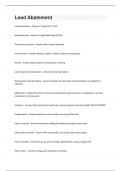
Lead Abatement (Questions + Answers) Solved
Lead based paint - Answer-1.0 mg/cm2 or 0.5% blood lead level - Answer-10 ug/dl (NH) 5ug/dl (CDC) Preliminary clearance - Answer-After hazards removed final clearance - Answer-Painted, sealed, cleaned, ready for reoccupancy Hazard - Answer-Deteriorated, friction/impact; chewing Lead inspector job description - Answer-Create lead reports Risk Assessors job description - Answer-Identify risk and make recommendations to abatement methods Abatement - Answer-Permanent removal of hazards (20 years) enclosure, encapsulation, removal, replacement, remove paint enclosure - Answer-Vinyl, paneling, drywall, luan, plywood, glued, screwed, chalked. NO WALLPAPER Encapsulation - Answer-Substrate must be stable and strong (fiberlock) Interim controls - Answer-Temporary, waiting for abatement (inspect every year) LBP location methods - Answer-XRF, dust sample, soil sample, paint chip sample Parts of window - Answer-Stop, sill, apron, header, parting bead, casing, trough, well Parts of door - Answer-Casing, jamb, hardware, thresholdParts of stairs - Answer-Treat, riser, spindle, newel post, balusters chewable - Answer-Between 6" and 4" - protrudes 1/2 " and is horizontal Lead sources - Answer-Pipes, water, paint, dust, soil, pottery, stained glass, toys, antiques Drinking water lead - Answer-Often from pipes, let water run, use cold water Most common source of childhood lee poisoning - Answer-dust Methylene chloride, chemical stripper - Answer-Carcinogen not recommended by HUD/EPA Dry scraping - Answer-Not allowed Dry sanding - Answer-Only allowed within 6" or outlet Heat gun - Answer-EPA 1100 NH 700 HEPA Vacuum - Answer-99.97% effective at 0.3 microns - sealed unit - beater bar
Document information
- Uploaded on
- March 6, 2024
- Number of pages
- 4
- Written in
- 2023/2024
- Type
- Exam (elaborations)
- Contains
- Questions & answers