
NR 509 Final
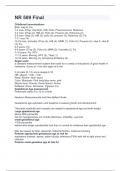
NR 509 Final Childhood immunizations Birth- Hep B, Flu 1-2 mos- DTap, Hep B(2), HIB, Polio, Pneumococcal, Rotavirus 3-4 mos- DTap (2), HIB (2), Polio (2), Pneumo (2), Rotavirus (2) 5-6 mos- Dtap (3), HIB (3), polio (3), pneumo (3), Rotavirus (3), Flu 7-11 mos- flu 12-23 mos- Varicella, DTap (4), HIB (4), MMR (1), Polio (3), Pnuemo (4), Hep A, Hep B (3), Flu 2-3 years- Flu 4-6 years- DTap (5), Polio (4), MMR (2), Varicella (2), Flu 7-10 years- Flu, HPV 11-12 years- Mening, HPV (2), Tdap (1) 13-18 years- Mening (2), Serogroup B Mening (2) Apgar scale a standard measurement system that looks for a variety of indications of good health in newborns. Score at 1 min and again at 5 min 3 pt scale (0,1,2) score ranges 0-10 HR: absent- 100- 100 Resp: Absent- slow- good Color: Blue/pale- Pink body/blue arms- pink Muscle tone: Flaccid- Some flexion- Active Reflexes: None- Grimaces- Vigorous Cry Gestational Age Assessment Performed within 2 to 12 hr of birth Newborn Measurements and New Ballard Scale Gestational age estimation and baseline to assess growth and development. *Neonatal morbidity and mortality are related to gestational age and birth weight. Large gestational age above 90th percentile risk for hypoglycemia- s/s include jitteriness, irritability, cyanosis small gestational age 10th percentile babies who weigh substantially less than is normal for whatever their gestational age May be caused by fetal, placental, maternal factors, maternal smoking Preterm appropriate gestational age at risk for respiratory distress, apnea, patent ductus arteriosis (PDA) with left to right shunt and infection Preterm small gestation age at risk for asphyxia, hypoglycemia, hypocalcemia tremors after 4 days old suggest CNS disease, asphyxia, drug withdrawal, central or peripheral neurologic defect, or birth injuries s/s include asymmetric movements of arms or legs failure to thrive 1) growth 5th percentile 2) drop 2 quartiles in 6 months 3) weight for length 5th percentile Causes include environmental, psychosocial, GI, neurologic, cardiac, renal, and endocrine diseases Macrocephaly 95th percentile or 2 standard deviations above mean Hydrocephalus, subdural hematoma, brain tumor, inherited familial, megaloencephaly Causes of HTN in newborns renal artery disease (stenosis, thrombosis), congenital renal malformations, coarctation of aorta Polycythemia A disorder characterized by an abnormal increase in the number of red blood cells in the blood Ruddy complexion- reddish/purple Cutis marmorata Lattice-like, bluish mottled skin seen in premature infants, hypothyroidism, down syndrome Acrocyanosis Temporary cyanotic condition, usually in newborns resulting in a bluish color around the lips, hands and fingernails, feet and toenails. May last for a few hours and disappear with warming. If color doesn't return to normal in 8 hours consider congenital heart disease harlequin dyschromia Occasionally in newborns there is a transient cyanosis over one half of the body or one extremity, presumably from vascular instability African American newborns skin tone light except for nailbeds, genitals, and ear folds which are dark Dark/Bluish pigment over buttocks lower lumbar (slate blue patches) Neonatal acne red pustule/papules over cheeks and nose of newborns seborrhea salmon red, scaly eruption on face, neck axilla, diaper area, and ears atopic dermatitis erythema, scaly, dry intense itching Candidal diaper dermatitis bright red rash involves the intertriginous folds with small "satellite lesions" along the edges Contact Diaper Dermatitis irritant rash is secondary to diarrhea or irritation & is noted along contact areas Cafe au lait spots Smooth edged tan-to-brown pigmentations on the skin measuring 1-2cm at birth if 5 spots seen in neurofibromatosis erythema toxicum pink rash that appears suddenly anywhere on the body of a term newborn during the first 3 weeks may be mistaken for herpes or staph infection presents with a pinpoint vesicle (looks like flea bite) Midline hair tufts over the lumbosacral spine region suggest a possible ___________. spinal cord defect Jaundice 24hrs hemolytic disease of the newborn 2-3wks old suggest biliary obstruction or liver disease breast feeding jaundice resolves 10-14 days salmon patch common vascular marking disappears by 1 year port-wine stain a flat vascular birthmark made up of dilated blood capillaries, creating a large, reddish-purple discoloration on the face or neck (opthalmic branch) sign of sturge-weber syndrome- associated with seizures, hemiparesis, glaucoma, mental retardation impetigo bacterial skin infection characterized by isolated pustules that become crusted and rupture bullous or crusty yellow from pus Millaria rubra scattered vesicles on an erythamatus base of face and trunk due to obstructed sweat gland Pustular melanosis transient benign rash -- small dry superficial vesicles over a dark macular base, leave a hyperpigmented region when they rupture -- more common in african american infants Milia small raised white spots on nose, chin, and forehead due to retention of sebum in sebaceous glands. disappear in weeks Pityriasis Rosea Presents with a herald patch, Christmas-tree pattern. Tineas corporis annular lesion central clearing and papules along border Brushfield spots salt and pepper speckling on the iris associated with Down Syndrome Dark light reflex cataracts or retinopathy white reflex leukocoria- cataract, retinal detatchment, chorioretinitis, retinoblastoma Choanal atresia closure of nasal cavity due to congenital septum between nasal cavity and pharynx test by passing a #8 feeding tube through each nostril Infant cries shrill/high pitched- increased ICP, narcotic addiction Hoarse- hypocalcemia, tetany, or congenital hypothyroidism Stridor- obstruction (polyp) small larynx, tracheomalacia stridor after birth- croup, foreign object, GERD Absent- severe illness, vocal cord paralysis, brain damage palmar grasp reflex Birth to 3-4 mos infant can flex all fingers to grasp your fingers. if present 4 mos suggest pyramidal tract dysfunction Plantar Grasp Reflex Birth to 6-8 mos touch base of toes making the toes curl. if 8 mos suggest pyramidal tract dysfunction rooting reflex Birth to 3-4 mos stroke corners of mouth, infant will turn head to that side and suck. if absent severe generalized CNS disease Moro (startle) reflex birth to 4mos support infant and abruptly drop 2 feet- arms will abduct and extend hands open with legs flexed, and infant will cry. If motion is asymmetric indicates fracture of clavicle, humerus, brachial plexus Asymmetric Tonic Neck Reflex birth-2 mos Stimulus: Fully rotate infant's head and hold for 5 seconds. Response: Extension of extremities on the face side, flexion of extremities on the skull side. if seen 2mos suggest CNS asymmetry or Cerebral Palsy Trunk incurvation (Galant reflex) Place infant prone on flat surface; run finger down back about 1.5 to 2 inches lateral to the spine, first on one side and then on the other. In response, infant flexes the trunk and swings his or her pelvis toward the stimulated side. Absent indicates- transverse spinal cord lesion or injury persistence- delayed development Landau reflex Infant birth to 6 mos should attempt to raise the head and arch the back when placed in a prone position Persistence= delayed development parachute reflex appears by 7 to 9 months for life: a protective arm extension that occurs when an infant is suddenly thrust downward when prone delay= delay in motor development Positive Support Reflex 2-6 months, weight placed on balls of feet = stiffening of legs into extension. Infant will stand briefly before sagging after 20-30 sec Lack of reflex= hypotonia, flaccidity Fixed extension with adduction of legs (scissoring)= suggest spacisity from neurological disorder or CP * Interferes with standing/walking, can lead to PF contractures Placing and stepping reflex birth (4 days) pretend walking reflex. variable age to disappear. absence may mean paralysis, also babies born breech may not have placing reflex. Milestones 1 year walks runs 2-3 words plays peek a boo separation anxiety Milstones 2 year throws ball overhand 2-3 word sentences draws circles imitates activities prefers to do task themself Milestones 3 year pedals tricycle jumps in place feeds self with utensils knows colors speaks in sentences asks questions "why" sings Knows self in the mirror knows gender Milestones 4 years cuts with scissors hops balances on one foot 100% speech understood talks in paragraphs imaginative sings takes turns puts on clothes Milestones 5 years copies skips balances well walks on tip toes says ABC copies figures defines words dresses self- buttons, zippers plays games knows name and phone number Middle childhood milestones 5-10 years goal directed exploration increased physical and cognitive abilities achievements by trial and error strength and coordination improve- more aware of disabilities and limitation concrete operational-rooted in present with little ability to understand consequences more independent establish fit in groups self esteem develops evolving self identity hypertension in children transient HTN- d/t ritalin, prednisone sustained HTN- primary or secondary d/t renal, endocrine, neurological disease, vascular, drugs/meds, psychological, obesity Causes of short stature 5th percentile growth hormone deficiency, endocrine disorder, GI disease, renal/metabolic disease, genetic syndrome coarctation of the aorta if BP is the same or lower in the thigh as it is in the upper arm (thigh BP is normally 10mmHg higher) Acute Mastoiditis presents with auricle protruded forward and outward with area over the mastoid bone red, swollen, and tender Acute Otitis Media presents with red, bulging, tympanic membrane with dull or absent light reflex and diminished movement on otoscopy purulent drainage may present ruptured- leads to pus in auditory canal cant see tympanic membrane Effusion- movement of tympanic membrane is present with hearing loss present at times Otitis Externa the pinna is painful with movement but no signs of otitis media conductive hearing loss congenital, trauma, recurrent OM and tympanic perforation Sensourineural Hearing Loss hereditary, congenital, ototopic drugs, trauma, infections (meningitis) Allergic rhinitis boggy, pale nasal mucosa sinusitis purulent rhinitis 10 days, HA, sore throat, fever, tenderness to sinuses foreign nasal body foul-smelling, purulent, unilateral discharge, often preschool aged kids staining of teeth Intrinsic- d/t tetracycline 8 years yellow, gray, brown stain that can't be polished off Extrinsic- iron (black) fluoride (white) can be polished off thumb sucking can cause malocclusion and misalignment or premature loss of primary teeth strawberry tongue scarlet fever, strep pharyngitis geographic tongue tongue appearance with creases, bends, and unusual appearance; tends to occur in people with allergic disease but has no significant pathology Steptococcal Pharyngitis strawberry tongue, white/yellow exudate on tonsels or posterior pharynx, beefy red uvula, palatal petechial peritonsillar abscess erythema, asymmetric enlargement of one tonsil, pain, lateral displacement of uvula Acute Epiglottitis Inflammation of the epiglottis; H influenzae type b is the most common cause, especially in nonimmunized children s/s sore throat, difficulty swallowing, sitting up stiffly, tripod DON'T OPEN MOUTH Tonsillits caused by streptococcus rocks in the mouth voice and enlarged tonsils with exudate nuchal rigidity marked resistance to movement of the head any direction suggest Meningitis, bleeding, tumor, extremely irritable
Document information
- Uploaded on
- February 16, 2024
- Number of pages
- 24
- Written in
- 2023/2024
- Type
- Exam (elaborations)
- Contains
- Questions & answers


