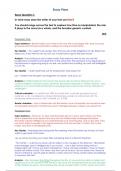
Component 1 essay plans - Key
arguments
Evaluate the view that the UK political system is no longer truly representative - intro - ANS
Representative democracy - the electorate elect representatives to make decisions on their behalf,
regular elections are a key feature, characterised by representative assemblies (parliament, councils,
devolved assemblies), representatives are not delegates they express their own opinions
Evaluate the view that the UK political system is no longer truly representative - Representative
democracy - ANS - elections/parliamentary system rely on representatives
- instances of direct democracy governed by representatives
- role of MP is based around constituency
Evaluate the view that the UK political system is no longer truly representative - Not representative
democracy - ANS - referendums are becoming increasingly popular
- politicians may not represent views of constituents
- representatives held to account through direct democracy
Evaluate the view that the UK political system is no longer truly representative - Conclusion - ANS UK
political system arguably still representative but increasingly including some elements of direct
democracy
Evaluate the extent to which the UK can be said to suffer from a participation crisis - Intro - ANS
Participation crisis a situation where a large proportion of the population do not engage with the
political process
Evaluate the extent to which the UK can be said to suffer from a participation crisis - Participation crisis -
ANS - turnout is decreasing
- party membership/interactions decreasing
, Evaluate the extent to which the UK can be said to suffer from a participation crisis - No participation
crisis - ANS - nature of participation is changing
- turnout etc. dependant on context, people participate when necessary
Evaluate the extent to which the UK can be said to suffer from a participation crisis - Conclusion - ANS
Whilst the reduction in participation is somewhat concerning, it is an exaggeration to suggest that this
indicates an overall 'crisis', increased levels of participation over divisive issues through direct action + e-
democracy indicates that the reduction in participation through trad. means does not represent the
over trend
Evaluate the extent the extent to which pressure groups enhance democracy - Intro - ANS Pressure
group - a group that tries to influence public policy in the interest of a particular cause
Evaluate the extent the extent to which pressure groups enhance democracy - Enhance democracy -
ANS - allow for a greater diversity of viewpoints to be represented
- represent those who cannot vote
- create awareness of issues
- insider groups can advise govt. resulting in better mutual outcome
Evaluate the extent the extent to which pressure groups enhance democracy - Undermine democracy -
ANS - people are encouraged to not vote etc.
- govt. does not have to respond
- insider group access unfair
- unfair advantaged to those with money + resources
Evaluate the extent the extent to which pressure groups enhance democracy - Conclusion - ANS Whilst
it's fair to say that the insider-outsider system by which pressure groups operate in the UK can be unfair,
pressure groups as a whole contribute to the fundamentally pluralist nature of UK democracy
arguments
Evaluate the view that the UK political system is no longer truly representative - intro - ANS
Representative democracy - the electorate elect representatives to make decisions on their behalf,
regular elections are a key feature, characterised by representative assemblies (parliament, councils,
devolved assemblies), representatives are not delegates they express their own opinions
Evaluate the view that the UK political system is no longer truly representative - Representative
democracy - ANS - elections/parliamentary system rely on representatives
- instances of direct democracy governed by representatives
- role of MP is based around constituency
Evaluate the view that the UK political system is no longer truly representative - Not representative
democracy - ANS - referendums are becoming increasingly popular
- politicians may not represent views of constituents
- representatives held to account through direct democracy
Evaluate the view that the UK political system is no longer truly representative - Conclusion - ANS UK
political system arguably still representative but increasingly including some elements of direct
democracy
Evaluate the extent to which the UK can be said to suffer from a participation crisis - Intro - ANS
Participation crisis a situation where a large proportion of the population do not engage with the
political process
Evaluate the extent to which the UK can be said to suffer from a participation crisis - Participation crisis -
ANS - turnout is decreasing
- party membership/interactions decreasing
, Evaluate the extent to which the UK can be said to suffer from a participation crisis - No participation
crisis - ANS - nature of participation is changing
- turnout etc. dependant on context, people participate when necessary
Evaluate the extent to which the UK can be said to suffer from a participation crisis - Conclusion - ANS
Whilst the reduction in participation is somewhat concerning, it is an exaggeration to suggest that this
indicates an overall 'crisis', increased levels of participation over divisive issues through direct action + e-
democracy indicates that the reduction in participation through trad. means does not represent the
over trend
Evaluate the extent the extent to which pressure groups enhance democracy - Intro - ANS Pressure
group - a group that tries to influence public policy in the interest of a particular cause
Evaluate the extent the extent to which pressure groups enhance democracy - Enhance democracy -
ANS - allow for a greater diversity of viewpoints to be represented
- represent those who cannot vote
- create awareness of issues
- insider groups can advise govt. resulting in better mutual outcome
Evaluate the extent the extent to which pressure groups enhance democracy - Undermine democracy -
ANS - people are encouraged to not vote etc.
- govt. does not have to respond
- insider group access unfair
- unfair advantaged to those with money + resources
Evaluate the extent the extent to which pressure groups enhance democracy - Conclusion - ANS Whilst
it's fair to say that the insider-outsider system by which pressure groups operate in the UK can be unfair,
pressure groups as a whole contribute to the fundamentally pluralist nature of UK democracy