NUR 265 EXAM 1 Study Guide: Guaranteed A+ Guide Solution: updated
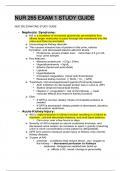
• Nephrotic Syndrome: o NS is a condition of increased glomerular permeability that allows larger molecules to pass through the membrane into the urine and then be excreted. o Immunological Kidney disorder o This causes massive loss of protein in the urine, edema formation, and decreased plasma albumin levels. ▪ Proteinuria- severe protein loss more than 3.5 g in 24- hour urine sample. o Key features: ▪ Massive proteinuria 3.5g / 24hrs ▪ Hypoalbuminemia 3g/dL ▪ Edema (facial and periorbital) ▪ Lipiduria ▪ Hyperlipidemia ▪ Increased coagulation (renal vein thrombosis) ▪ Reduced kidney function (↑ BUN, ↑ Cr, ↓ GFR) o Treatment- immunosuppressant agents (if immunity based). ▪ ACE inhibitors (to decreased protein loss in urine & ↓BP) ▪ Statins (improve blood lipid levels). ▪ Heparin (↑ coagulation / risk of thrombosis → treat vascular effects and improve kidney function) o Diet: ▪ If GFR is normal- dietary intake of complete proteins is needed ▪ If GFR is decreased- dietary protein is decreased, diuretics and sodium restriction. • Acute Kidney Injury: o AKI is rapid reduction in kidney function resulting in a failure to maintain _uid and electrolyte balance, and acid-base balance. ▪ Can occur over a few hours or days o Severity of AKI is based on serum creatinine increase, and decreased urine output- an increase in speci`c gravity (meaning urine is more concentrated or the patient is dehydrated). o GFR isn’t used to measure acute injury or illness—only chronic kidney disease. o 3 types of AKI ▪ prerenal - conditions that reduce blood _ow / oxygen to the kidney → decreased perfusion to kidneys • azotemia- nitrogenous waste/toxin build up o effects LOC, mood, change in personality o related directly to reduced perfusion to the kidneys • examples of perfusion reduction: o blood/_uid loss- (surgery, sepsis, hypovolemic shock)
Document information
- Uploaded on
- February 9, 2024
- Number of pages
- 28
- Written in
- 2023/2024
- Type
- Exam (elaborations)
- Contains
- Questions & answers